
Features
Is Board Worth it? A 360-Degree Look at the New Console Everyone’s Talking About

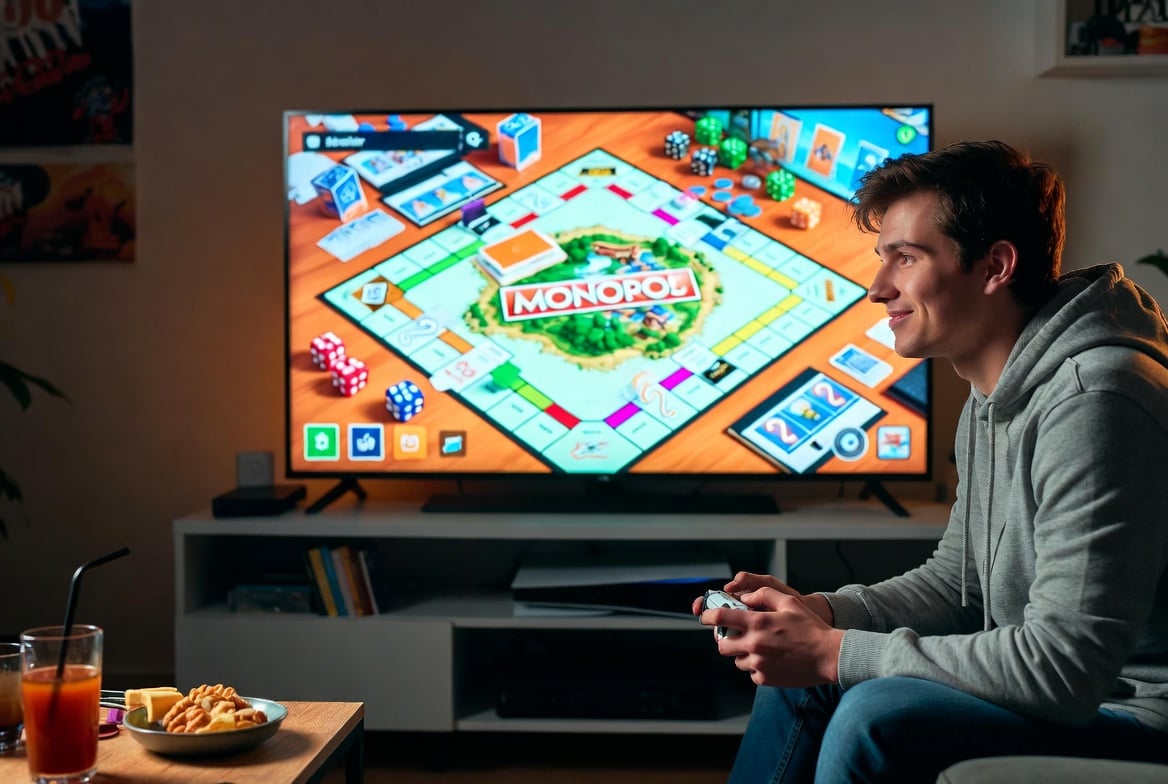
Parents are caught in a constant balancing act: keeping kids engaged while reducing passive screen time. The 2025 Common Sense Census reports that children aged 0–8 now average 2.5 hours of daily screen use, and gaming time has surged 65% since 2021. Screens clearly are not going away, but how they are used is evolving.
Enter Board, a 24-inch tabletop game console that mixes the tactile satisfaction of physical pieces with the variety of digital play.
The promise is bold: Turn solo scrolling into shared, shoulder-to-shoulder fun.
This review gathers published test reports, market data, and pricing math to determine whether the $399 device delivers real value—or just another glowing rectangle.
What Ships for $399
- 24-inch touchscreen; big enough for 2-6 players (or more, if players team up)
- The screen that recognizes playing pieces for seamless interactions
- Seven included titles—no subscription fees
- Neatly labeled pouches for every game piece
Place the console on a stable table, plug in the power cord, and follow the on-screen Wi-Fi prompt. No controllers are required; every player simply places a conductive token, ship, or utensil on the glass and begins.
Does It Really Bring People Together?
Shoulder-to-Shoulder Play
Board is “the future of family game night,” which grandparents and grade-schoolers can play cooperatively for hours.
A University of York study tied regular family board-game sessions to a 17% rise in life-satisfaction scores among 8- to 12-year-olds. Board’s face-to-face format taps directly into those social benefits.
Cross-Generational Appeal
Meeple Mountain documented a nine-year-old requesting nightly sessions for three weeks. Game Informer added that the “novel input keeps grandparents engaged because no buttons must be memorized.”
Families that swapped between Board and a couch co-op on Nintendo Switch found more active conversation and eye contact during Board rounds.
Game Library: Depth vs. Dollar
Seven launch titles arrive pre-installed:
- Chop Chop – Frantic team cooking; players wield tiny knives, spoons, and sponges to plate orders before timers expire.
- Cosmic Crush – Fast, competitive match-3 where robot pieces herd adorable aliens into color sets for points.
- Starfire – Pinball-style space arena; bounce projectiles off paddles and walls to score while defending your ship.
- Snek – Arcade classic re-imagined; guide a growing tail around hazards, collecting fruit and boxing in rivals.
- Space Rocks – Co-op asteroid-blasting shooter with spaceship tokens grabbing minerals amid incoming debris.
- Astrofort – Brick-busting defence: use ship pieces to deflect multiballs and protect your fort’s core.
- Board Arcade – A five-game party pack of re-tooled classics (including Space Rocks, Snek, and Starfire) that rotate in seconds-long bursts.
Additional titles cost $34.95 and ship with any required pieces. Because each purchase bundles both hardware tokens and software, the effective cost per playable hour trends low.
Logging about 20 hours on the add-on narrative puzzler Spycraft, the US $34.95 price tag works out to roughly US $1.75 per hour of entertainment before week three—and every additional session pushes that figure even lower.
Hardware Design & Durability
The console’s furniture-grade trim and wipe-clean glass allow it to live on a coffee table full-time. Wargamer, which dubbed Board “the next Nintendo Wii,” praised the build quality after extended preview sessions.
The low, table-first design makes it easy to gather around, rest your hands on the surface, and play comfortably together.
Two practical notes:
- The unit is relatively large, so younger kids may need help moving it.
- It needs to stay plugged in, so you’ll need to position it on a table near an outlet.
Market Context: Hybrid Consoles on the Rise
Analyst firm Omdia projects that digital-physical hybrid consoles will reach 3 million households by 2028. The forecast groups Board with discontinued predecessors such as Arcade1Up’s Infinity Game Table and education-focused Osmo kits.
Board avoids the “tablet in a box” feel by pairing custom sensing hardware with games designed specifically for physical, around-the-table play.
For classic couch co-op, a Nintendo Switch still offers a bigger catalog, yet hardware for four players (console + extra Joy-Cons + grip) lands near $500–$550 before any games.
Board’s $399 price already covers multiplayer capability and seven titles.
[Readers interested in broader industry shifts can check Goomba Stomp’s recent feature on Why Hybrid Game Worlds Keep Players Hooked for additional context.]
Pros, Cons, and Who Should Buy
Major Strengths
- Hybrid digital-physical play keeps everyone’s hands active.
- Broad age appeal
- No subscriptions
- Responsive piece recognition maintains game flow.
Key Drawbacks
- Premium upfront cost compared with traditional board games.
- Requires dedicated table space and constant power.
- Library sits at a dozen titles; depth varies.
- Local multiplayer only
Best-Fit Households
- Children aged 6–12 who like cooperating.
- Families hosting regular game nights.
- Parents aiming to shift screen time from solo scrolling to shared play.
Poor Fit
- Players focused on deep single-player AAA experiences.
- Households needing a portable gaming option.
Tips to Maximize Value
- Table Height: A coffee table keeps the screen within easy reach for children and adults.
- Piece Care: Store conductive pieces in the labeled pouches and wipe the glass with a microfiber cloth after messy food sessions.
Verdict: Is Board Worth $399?
Board succeeds at converting passive screen hours into social, tactile experiences. The cost-per-player math undercuts an equivalently equipped Switch setup, and the absence of subscriptions keeps ownership simple.
For households that regularly gather around a table and value shared laughter over solo level grinding, Board’s asking price represents solid value today—and a stronger proposition as the library grows.
Bottom line: Board justifies its $399 price tag by delivering something most consoles can’t—genuine, face-to-face play.



How to Recover Lost Game Files from an External Drive on Mac

Mystery Anime You’ll Regret Starting at Midnight | Part 2

ARC Raiders Frozen Trail Guide: How to Board and Clear the Frigate

Rockstar Games Integrates Advanced Ray Tracing for GTA VI

How to Update Outdated Graphics Drivers for Better Gaming Performance and Higher FPS

The Most Popular Car Game Isn’t Where Players Stay Longest

Canada’s Gaming Audience Is Bigger Than the Old Stereotype

Mystery Anime You’ll Regret Starting at Midnight | Part 1

Anime You’ll Be Glad You Added to Your Fall Watchlist (Part 2) 🍂

WoW Forever Leveling: What Is New on the Road from 1 to 60

MM2 weapon rarity tiers explained for traders

Blox Fruits Physical vs Permanent Fruits: What’s the Difference?

What to Check Before Buying FC 27 Coins Online

Pokémon Announces New Movie With a New Hero and Mimikyu

Double-Sentinel Defensive Holds Disrupt Fast Valorant Site Executes
Canada’s Gaming Audience Is Bigger Than the Old Stereotype
-
 Anime3 weeks ago
Anime You’ll Be Glad You Added to Your Fall Watchlist (Part 2) 🍂
-
 Features2 weeks ago
WoW Forever Leveling: What Is New on the Road from 1 to 60
-
 Esports3 weeks ago
MM2 weapon rarity tiers explained for traders
-
 Features4 weeks ago
Blox Fruits Physical vs Permanent Fruits: What’s the Difference?
-
 Features4 weeks ago
What to Check Before Buying FC 27 Coins Online
-
 Anime4 weeks ago
Pokémon Announces New Movie With a New Hero and Mimikyu
-
 Esports4 weeks ago
Double-Sentinel Defensive Holds Disrupt Fast Valorant Site Executes
-
 Features2 weeks ago
Canada’s Gaming Audience Is Bigger Than the Old Stereotype
-
 Anime2 weeks ago
Mystery Anime You’ll Regret Starting at Midnight | Part 1
-

 Features2 weeks ago
8 Underrated PC Games Worth Playing in 2026 (That Aren’t Getting the Attention They Deserve)
-
 Features1 week ago
The Most Popular Car Game Isn’t Where Players Stay Longest
-
 Features3 weeks ago
Why Sports Games Keep Getting Better at Simulating the Real Thing