
Features
Before You Press Start: Why Understanding the Rules Is the Real Beginning of Play


We tend to think of games as something that begins the moment we take control, when the first move is made, the first decision taken, the first mechanic engaged. But in reality, play starts much earlier. It begins with understanding.
Every game, whether digital or analog, is built on a system of rules. These rules define what is possible, what is not, and what matters. They are not just instructions; they are the framework that gives the experience meaning. And yet, for something so fundamental, the process of learning those rules is often treated as an afterthought.
Rules as Design, Not Obstacle
In well-designed games, rules are invisible. They guide behavior without drawing attention to themselves. Players learn through interaction, intuition, and feedback. This is the hallmark of strong design, systems that feel natural, even when they are complex.
But when that process breaks down, the opposite happens. Rules become visible, intrusive, and, in some cases, frustrating. Instead of enabling play, they delay it.
This tension is particularly evident outside of digital environments. In card, board, and party games, the onboarding process is often entirely manual. Players must interpret instructions, reconcile differences, and align on a shared understanding before the experience can begin.
The Friction Before the Fun
There is a moment, familiar to anyone who has ever opened a game box, where enthusiasm meets hesitation. Someone reads the rules aloud. Others try to follow along. Questions arise. Clarifications are needed.
This is not inherently a problem, learning is part of play, but the way rules are presented often introduces unnecessary friction. Dense text, inconsistent explanations, and assumptions about prior knowledge can turn what should be an inviting process into a barrier.
And when that barrier appears at the very start, it shapes everything that follows. Players who feel uncertain engage less. Momentum is lost before it has a chance to build.
Bridging the Gap Between Design and Experience
What’s interesting is that this issue doesn’t reflect a flaw in the games themselves, but in how their systems are communicated. The design may be elegant, but if players cannot access it easily, that elegance is effectively hidden.
This is where platforms like Playiro become relevant in a broader discussion about game culture. By offering clear, structured explanations for a wide range of card, board, and party games, it reframes how rules are encountered. Instead of being an obstacle to overcome, they become an accessible entry point. Players can approach a game with confidence, understanding the system before they engage with it, which ultimately preserves the integrity of the experience.
The Parallel With Video Game Tutorials
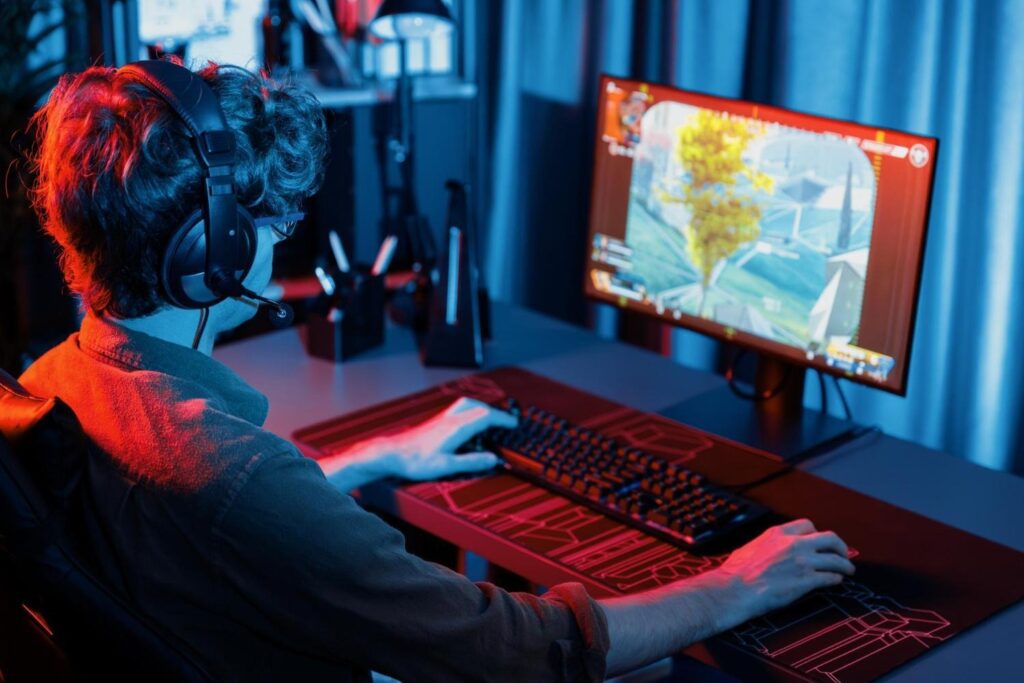
Image by Frolopiaton Palm on Freepik
The evolution of video game tutorials offers an interesting comparison. Early games often relied on manuals, leaving players to interpret systems on their own. Over time, this approach shifted toward integrated tutorials, systems that teach through play rather than explanation.
Modern games rarely present all their mechanics upfront. Instead, they introduce concepts gradually, allowing players to learn by doing. This reduces cognitive load and creates a smoother onboarding experience.
Tabletop and social games, however, have not always followed this trajectory. Many still rely on static rulebooks, even as player expectations have changed.
Clarity as a Design Philosophy
Clarity is often underestimated in discussions about game design. Complexity tends to receive more attention, as it is associated with depth and challenge. But clarity is what allows players to access that depth in the first place.
A clear system does not mean a simple one. It means a system that is communicated effectively, where players understand the boundaries and possibilities from the outset.
According to Smithsonian Magazine, games across cultures have historically relied on shared understanding and clearly communicated rules to function as social experiences. Without that shared understanding, the game itself cannot exist in a meaningful way.
Play as a Shared Language
At its core, a game is a form of communication. It establishes a language that players use to interact with one another. The rules define that language, setting the terms of engagement.
When everyone understands that language, interaction becomes fluid. Players anticipate each other’s moves, respond strategically, and engage more deeply with the system.
But when that language is unclear, communication breaks down. The experience becomes fragmented, with players operating at different levels of understanding.
The Cultural Importance of Accessible Play
As gaming continues to expand beyond traditional audiences, accessibility becomes increasingly important. New players bring different expectations, different experiences, and different levels of familiarity.
Making games more accessible is not about simplifying them, but about making their systems easier to understand. This distinction is critical.
Platforms that prioritize clarity contribute to this accessibility. They allow more people to participate, explore, and engage with games in a meaningful way.
Why the Beginning Matters Most
The beginning of a game is not just a starting point, it is a foundation. It determines how players feel, how they engage, and how the experience unfolds.
A strong start creates momentum. It builds confidence and encourages participation. A weak start does the opposite, introducing hesitation that can persist throughout the game.
This is why the process of learning the rules deserves more attention. It is not separate from the experience, it is part of it.
Before any move is made, before any strategy is formed, there is a moment of understanding. That moment shapes everything that follows.
Games are not just systems to be played, but systems to be understood. When that understanding is clear and accessible, play becomes what it is meant to be: engaging, dynamic, and shared.
In the end, the real beginning of any game is not the first move, it is the moment when everyone understands how to play.
Featured Image by superpicture on Freepik



Steal a Brainrot Items Guide: How to Get Rare Brainrots and Build a Stronger Base

Best MM2 Weapons to Collect: Knives, Guns and Godlys Explained

Table and Mini Games In Grand Theft Auto 6 – What Can We Expect?

How to Recover Lost Game Files from an External Drive on Mac

Mystery Anime You’ll Regret Starting at Midnight | Part 2

ARC Raiders Frozen Trail Guide: How to Board and Clear the Frigate

Rockstar Games Integrates Advanced Ray Tracing for GTA VI

How to Update Outdated Graphics Drivers for Better Gaming Performance and Higher FPS

Anime You’ll Be Glad You Added to Your Fall Watchlist (Part 2) 🍂

WoW Forever Leveling: What Is New on the Road from 1 to 60

MM2 weapon rarity tiers explained for traders

Canada’s Gaming Audience Is Bigger Than the Old Stereotype
ARC Raiders Frozen Trail Guide: How to Board and Clear the Frigate

8 Underrated PC Games Worth Playing in 2026 (That Aren’t Getting the Attention They Deserve)

The Most Popular Car Game Isn’t Where Players Stay Longest

Mystery Anime You’ll Regret Starting at Midnight | Part 1
-
 Anime4 weeks ago
Anime You’ll Be Glad You Added to Your Fall Watchlist (Part 2) 🍂
-
 Features3 weeks ago
WoW Forever Leveling: What Is New on the Road from 1 to 60
-
 Esports4 weeks ago
MM2 weapon rarity tiers explained for traders
-
 Features3 weeks ago
Canada’s Gaming Audience Is Bigger Than the Old Stereotype
-
 Features2 weeks ago
ARC Raiders Frozen Trail Guide: How to Board and Clear the Frigate
-
 Features3 weeks ago
8 Underrated PC Games Worth Playing in 2026 (That Aren’t Getting the Attention They Deserve)
-
 Features2 weeks ago
The Most Popular Car Game Isn’t Where Players Stay Longest
-
 Anime3 weeks ago
Mystery Anime You’ll Regret Starting at Midnight | Part 1
-
 Gaming News2 weeks ago
Rockstar Games Integrates Advanced Ray Tracing for GTA VI
-
 Features3 weeks ago
Why Sports Games Keep Getting Better at Simulating the Real Thing
-

 Features3 weeks ago
From Consoles to Phones: How Canadian Gaming Became an Anytime Experience
-
 Anime1 week ago
Mystery Anime You’ll Regret Starting at Midnight | Part 2