
Features
10 games that pay real rewards in 2026 (PC, browser and competitive)

Many games promise rewards, but only some offer real earning paths. In 2026, the strongest options are tied to competition, player economies, and creator systems rather than vague bonus mechanics. The wider digital entertainment market has also changed. Players now move between esports, tradable item markets, user-generated worlds, and adjacent platforms in search of value, not just playtime. From competitive titles to alternative ecosystems like plinko, more users are looking for ways to connect gaming habits with real-world rewards. This guide focuses only on games that still offer realistic earning routes in 2026.
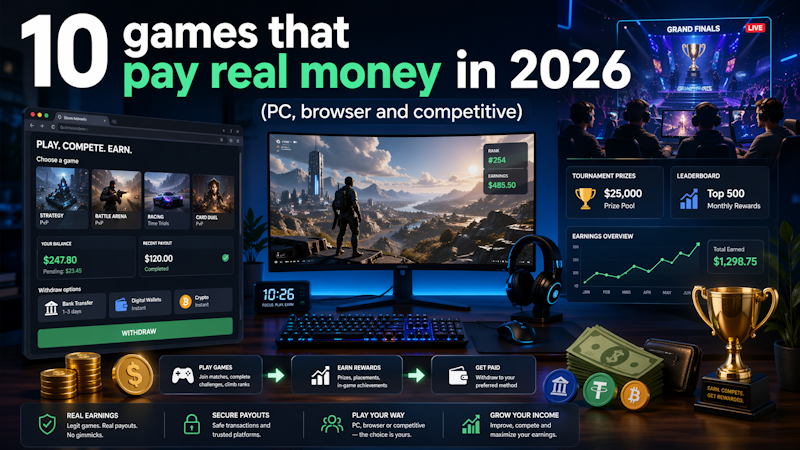
How these games actually pay you
Most games that pay real money follow three models.The first is competitive earnings. Players join tournaments, ladders, or cash matches and earn through performance. The second is player-driven economies. In these games, skins, items, gold, land, or other digital assets hold value because other users want them. The third is services and creation. Some players earn by boosting, farming, coaching, building content, or selling user-made products.
Official creator programs and tournament systems are safer, but often harder to scale. Off-platform trading and services can pay faster, yet they usually carry more risk. That difference matters if the goal is steady income rather than a lucky one-time result.
10 best games that pay real money
The list below covers games with different earning models. Some reward skill, some reward market knowledge, and some reward creation. That is why the best choice depends on what kind of player you are.
Counter-Strike 2
| Category | Details |
|---|---|
| Earning type | Skins, trading, item flipping |
| Entry cost | Free to play, but inventory helps |
| Payout speed | Fast to medium |
| Earning potential | $10 – $300+ |
Counter-Strike 2 remains one of the most practical examples of games that pay real money through a live item economy. Skins, stickers, and rare drops still hold value because demand stays active. Some players profit by trading and timing, while others focus on holding items through update cycles. CS2 works best for users who understand rarity, price movement, and buyer behavior. It is not passive income, but it remains one of the clearest market-based earning systems in gaming.
Fortnite
| Category | Details |
|---|---|
| Earning type | Tournaments, creator maps, engagement |
| Entry cost | Free |
| Payout speed | Medium |
| Earning potential | $0 – $1,000+ |
Fortnite offers two realistic paths. The first is competition, where skilled players can chase prize money through official and third-party events. The second is creation. Players who build islands, mini-games, or social spaces can earn if their content attracts enough engagement. That makes Fortnite one of the more flexible games with real rewards like the ones you can get in online gaming sites, a Yep casino bonus. Most users will find the creator route more sustainable than direct competition.
Roblox
| Category | Details |
|---|---|
| Earning type | Game creation, item sales, UGC |
| Entry cost | Free to start |
| Payout speed | Medium |
| Earning potential | $50 – $5,000+ |
Roblox stays near the top of any honest list of best money making games 2026 players should watch. The main reason is simple: it rewards creators more than grinders. Developers can build games with repeat spending loops, while designers can sell items that match popular styles and communities. Roblox takes time, but it is still one of the clearest long-term systems for players who want to earn money playing games through building.
RuneScape (OSRS)
| Category | Details |
|---|---|
| Earning type | Gold farming, flipping, item trading |
| Entry cost | Low |
| Payout speed | Medium |
| Earning potential | $20 – $400+ |
Old School RuneScape still works because its economy is active and easy to read. Some players earn through gold farming, while others make more through flipping items and watching supply cycles. OSRS rewards patience, routine, and system knowledge rather than hype. That makes it attractive to players who prefer consistency over trend-driven markets. The returns may look smaller than in creator platforms, but the structure is stable.
World of Warcraft
| Category | Details |
|---|---|
| Earning type | Boosting, gold farming, service play |
| Entry cost | Subscription plus content access |
| Payout speed | Medium |
| Earning potential | $30 – $500+ |
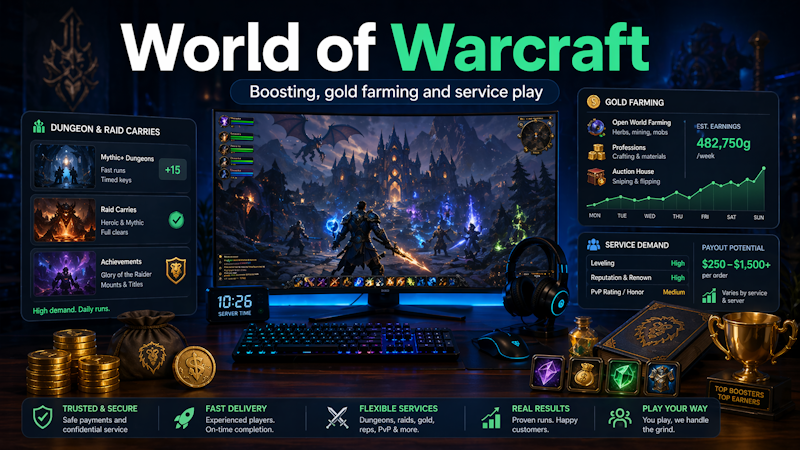
World of Warcraft remains a service-heavy earning game. Players with strong characters and good game knowledge can sell help with raids, dungeons, leveling, or progression goals. WoW works best for specialists rather than casual users because demand usually goes to players who are fast, reliable, and organized. It still belongs on a list of games that pay real money, but the strongest earning routes depend more on skill and reputation than on simple marketplace access.
Axie Infinity
| Category | Details |
|---|---|
| Earning type | Tokens, NFT assets, ecosystem rewards |
| Entry cost | Medium |
| Payout speed | Fast on-chain, slower after cashout |
| Earning potential | $20 – $250+ |
Axie Infinity is no longer the symbol of easy play-to-earn income, but it still has a real digital economy behind it. Players can earn through rewards, asset activity, and ecosystem participation. The main difference is that earnings now depend on both gameplay and token conditions. That makes Axie more volatile than item-based or creator-based platforms. It can still work for users who understand crypto risk, but it is not a fixed-income game.
The Sandbox
| Category | Details |
|---|---|
| Earning type | Asset creation, land, paid experiences |
| Entry cost | Free to build, higher to scale |
| Payout speed | Slow to medium |
| Earning potential | $0 – $2,000+ |
The Sandbox is better understood as a creator platform than a fast-money game. Users who earn here usually make something other people want to visit, use, or collect. That can include interactive spaces, branded experiences, or digital assets. For that reason, The Sandbox suits designers and digital creators more than competitive players. It is a long-term option, but still a relevant one for users who care about ownership and monetizable content.
Decentraland
| Category | Details |
|---|---|
| Earning type | Wearables, events, land, virtual assets |
| Entry cost | Low to medium |
| Payout speed | Medium |
| Earning potential | $0 – $1,500+ |
Decentraland works best for creators, event organizers, and digital sellers. Income can come from virtual goods, branded spaces, community events, and world-building. Casual players usually earn little, while users with design or organizational skills can do much better. It is less direct than tournament gaming, but more strategic over time. Decentraland still matters because it connects virtual activity to asset ownership and market demand.
Second Life
| Category | Details |
|---|---|
| Earning type | Goods, services, rentals, marketplace sales |
| Entry cost | Free to start |
| Payout speed | Medium |
| Earning potential | $20 – $2,000+ |
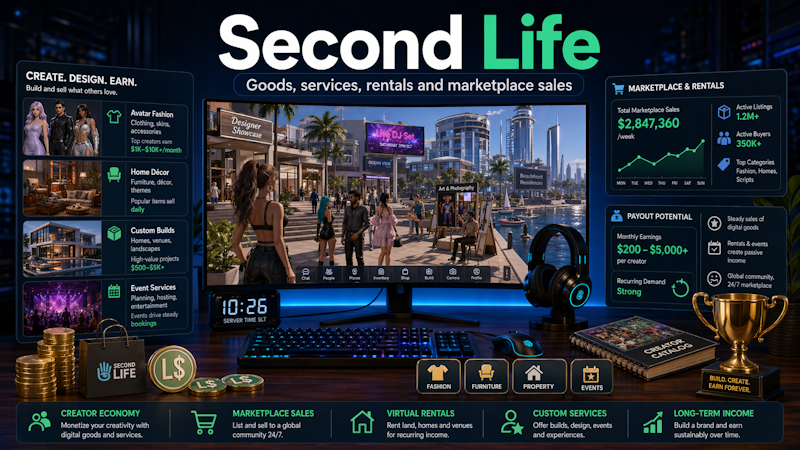
Second Life remains one of the strongest older examples of a game-like platform with a functioning digital economy. Users can create products, sell services, rent property, and build niche communities. That range gives it several income routes instead of one. In a market full of newer platforms, Second Life still works because many users treat virtual commerce seriously. For creators, it remains one of the clearest answers to how games with real rewards can support long-term digital production.
Skill-based tournament games
| Category | Details |
|---|---|
| Earning type | Cash matches, ladders, tournaments |
| Entry cost | Free to low |
| Payout speed | Fast to medium |
| Earning potential | $10 – $500+ |
This category includes games built around short competitive sessions with prize-based outcomes. That can mean puzzle, strategy, card, or arcade-style formats. The appeal is speed. Players do not need to build a large asset base before seeing results. Still, caution matters. Not every platform is available in every region, and not every operator is transparent. The better options are the ones with clear rules, visible skill elements, and straightforward payout terms.
What actually works in 2026
The fastest money usually comes from competition, but it is also the least predictable. Tournament wins depend on skill, consistency, and matchmaking conditions. Stable money is more common in trading systems like CS2 and OSRS, where players benefit from demand, timing, and market knowledge. Long-term money usually comes from creation. Roblox, Fortnite, The Sandbox, Decentraland, and Second Life all reward users who make something people return to, buy, or share.
Quick money is rarely stable. Stable money usually takes patience. Bigger money over time often comes from building rather than playing. There are no easy profits here.
How to avoid fake money games
Fake money games usually repeat the same warning signs. The first is any promise of guaranteed profit. Real earning does not work that way. The second is a required deposit before withdrawal becomes possible. The third is the absence of a real economy, creator system, or visible prize structure.
A simple filter helps. Ask where the money comes from, who is paying it, and how it reaches the player. If the answers are unclear, the model is weak.


How to Recover Lost Game Files from an External Drive on Mac

Mystery Anime You’ll Regret Starting at Midnight | Part 2

ARC Raiders Frozen Trail Guide: How to Board and Clear the Frigate

Rockstar Games Integrates Advanced Ray Tracing for GTA VI

How to Update Outdated Graphics Drivers for Better Gaming Performance and Higher FPS

The Most Popular Car Game Isn’t Where Players Stay Longest

Canada’s Gaming Audience Is Bigger Than the Old Stereotype

Mystery Anime You’ll Regret Starting at Midnight | Part 1

Anime You’ll Be Glad You Added to Your Fall Watchlist (Part 2) 🍂

WoW Forever Leveling: What Is New on the Road from 1 to 60

MM2 weapon rarity tiers explained for traders

Blox Fruits Physical vs Permanent Fruits: What’s the Difference?

What to Check Before Buying FC 27 Coins Online

Can You Stream Kick on Xbox: Complete Guide for Xbox Users

Pokémon Announces New Movie With a New Hero and Mimikyu

Double-Sentinel Defensive Holds Disrupt Fast Valorant Site Executes
-
 Anime3 weeks ago
Anime You’ll Be Glad You Added to Your Fall Watchlist (Part 2) 🍂
-
 Features2 weeks ago
WoW Forever Leveling: What Is New on the Road from 1 to 60
-
 Esports3 weeks ago
MM2 weapon rarity tiers explained for traders
-
 Features4 weeks ago
Blox Fruits Physical vs Permanent Fruits: What’s the Difference?
-
 Features4 weeks ago
What to Check Before Buying FC 27 Coins Online
-
 Social Media4 weeks ago
Can You Stream Kick on Xbox: Complete Guide for Xbox Users
-
 Anime4 weeks ago
Pokémon Announces New Movie With a New Hero and Mimikyu
-
 Esports4 weeks ago
Double-Sentinel Defensive Holds Disrupt Fast Valorant Site Executes
-
 Features2 weeks ago
Canada’s Gaming Audience Is Bigger Than the Old Stereotype
-
 Anime2 weeks ago
Mystery Anime You’ll Regret Starting at Midnight | Part 1
-
 Features2 weeks ago
8 Underrated PC Games Worth Playing in 2026 (That Aren’t Getting the Attention They Deserve)
-
 Features1 week ago
The Most Popular Car Game Isn’t Where Players Stay Longest