
Esports
Best CS2 Skin Marketplaces in 2026: Where to Buy and Sell Skins Safely

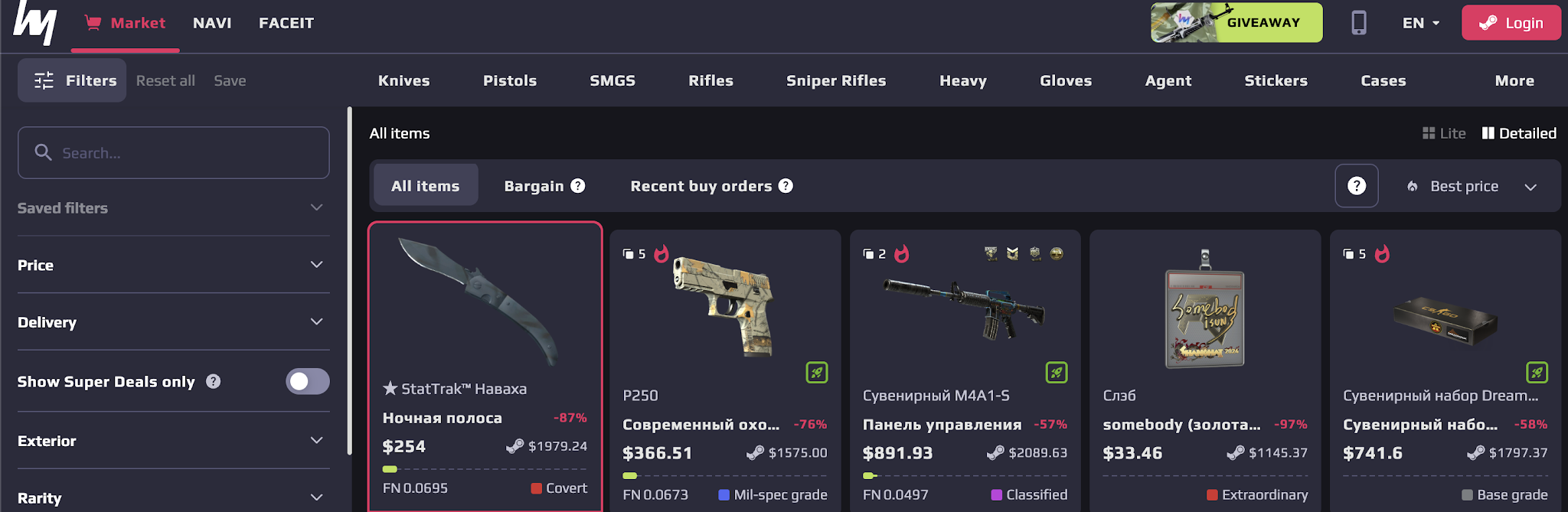
Millions of players buy, sell, and swap weapon skins every day. The total market cap has climbed well past the $4 billion mark, and it reflects something real: for many players, an inventory is not just a collection of cosmetics but a portfolio with actual monetary value.
In this climate, the platform you choose matters more than most people realize. Picking the wrong one can cost you money, time, or worse, your items entirely.
How CS2 Skin Marketplaces Work
Every CS2 skin lives in a Steam inventory. When you sell or buy one, that item moves from one Steam account to another via a trade offer.
The Steam Community Market handles this entirely within Valve’s own ecosystem. Third-party marketplaces work differently: they typically act as intermediaries, either holding items in escrow via a trading bot or facilitating direct peer-to-peer (P2P) transfers between two users.
The key distinction between the two:
- Steam Market: inventory-to-inventory transfers stay within Steam. No real-money withdrawals, and you’re locked inside the Steam Wallet.
- Third-party P2P platforms: items are traded directly between sellers and buyers via Steam trade offers. Money moves through the platform’s payment infrastructure, not Steam’s.
- Bot-based third-party platforms: you deposit your item to the platform’s bot, it gets listed, and when sold, the bot sends it to the buyer. Faster and more automated, but you lose custody of the item during the listing period.
Why Players Use CS2 Skin Marketplaces
The reasons vary:
- The Steam Wallet allows you to spend money only on Steam. Third-party marketplaces break that loop, letting you withdraw to a bank account, card, or crypto wallet.
- Third-party platforms typically list items at lower prices than the Steam Market because sellers price competitively to move items faster.
- A growing segment of players treats skin trading like a market: buying undervalued items, waiting for prices to rise, then selling at a profit.
- After case openings or trade-ups, most players accumulate items they’ll never use. Marketplaces provide a quick, low-friction way to convert those into something useful (or spendable).
Popular CS2 Skin Marketplaces
Here’s a breakdown of the major platforms available in 2026. Each has a different fee structure, trading model, and target audience.
white.market
A P2P CS2 marketplace backed by the WhiteBIT cryptocurrency exchange. Unlike bot-based platforms, skins stay in the seller’s inventory until the trade is confirmed. The fee structure is straightforward: 5% for sellers, 0% for buyers. Withdrawals are supported in EUR, USD, and several cryptocurrencies, including BTC, ETH, and USDT. The platform also supports limit orders, a mobile app, and wholesale trading for larger inventories. A useful option for sellers who want control over their items and flexible cash-out options.
CSFloat
One of the more technically focused platforms in the market. CSFloat is P2P and charges a flat 2% seller fee. It rose to prominence through its FloatDB, an enormous public database tracking float values across hundreds of millions of CS2 skins. The platform does not require users to share their Steam API key, which is a meaningful security advantage. Best suited for collectors and traders who care about precise float value filtering and pattern inspection.
Buff163
The largest CS2 marketplace in the world by trading volume, operated by NetEase. With over 2 million active listings at any given time, it offers the deepest inventory and a low 2.5% seller fee. The platform is China-based, and while it remains accessible internationally, regional restrictions and withdrawal complexities make it less practical for European and US-based sellers. Best for buyers hunting specific rare items at the lowest available price.
Skinport
A German-based marketplace operating under strict EU consumer protection regulations, which gives it a compliance-first reputation. Skinport runs on a bot-based consignment model: you deposit your item, it gets listed, and buyers receive it through the platform’s automated system. The seller’s fee is 8%. Particularly reliable for EU-based users who prioritize regulatory compliance.
DMarket
A US-based multi-game marketplace with blockchain integration. Supports CS2, Dota 2, Rust, and others, which broadens its user base. Offers an instant sell feature, useful when you want liquidity fast rather than waiting for a buyer to match your price. Fee structures vary by item and transaction type. A reasonable option for players who trade across multiple games.
Waxpeer
A P2P platform that has grown steadily since 2019. Competitive fees and a fairly liquid inventory make it a practical mid-tier option. Popular among traders who want an alternative to the larger platforms without giving up much in terms of selection or speed.
What to Look for in a CS2 Skin Marketplace
Before committing to one platform, evaluate it across these factors:
- Security. Does the platform require Steam Guard? Is it transparent about how trades are executed? Check whether it asks for your Steam API key (legitimate P2P platforms generally don’t need it).
- Fees. Compare seller and buyer fees separately. A 0% buyer fee sounds attractive, but if the seller fee is 15%, those costs get priced into listings anyway.
- Liquidity. A platform with thin inventory or few active buyers means your item might sit listed for weeks.
- Withdrawal options. Can you actually get your money out in a format that works for you?
- Account protection. Two-factor authentication on the platform itself (beyond Steam Guard) is a meaningful security layer.
- Platform reputation. Cross-reference Trustpilot reviews, Reddit threads, and community forums.
Tips for Choosing the Best CS2 Marketplace
- Compare fees before listing. Even a 3-4% difference in seller fee across platforms adds up fast if you trade regularly.
- Verify the platform’s reputation independently. Don’t rely solely on the platform’s own site. Check Trustpilot, the CS2 subreddit, and community Discord servers.
- Use Steam Guard Mobile Authenticator. It adds a required confirmation step to every trade offer, which blocks unauthorized transfers.
- Never enter your Steam credentials on a third-party site. Legitimate marketplaces authenticate via Steam’s official OAuth.
- Bookmark your platforms of choice. Phishing sites copy the look of legitimate marketplaces down to the pixel. Access platforms through saved bookmarks.
- Check the URL before every session. One transposed letter in a domain name is the oldest trick in the book. It still works because people don’t look.
CS2 Skin Economy Explained
Rarity is the foundation. Every skin has a rarity tier: from Consumer Grade through Restricted, Classified, Covert, and finally rare special items like knives and gloves. Higher rarity means lower drop chance from cases and higher prices.
Float value adds another layer. Every skin has a wear condition determined by a float value between 0 and 1. Factory New (close to 0) is the most pristine. Battle-Scarred (close to 1) shows heavy wear. Two identical skins can differ in price by 50% or more based on float alone.
Pattern seeds matter for certain skins. Case Hardened skins, Fade variants, and several others generate their visual pattern from a seed number. The “Blue Gem” pattern on Case Hardened knives is so rare that a Karambit with the right seed has reportedly attracted private offers exceeding $1.5 million.
Game updates move the market overnight. This kind of volatility is part of the CS2 skin economy’s nature: supply and demand respond instantly to any change in the rules.
Esports events create seasonal demand. Prices often spike during tournament periods and normalize afterward.
The CS2 skin marketplace landscape in 2026 offers more options than ever: from the globally dominant Buff163 to P2P platforms like white. market where your skins stay in your inventory until the moment of transfer.
If you want to buy CS2 skins safely, stick to platforms with verifiable reputations, always use Steam Guard, and treat any unsolicited offer or unfamiliar URL as a red flag until proven otherwise. Know your items’ value, understand the fees you’re paying, and choose platforms that have earned trust over time.



How to Recover Lost Game Files from an External Drive on Mac

Mystery Anime You’ll Regret Starting at Midnight | Part 2

ARC Raiders Frozen Trail Guide: How to Board and Clear the Frigate

Rockstar Games Integrates Advanced Ray Tracing for GTA VI

How to Update Outdated Graphics Drivers for Better Gaming Performance and Higher FPS

The Most Popular Car Game Isn’t Where Players Stay Longest

Canada’s Gaming Audience Is Bigger Than the Old Stereotype

Mystery Anime You’ll Regret Starting at Midnight | Part 1

Anime You’ll Be Glad You Added to Your Fall Watchlist (Part 2) 🍂

WoW Forever Leveling: What Is New on the Road from 1 to 60

MM2 weapon rarity tiers explained for traders

Blox Fruits Physical vs Permanent Fruits: What’s the Difference?

What to Check Before Buying FC 27 Coins Online

Can You Stream Kick on Xbox: Complete Guide for Xbox Users

Pokémon Announces New Movie With a New Hero and Mimikyu

Double-Sentinel Defensive Holds Disrupt Fast Valorant Site Executes
-
 Anime3 weeks ago
Anime You’ll Be Glad You Added to Your Fall Watchlist (Part 2) 🍂
-
 Features2 weeks ago
WoW Forever Leveling: What Is New on the Road from 1 to 60
-
 Esports3 weeks ago
MM2 weapon rarity tiers explained for traders
-
 Features4 weeks ago
Blox Fruits Physical vs Permanent Fruits: What’s the Difference?
-
 Features4 weeks ago
What to Check Before Buying FC 27 Coins Online
-
 Social Media4 weeks ago
Can You Stream Kick on Xbox: Complete Guide for Xbox Users
-
 Anime4 weeks ago
Pokémon Announces New Movie With a New Hero and Mimikyu
-
 Esports4 weeks ago
Double-Sentinel Defensive Holds Disrupt Fast Valorant Site Executes
-
 Features2 weeks ago
Canada’s Gaming Audience Is Bigger Than the Old Stereotype
-
 Anime2 weeks ago
Mystery Anime You’ll Regret Starting at Midnight | Part 1
-
 Features1 week ago
The Most Popular Car Game Isn’t Where Players Stay Longest
-

 Features3 weeks ago
Why Sports Games Keep Getting Better at Simulating the Real Thing