
Features
The Guerilla Collective Showcase Demonstrated the Wonders of Weird Indies
The Guerilla Collective showed that even without the major players of the AAA field, indies can hold their own.

The Guerilla Collective showed that even without the major players of the AAA field, indies can hold their own.
While the annual industry bonanza of E3 is absent this year, plenty of independent shows have stepped up to try and fill the gap of rapid industry announcements throughout the summer. The Guerilla Collective Showcase was just one such event, presenting a plethora of exciting games from independent developers. It was certainly no E3 replacement on its own—as it was focused solely on indie and mid-size developers, there were very few groundbreaking, Persona-4-on-PC-level announcements at the showcase. But at the same time, that was one of the show’s strong points. Without big-name series hogging all the attention, the Guerilla Collective could home in on what makes indie games so special in general: reckless creativity, inventiveness, and outright weirdness.

The most memorable games of the show were also the strangest, the ones that pushed boundaries with outlandish concepts. One standout on Day 1 of the show was Genesis Noir, a game that presents a bizarre blend—the Big Bang and the creation of all life, and an old-school, black-and-white, jazzy noir setting. Its minimalist visuals are reminiscent of modernist artwork with its reliance on bare, angular line art for character designs set off against lusciously elaborate figures that populate the environment. The game’s emphasis on exploration and light puzzle-solving in its gameplay looks set to complement this direction.

There were plenty of other fascinating picks along these lines as well. Another interesting title from Day 1 was Exo One, a surrealist exploration game where you control what looks like a frisbee and focus on maintaining momentum in racetrack-like environments. Meanwhile, the minimalist trailer for Skate Story stripped back all the pomp and circumstance that accompanies many major game trailers in favor of a quiet little video showcasing the game’s stripped-back visuals and simple yet detailed control scheme. There was also a game called Nuts: An Adventure in Squirrel Surveillance, and the appeal of that title should be self-explanatory.
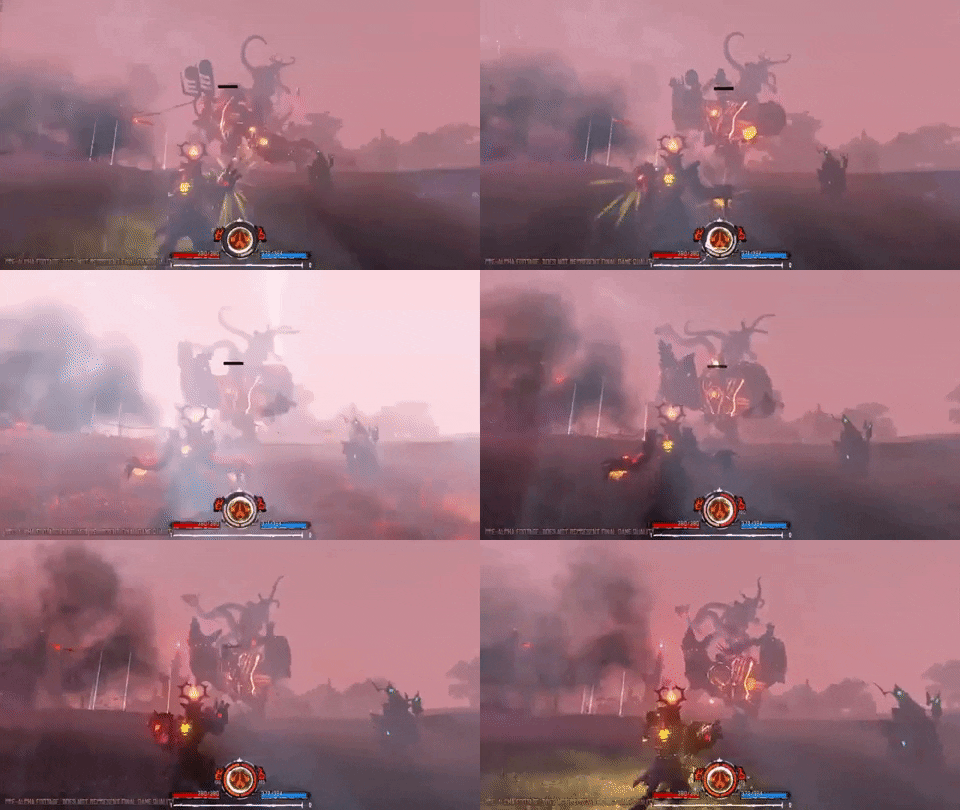
The Guerilla lineup seemed curated to specifically address the many stereotypes that indie developers have to deal with. Many assume that indies look the same, that every one of them is a metroidvania or pixelated roguelike. And while yes, there were more than a few pixelated platformers and exploration games on display, there was so much more than that. One game that got plenty of attention over the 3-day showcase was Almighty: Kill Your Gods, a multiplayer action game where you take down massive opponents with the help of other players in Monster Hunter-style action. On the other side of the action-based spectrum was Lost at Sea, a first-person exploration game that looks serenely beautiful with its soft color palette and promise of an impactful narrative.
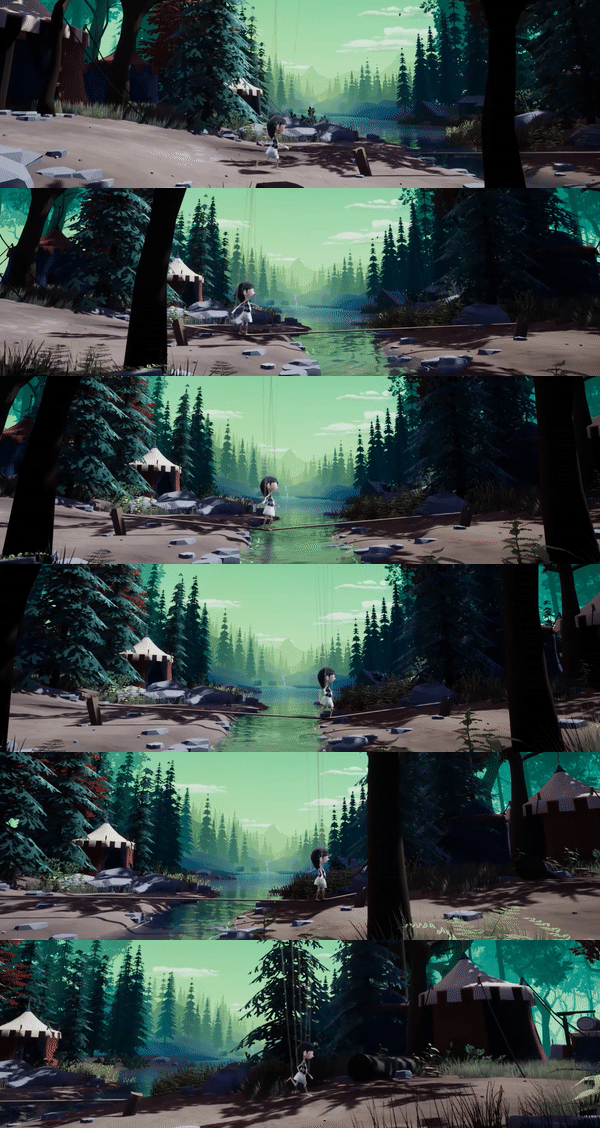
The showcase kept going with games that pushed the technical and creative boundaries that many stereotypes put on indie games: the strategy RPG Star Renegades looks gorgeous with its 3D pixelated hybrid visual style, and Source of Madness, a Lovecraftian action-platformer from the publishers of the SteamWorld games, looks beautiful as well with its nightmarish storybook style. And on a conceptual level, the mere idea behind A Juggler’s Tale is delightful: it’s an action platformer where you control a string puppet who must avoid getting the strings that control her caught in her environment. These are just a few highlights from the Guerilla Collective’s strongest achievement: it showcased the absolutely insane variety of experiences that indie developers bring to the industry.
Of course, this is not to say that the Collective was perfect. It certainly wasn’t—there were more than a few old or reused trailers mixed in with the new announcements at random, for example. Similarly, the show was always going to face pacing issues. Whereas typical gaming press conferences try to keep audiences engaged with big, bombshell announcements, there aren’t very many indie games that can garner a similar reaction. But they did the best they could by showing off such a wide assortment of games from beginning to end over two full days of reveals.
It’s a shame that the traditional industry blowout of E3 was absent this year, but the good part about it has been that indie developers have a bigger stage to shine than ever before. Without massive stage shows from AAA publishers and manufacturers, the stage was open for all these weird and delightful indies to steal our hearts. The Guerilla Collective Showcase wasn’t free from fault, but it nonetheless managed to convey the staggering potential of indie game development. From wildly ambitious action games to intimate and inventive experiences, Guerilla showed that even without the major players of the AAA field, indies can hold their own.




How to Recover Lost Game Files from an External Drive on Mac

Mystery Anime You’ll Regret Starting at Midnight | Part 2

ARC Raiders Frozen Trail Guide: How to Board and Clear the Frigate

Rockstar Games Integrates Advanced Ray Tracing for GTA VI

How to Update Outdated Graphics Drivers for Better Gaming Performance and Higher FPS

The Most Popular Car Game Isn’t Where Players Stay Longest

Canada’s Gaming Audience Is Bigger Than the Old Stereotype

Mystery Anime You’ll Regret Starting at Midnight | Part 1

Anime You’ll Be Glad You Added to Your Fall Watchlist (Part 2) 🍂

WoW Forever Leveling: What Is New on the Road from 1 to 60

MM2 weapon rarity tiers explained for traders

Blox Fruits Physical vs Permanent Fruits: What’s the Difference?

What to Check Before Buying FC 27 Coins Online

Pokémon Announces New Movie With a New Hero and Mimikyu

Double-Sentinel Defensive Holds Disrupt Fast Valorant Site Executes
Canada’s Gaming Audience Is Bigger Than the Old Stereotype
-
 Anime3 weeks ago
Anime You’ll Be Glad You Added to Your Fall Watchlist (Part 2) 🍂
-
 Features3 weeks ago
WoW Forever Leveling: What Is New on the Road from 1 to 60
-
 Esports3 weeks ago
MM2 weapon rarity tiers explained for traders
-
 Features4 weeks ago
Blox Fruits Physical vs Permanent Fruits: What’s the Difference?
-
 Features4 weeks ago
What to Check Before Buying FC 27 Coins Online
-
 Anime4 weeks ago
Pokémon Announces New Movie With a New Hero and Mimikyu
-
 Esports4 weeks ago
Double-Sentinel Defensive Holds Disrupt Fast Valorant Site Executes
-
 Features2 weeks ago
Canada’s Gaming Audience Is Bigger Than the Old Stereotype
-
 Anime2 weeks ago
Mystery Anime You’ll Regret Starting at Midnight | Part 1
-

 Features3 weeks ago
Why Sports Games Keep Getting Better at Simulating the Real Thing
-

 Features3 weeks ago
8 Underrated PC Games Worth Playing in 2026 (That Aren’t Getting the Attention They Deserve)
-
 Features1 week ago
The Most Popular Car Game Isn’t Where Players Stay Longest