
Game Reviews
‘Reaching for Petals’ Loses its Grasp
Reaching for Petals is a gorgeous walking simulator with high aspirations. But does it reach its destination?

There’s been some debate within the gaming community surrounding the definition of a “game.” For some, games need to have a degree of actual gameplay involved to be classified as more than just “experiences.” For others, games are purely a form of art, and as long as there’s even minimal player input something can qualify as a game. At the heart of this debate are “walking simulators,” a somewhat recent genre of game that has players walk around different areas and interact with objects without any real win/loss conditions or traditional gameplay elements.
Reaching for Petals falls into this genre seamlessly. For better and for worse, this game is indeed a walking sim; players will spend almost all of their time walking through beautifully-detailed environments and occasionally performing the…odd jump here and there? It’s strange to fathom why a walking sim would need a jump button in the first place, and it ends up leading to several immersion-breaking instances. Not in the exact perfect the spot? Don’t expect to make the jump. It’s spotty and feels like it was included to add to the hiking aspect of the game, but instead, ends up providing the only moments of frustration in it.
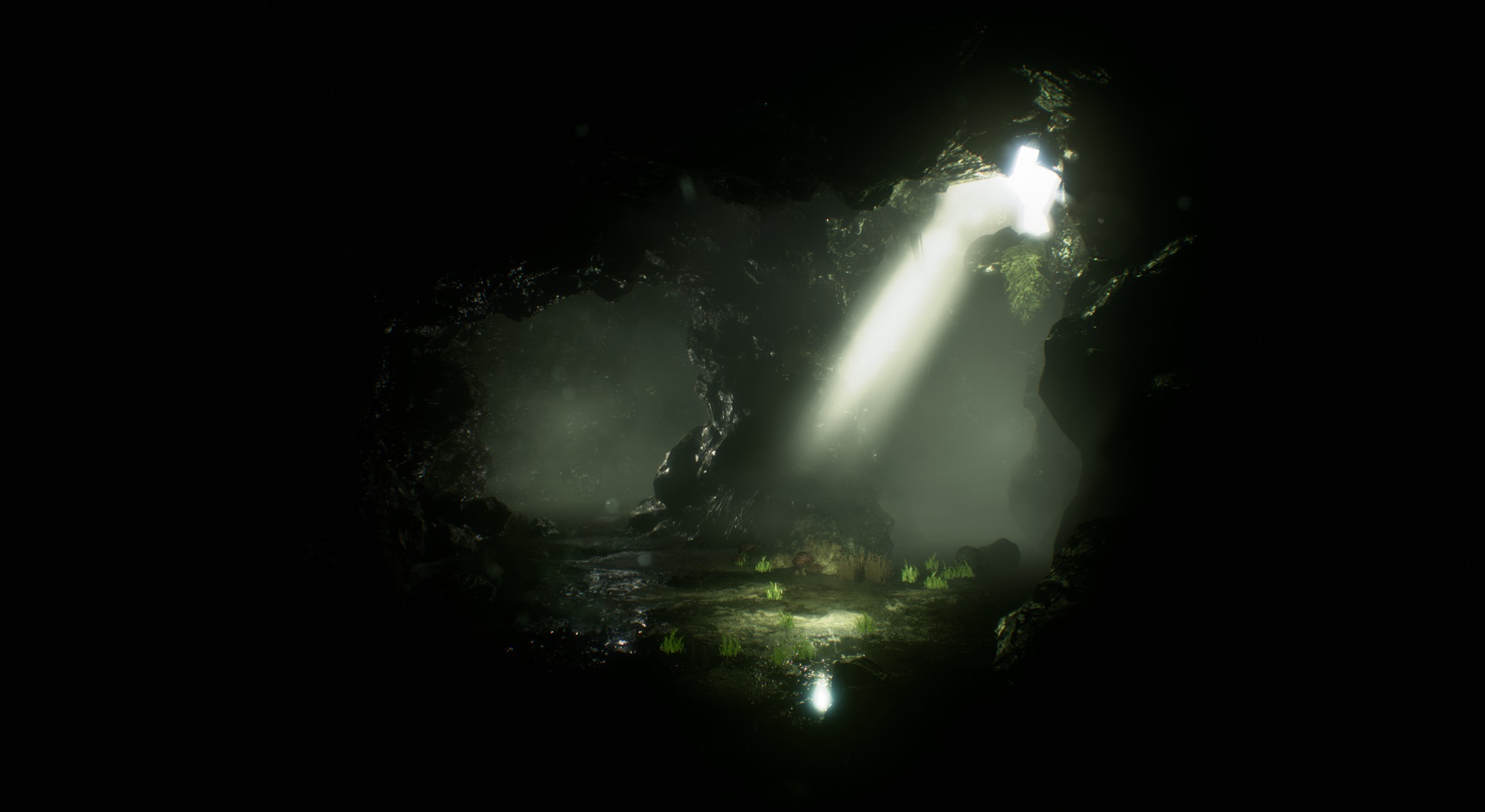
On the positive side, Petals’ greatest strength is undeniably its presentation. There are few games that lend themselves to gorgeous screenshots as well as this one. Forests are rendered in lush detail, sunsets look absolutely breathtaking, and pretty lighting effects do well to immerse the player and give the whole experience a dreamy, yet realistic feel. I did encounter some minor pop-in and texture issues during my time with the game, but it was hardly enough to detract from the overall experience.
Perhaps even more gorgeous, however, is Petals’ score. Composer Gustavo Coutinho thoroughly succeeds at creating a subtle yet expansive soundscape that lends itself perfectly to each of the game’s environments. Music swells and ebbs perfectly with key moments throughout and gradually builds to a startling treat of a listen in the final chapter. Poor environmental sound design bogs things down a bit, but the soundtrack for this one is a clear winner.
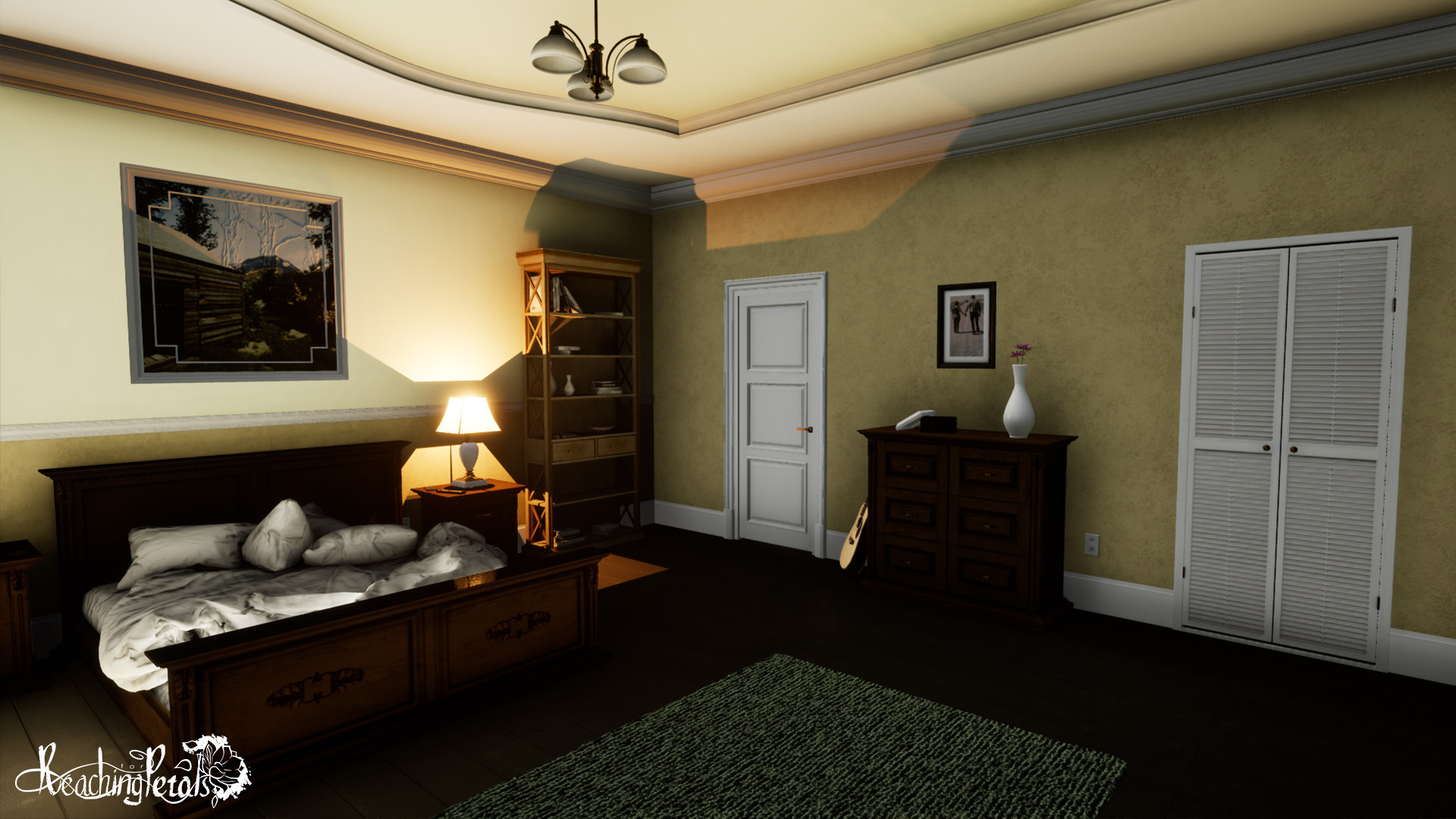
The story of Reaching for Petals is half told through a stellar narrator and half read by the player in short memory sequences. Players take control of Kai as he embarks on a hike and muses over themes like love, loss, memories and the meaning of life itself. It’s a quite somber tale that’s not particularly well-articulated through the game’s writing. Rather, the narrator’s philosophical and poetical ramblings (which, again, are voiced incredibly well), environmental effects and swelling ambient soundtrack work together quite effectively to make the player feel the weight of the journey. Unfortunately, by the time the credits rolled I was ultimately left with something that felt heavy but empty, seemingly meaningful but without any real way to connect the dots.
Herein lies what is perhaps Petals’ greatest downfall: it’s incredibly presumptuous, self-important tone. For as well as the lines are delivered, most of the game’s introspective musings are nothing but poetical fluff. One of the key purposes of philosophy is to seek truth and get to the core of some of life’s greatest questions. Petals tries to accomplish this but simultaneously tries to make this process sound as heady and needlessly fanciful as possible. It’s rare to hear an insight in this game and not think to yourself “Wow, that sounded lovely…but what’s he getting at?” This only shows signs of clearing up towards the game’s final moments, and by then the player is left with more feelings than answers.

So, should you give Reaching for Petals a chance? In the end, it all comes down to what you’re looking for. If you’re simply in search of something aesthetically pleasing, I think you’ll find a lot to like here. From the voice work to the visuals and especially the score, Petals’ presentation shines. If you’re looking for a more hard-hitting game in the same genre, however, there are certainly better options out there. My playthrough took a little under an hour and a half, which might seem steep considering the $10 asking price. If nothing else, you owe it to yourself to pick up the standalone OST for a little less than half that.




How to Recover Lost Game Files from an External Drive on Mac

Mystery Anime You’ll Regret Starting at Midnight | Part 2

ARC Raiders Frozen Trail Guide: How to Board and Clear the Frigate

Rockstar Games Integrates Advanced Ray Tracing for GTA VI

How to Update Outdated Graphics Drivers for Better Gaming Performance and Higher FPS

The Most Popular Car Game Isn’t Where Players Stay Longest

Canada’s Gaming Audience Is Bigger Than the Old Stereotype

Mystery Anime You’ll Regret Starting at Midnight | Part 1

Anime You’ll Be Glad You Added to Your Fall Watchlist (Part 2) 🍂

WoW Forever Leveling: What Is New on the Road from 1 to 60

MM2 weapon rarity tiers explained for traders

Blox Fruits Physical vs Permanent Fruits: What’s the Difference?

What to Check Before Buying FC 27 Coins Online

Pokémon Announces New Movie With a New Hero and Mimikyu

Double-Sentinel Defensive Holds Disrupt Fast Valorant Site Executes
Canada’s Gaming Audience Is Bigger Than the Old Stereotype
-
 Anime3 weeks ago
Anime You’ll Be Glad You Added to Your Fall Watchlist (Part 2) 🍂
-
 Features2 weeks ago
WoW Forever Leveling: What Is New on the Road from 1 to 60
-
 Esports3 weeks ago
MM2 weapon rarity tiers explained for traders
-
 Features4 weeks ago
Blox Fruits Physical vs Permanent Fruits: What’s the Difference?
-
 Features4 weeks ago
What to Check Before Buying FC 27 Coins Online
-
 Anime4 weeks ago
Pokémon Announces New Movie With a New Hero and Mimikyu
-
 Esports4 weeks ago
Double-Sentinel Defensive Holds Disrupt Fast Valorant Site Executes
-
 Features2 weeks ago
Canada’s Gaming Audience Is Bigger Than the Old Stereotype
-
 Features3 weeks ago
Why Sports Games Keep Getting Better at Simulating the Real Thing
-
 Anime2 weeks ago
Mystery Anime You’ll Regret Starting at Midnight | Part 1
-

 Features2 weeks ago
8 Underrated PC Games Worth Playing in 2026 (That Aren’t Getting the Attention They Deserve)
-
 Features1 week ago
The Most Popular Car Game Isn’t Where Players Stay Longest