
Features
Empowering Doubt: An Interview With ‘Timelie’ Creative Director
We discuss the nuances of indie masterpiece Timelie with creative director Parimeth Wongsatayanon, finding hope in infinite possibility.

“Timelie is a canvas that can be anything for anyone.”
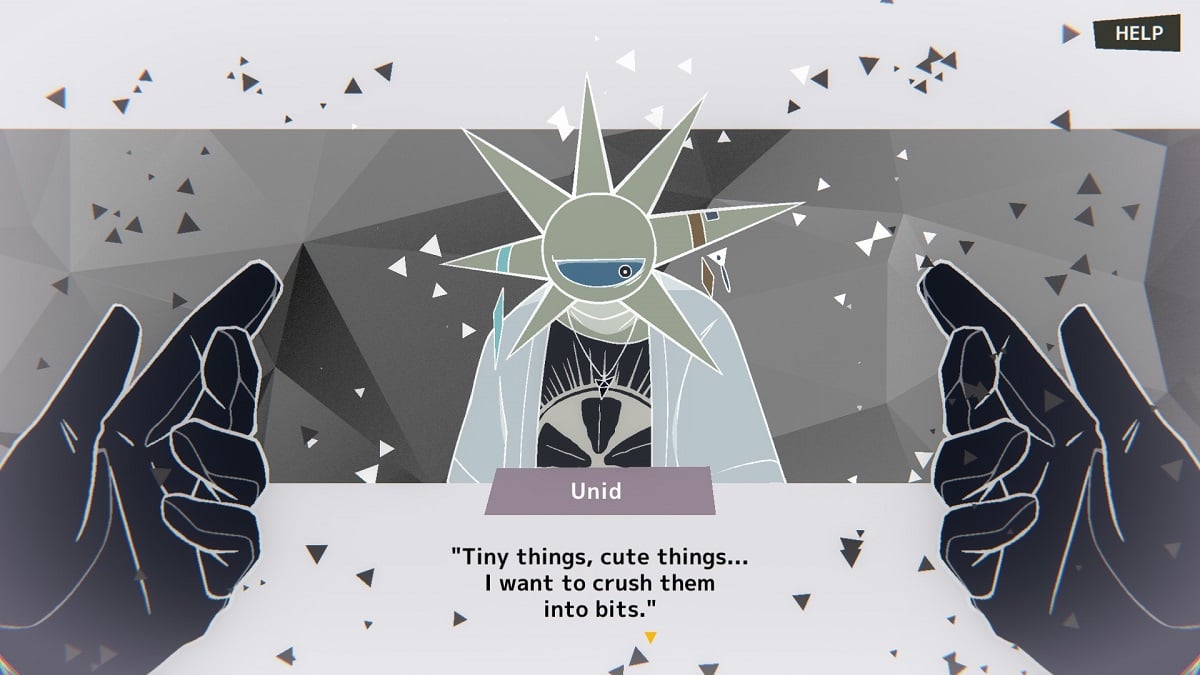
What is reality? Science, philosophy, religion, all seek answers and come up short. No matter the evidence, no answer can escape the doubt of further inquiry. Even the most implausible is possible. Urnique Studios’ Timelie delights in such uncertainty with a narrative built around speculation. Much like our world, the truth behind Timelie’s universe eludes us, shrouded in infinite possibilities.
“We wanted to create a game and a world where a lot of things collide in weird and interesting ways – time, color, sound, just as examples,” says Timelie creative director Parimeth Wongsatayanon.“We want the world to be like a dream state…but also not like one. We want the player questioning and wondering where they are and why. But like some things in life, maybe there’s no real set answer and it’s just about taking in the experiencing and coming to your own conclusions.”
The universe of Timelie is filled with evocative imagery and events. As the player guides the unnamed and (potentially) imprisoned girl through challenge after challenge, the world changes. Haunting, surreal imagery gives way to more knowable environments while perspective shifts make the player question all they think they know. The world is surreal and psychedelic, but it is not aimless, at least from Wongsatayanon’s point of view.
“Everything in [Timelie] happened or exists with a reason,” explains Wongsatayanon. The team went into the game with a vision and story in mind, but instead of telling their tale, they chose to hint at it. For instance, the terrifying syringes that plague the game’s early levels are inspired by the team’s story: there is purpose behind their existence. However, Wongsatayanon is clear, while the imagery draws from his narrative the actual story of Timelie is up to the player. According to Wongsatayanon, “Timelie is a canvas that can be anything for anyone. You can have your own theories. They may be correct or they may be wrong. But, just like the theory of multiple timelines, anything is possible.”
Even the game’s title, Timelie, reflects this infinite possibility. “We wanted to play with the word timeline and add a twist with lie,” says Wongsatayanon. “But, what does that actually mean? Maybe the game is just a big lie that just randomly combines various things together into one experience. Anything can be true…or just another lie.” Perhaps, the play on words refers to how the girl’s time manipulating powers reveal linear time to be illusory. Perhaps, it means the girl’s powers are themselves a lie. Or, perhaps, the title even refers to the gameplay itself.
Reminiscing, Wongsatayanon says: “A few days ago I saw someone who posted online a theory that we can’t know the future and we can’t change the past, but we do it in the game and thus, all that we do in the game ends up being a lie due to that fact. The game is lying to the player in letting them believe they can do those things. We think we can, but it’s just a game. We love to lie to ourselves for the sake of playing it.” But, of course, like with everything else in Timelie, the exact meaning of the title is up to players.
The lies extend beyond time manipulation and into the conception of perfection. The escapes pulled off by the girl – thanks to the player’s planning – require perfect precision. Sometimes, only the slightest of movements and the fewest of seconds separate success from failure. In order to allude enemy sight, the girl most move the right distance at exactly the right moment. Wongsatayanon likens the experience to directing a film with players editing and replaying sections “in their quest to be perfect.”
However, Timelie’s perfection is delusional. The very nature of the game world precludes perfection since depending on how the player chooses to see the game, the escapes may be, for the girl, pointless. If the game is just a dream, planning an escape has no purpose other than the immediate joy of seeing a successful plan work. But, if the game is read as something different (like an internal struggle or alternative dimension) then the player’s actions are important as they improve the girl’s life. Its the player’s discretion, not their performance during gameplay, that decides the girl’s ultimate fate.
Thus, its in infinite possibility that we, and the girl, find hope. The possibilities of Timelie‘s world are limited only by our imagination. Just as with life, players find meaning “how they want and where they want,” says Wongsatayanon. Hope or despair: The decision is ours.





How to Recover Lost Game Files from an External Drive on Mac

Mystery Anime You’ll Regret Starting at Midnight | Part 2

ARC Raiders Frozen Trail Guide: How to Board and Clear the Frigate

Rockstar Games Integrates Advanced Ray Tracing for GTA VI

How to Update Outdated Graphics Drivers for Better Gaming Performance and Higher FPS

The Most Popular Car Game Isn’t Where Players Stay Longest

Canada’s Gaming Audience Is Bigger Than the Old Stereotype

Mystery Anime You’ll Regret Starting at Midnight | Part 1

Anime You’ll Be Glad You Added to Your Fall Watchlist (Part 2) 🍂

WoW Forever Leveling: What Is New on the Road from 1 to 60

MM2 weapon rarity tiers explained for traders

One Piece Is Everywhere Right Now – and It’s Exposing a Problem With How Gaming Teaches Players to Gamble

Why Game Clips Stall on Instagram Reels

Blox Fruits Physical vs Permanent Fruits: What’s the Difference?

What to Check Before Buying FC 27 Coins Online

Can You Stream Kick on Xbox: Complete Guide for Xbox Users
-
 Anime3 weeks ago
Anime You’ll Be Glad You Added to Your Fall Watchlist (Part 2) 🍂
-
 Features2 weeks ago
WoW Forever Leveling: What Is New on the Road from 1 to 60
-
 Esports3 weeks ago
MM2 weapon rarity tiers explained for traders
-
 Features4 weeks ago
One Piece Is Everywhere Right Now – and It’s Exposing a Problem With How Gaming Teaches Players to Gamble
-
 Social Media4 weeks ago
Why Game Clips Stall on Instagram Reels
-
 Features4 weeks ago
Blox Fruits Physical vs Permanent Fruits: What’s the Difference?
-
 Features4 weeks ago
What to Check Before Buying FC 27 Coins Online
-
 Social Media4 weeks ago
Can You Stream Kick on Xbox: Complete Guide for Xbox Users
-

 Anime4 weeks ago
Pokémon Announces New Movie With a New Hero and Mimikyu
-
 Esports4 weeks ago
Double-Sentinel Defensive Holds Disrupt Fast Valorant Site Executes
-
 Features2 weeks ago
Canada’s Gaming Audience Is Bigger Than the Old Stereotype
-
 Anime2 weeks ago
Mystery Anime You’ll Regret Starting at Midnight | Part 1