
Features
Canada’s Gaming Audience Is Bigger Than the Old Stereotype

Ask someone to picture a gamer and there is a fair chance they will still imagine a teenage boy sitting in front of a console. It is a stubborn image, repeated in films, advertising, and every tired joke about people living in their parents’ basements.
It is also increasingly useless.
Gaming in Canada stretches across generations, devices, and lifestyles. The person completing a word puzzle during a commute belongs to the same broad culture as the player spending Saturday night learning a difficult boss fight. They may never play the same title, but both have helped turn gaming into an ordinary part of Canadian life.
The Phone Changed Who Gets to Play
The Entertainment Software Association of Canada’s 2025 Power of Play research surveyed 1,521 Canadian players aged 16 and older who played for at least one hour each week. Mobile devices were the first choice for 52 percent of respondents, compared with 25 percent for consoles and VR and 22 percent for computers.
That should not surprise anyone who has watched gaming escape the living room.
A phone removes most of the preparation once associated with the hobby. There is no television to claim, no collection of cables to untangle, and no need to promise the next three hours to a single game. Players can solve one puzzle, finish a daily challenge, or continue a campaign from wherever they happen to be.
Mobile gaming is not automatically shallow gaming either. Touchscreens now host strategy games, RPGs, competitive shooters, deck-builders, and narrative adventures. The quality varies wildly, of course, but that has always been true of every platform.
Sometimes the Small Screen Creates a Bigger Community
Mobile play can look solitary from the outside. Everyone is staring at a personal screen, usually while wearing headphones and ignoring the world around them. Yet some of the most memorable mobile games use that screen to create connections.
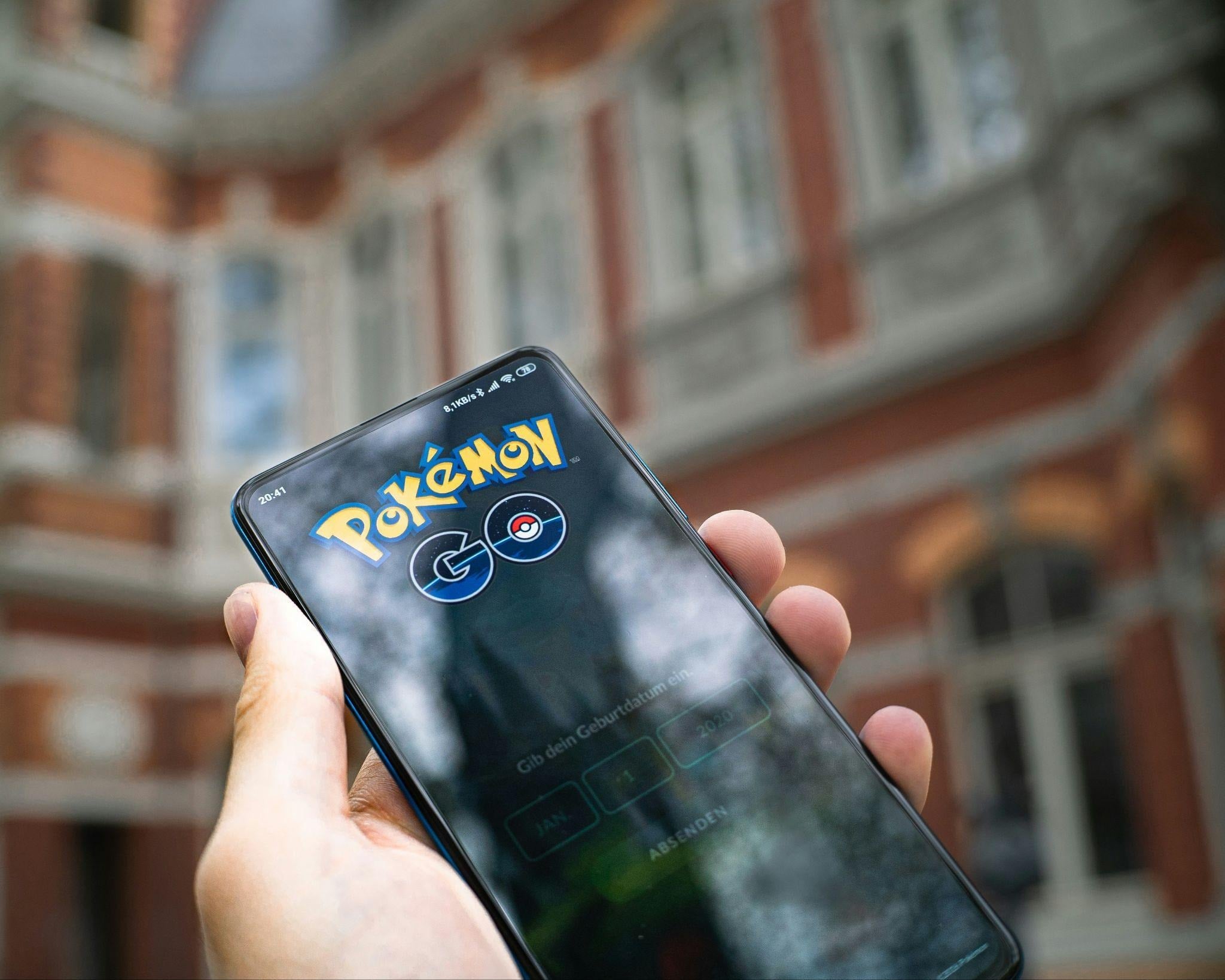
Attending a Pokémon Go meet-up in Montréal captured that contradiction beautifully. Pokémon Go gave everyone an individual collection to build, but its map, gyms, and shared locations encouraged players to occupy the same real-world spaces.
The phone was not a wall between those players. It was the reason they started talking.
That idea remains central to modern gaming. A personal device can still support a shared experience, whether players are meeting outside, working together online, or arguing in a group chat about who ruined the last match.
One Screen Can Hold Completely Different Experiences
“Mobile game” is now such a broad label that it barely describes the activity. Two people can use identical phones while playing games that share no mechanics, goals, or audience.
One might be managing a football club. Another could be exploring a fantasy world, solving a crossword, or competing in a shooter. The device provides the touchscreen, but the rules decide what the player is actually doing.
That variety extends to digital entertainment beyond conventional video games. Jackpot City’s Canadian online slots, for example, include classic three-reel games and modern video formats that can be accessed on desktop and mobile devices. These are chance-based casino games, not video games in the sense measured by ESAC, but they reinforce the same point: knowing the screen tells us almost nothing about the experience behind it.
Genre, rules, and player expectations remain far more useful than the hardware alone.
The Audience Is Not Who Marketing Once Told Us It Was
The ESAC findings also challenge assumptions about age and gender. Women accounted for 51 percent of Canadian respondents. Players aged 35 to 54 represented 37 percent of the sample, while those aged 55 and older accounted for another 35 percent.
Puzzle games were the most popular genre, selected by 59 percent of Canadian players. Action games followed at 39 percent.
Those numbers do not mean that younger enthusiasts or dedicated console players have disappeared. The audience has simply grown around them. Gaming now has room for someone who buys one enormous RPG each year and someone who plays a daily puzzle for ten minutes before breakfast.
The Power of Play findings for Canada also show why people return. Fifty-one percent used video games to stay connected with friends and family, while 43 percent had met a good friend, spouse, or significant other through gaming.
That sounds less like an antisocial hobby and more like another place where modern relationships happen.
Canada Is Still Building What Comes Next
Canada is not only home to a broad gaming audience. It continues to support the people making games.
In July 2026, the Canada Media Fund announced more than $18 million for 20 interactive digital media projects. Ten video games received approximately $8.85 million in production funding, with projects based in Ontario, Québec, and British Columbia. Nine additional games and one interactive or immersive experience received support through a separate program.
Major studios may attract the headlines, but smaller teams prevent Canadian gaming from becoming creatively predictable. They bring different stories, mechanics, and perspectives to an audience that is already far more varied than the stereotype suggests.
There is no single Canadian gamer anymore, if there ever was one. That is not a crisis of identity for gaming. It is proof that the medium has finally become large enough to contain almost everyone.
Image source: Unsplash



Canada’s Gaming Audience Is Bigger Than the Old Stereotype

Mystery Anime You’ll Regret Starting at Midnight | Part 1

From Consoles to Phones: How Canadian Gaming Became an Anytime Experience

8 Underrated PC Games Worth Playing in 2026 (That Aren’t Getting the Attention They Deserve)

WoW Forever Leveling: What Is New on the Road from 1 to 60

Why Sports Games Keep Getting Better at Simulating the Real Thing

MM2 weapon rarity tiers explained for traders

Why Esports Platforms Need Different Payment Rails Than Traditional Game Stores

6 Years Later, Haikyu!! Returns in the Last Way Fans Expected

Anime You’ll Be Glad You Added to Your Fall Watchlist (Part 2) 🍂

How to Fix Lag in Games Once and For All
WoW Forever Leveling: What Is New on the Road from 1 to 60

One Piece Is Everywhere Right Now – and It’s Exposing a Problem With How Gaming Teaches Players to Gamble

Can You Stream Kick on Xbox: Complete Guide for Xbox Users

What to Check Before Buying FC 27 Coins Online

Blox Fruits Physical vs Permanent Fruits: What’s the Difference?
-
 Anime4 weeks ago
6 Years Later, Haikyu!! Returns in the Last Way Fans Expected
-
 Anime1 week ago
Anime You’ll Be Glad You Added to Your Fall Watchlist (Part 2) 🍂
-
 Technology3 weeks ago
How to Fix Lag in Games Once and For All
-
 Features5 days ago
WoW Forever Leveling: What Is New on the Road from 1 to 60
-
 Features3 weeks ago
One Piece Is Everywhere Right Now – and It’s Exposing a Problem With How Gaming Teaches Players to Gamble
-
 Social Media3 weeks ago
Can You Stream Kick on Xbox: Complete Guide for Xbox Users
-
 Features2 weeks ago
What to Check Before Buying FC 27 Coins Online
-
 Features2 weeks ago
Blox Fruits Physical vs Permanent Fruits: What’s the Difference?
-
 Esports1 week ago
MM2 weapon rarity tiers explained for traders
-

 Social Media3 weeks ago
Why Game Clips Stall on Instagram Reels
-

 Features3 weeks ago
From Arcade Cabinets to Digital Cards: The Psychology of the Push-Your-Luck Mechanic
-

 Features4 weeks ago
What Even Happened to Cloud Gaming?