
Games That Changed Our Lives
Inside the Mines Game: Origins, Variations, and Interesting Facts

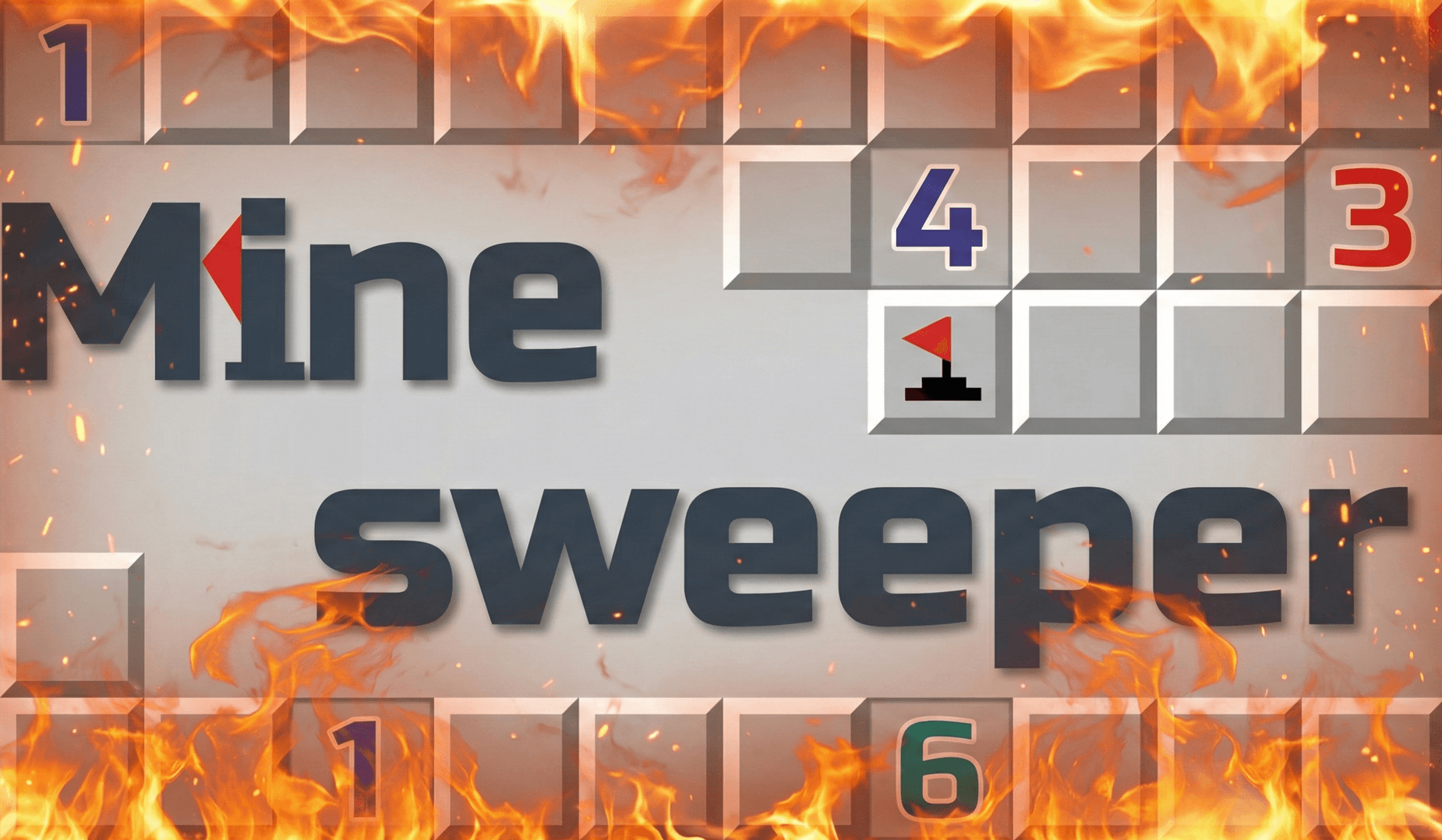
If you used a computer in the 1990s, you probably clicked a grey square on a grid and held your breath. Maybe you hit a number. Maybe you hit a bomb. Either way, you remember the feeling. That game was Minesweeper, and it quietly became one of the most played video games in history without anyone really thinking of it as a “real” game.
Fast forward to today, and that same idea lives on in an unexpected place: online casinos. The Mines game took everything people loved about the old puzzle and turned it into something you can actually win money on. But how did we get from a boring-looking Windows app to a crypto casino favorite?
A Game Nobody Planned to Make Famous
The very first game that looked like Minesweeper wasn’t made by Microsoft. It was called Mined-Out, and a developer named Ian Andrew created it in 1983 for the Sinclair Spectrum, a small home computer popular in the UK. The game had a simple goal: walk through a minefield without stepping on anything explosive. There were no fancy graphics, no colors, nothing flashy. Just a grid and your brain.
But the version everyone remembers showed up in 1990. Robert Donner and Curt Johnson, both Microsoft employees, created Minesweeper for the Windows Entertainment Pack. Two years later, Microsoft bundled it into Windows 3.1, and suddenly it was sitting on millions of desktops around the world.
Here’s the funny part: Microsoft didn’t include Minesweeper because they thought it was an amazing game. They included it to teach people how to use a mouse. Left-click to open a square, right-click to flag a mine. For many office workers in the early ’90s, this was genuinely how they learned to use their computer’s mouse. The game was a training tool disguised as entertainment.
How Classic Minesweeper Actually Works
For anyone who never figured out the rules (and let’s be honest, millions of people just clicked randomly and hoped for the best), the original Minesweeper is a logic puzzle. You get a grid of covered squares. Some squares hide mines. The rest are safe.
When you click a safe square, it shows a number. That number tells you how many mines are touching that square (including diagonally). If a square has no mines around it at all, it opens up blank, and all the safe squares next to it open up too.
The classic Windows version had three difficulty levels:
| Difficulty | Grid Size | Number of Mines |
| Beginner | 9 × 9 | 10 |
| Intermediate | 16 × 16 | 40 |
| Expert | 30 × 16 | 99 |
Your job was to open every safe square without clicking on a mine. No score, no points. Just a timer counting how fast you could solve the board. Simple enough, but weirdly addictive.
When Mines Left the Office and Entered the Casino
Somewhere around 2019–2021, game developers looked at the Minesweeper concept and asked a pretty obvious question: what if you could bet money on it?
Spribe, a Ukrainian game studio founded in 2018, was one of the first companies to release a gambling version. Their take stripped away the logic puzzle and replaced it with pure risk. Instead of using numbers to figure out where mines were hiding, you just picked tiles and hoped.
The casino version works on a 5×5 grid with 25 tiles. Before each round, you choose how many mines (bombs) you want hidden on the board. The rest of the tiles contain gems or stars. Every time you click a safe tile, your payout multiplier goes up. You can stop and cash out at any time, or keep going for a bigger win. Hit a mine, and you lose your bet.
That cash-out mechanic is what makes the game so tense. After three safe clicks, you might be sitting on a 2x multiplier. Do you take the money? Or do you press your luck and go for four, five, six safe tiles? Each click gets riskier because there are fewer safe tiles left.
What Makes the Casino Version Different
The differences between classic Minesweeper and the casino Mines game go deeper than just money. Here’s how the two compare:
- Classic Minesweeper uses numbers as clues to help you figure out where mines are. The casino version gives you zero information; every click is a guess.
- In Minesweeper, you can flag squares you think are mines. In the casino version, there’s no flagging, no strategy based on logic, just probability and your own nerve.
- Minesweeper has a fixed number of mines per difficulty setting. In casino Mines, you pick how many mines you want, anywhere from 1 to 24 on a 25-tile grid.
- The original game has no money involved. The casino version is built entirely around betting and cashouts.
This flexibility in choosing mine count is actually one of the smartest design choices. With just 1 mine on the board, you have a 96% chance of hitting a safe tile on your first click (24 safe tiles out of 25). With 20 mines, that first-click probability drops to 20%. You’re basically choosing your own difficulty and potential reward every single round.
The Math Behind Those Multipliers
If you want to play Mines at BetFury or at any other crypto casino, it helps to understand the numbers. The game’s payout system is based on probability, and it’s surprisingly transparent.
The math is straightforward. On a 25-tile grid with 3 mines, your chance of hitting a safe tile on the first pick is 22 out of 25, or 88%. Each successful click slightly reduces your odds because there are fewer safe tiles left. The cumulative chance of three safe picks in a row drops to about 67%.
Most casinos apply a house edge (usually between 1% and 3%) and pay you based on how unlikely your streak was. More mines and more revealed tiles means a higher multiplier.
Here’s a simplified look at approximate first-click multipliers based on mine count:
| Mines on Board | Safe Tiles | First-Click Win Chance | Approximate Multiplier |
| 1 | 24 | 96% | 1.03x |
| 3 | 22 | 88% | 1.12x |
| 5 | 20 | 80% | 1.23x |
| 10 | 15 | 60% | 1.65x |
| 20 | 5 | 20% | 4.95x |
The RTP (return to player) in most versions sits between 97% and 99%, which is better than the average slot machine. That said, “better odds” doesn’t mean guaranteed wins. Variance is real, and the short-term swings can be brutal.
Why Did This Game Blow Up in Crypto Casinos?
Mines became especially popular on cryptocurrency gambling platforms for a few reasons. The game is provably fair, which means every round uses a cryptographic system that players can verify after the fact. You get a server seed and a client seed, and you can check that the mine positions were set before you started clicking. This kind of transparency matters to people who gamble with Bitcoin or Ethereum, because trust is everything when there’s no traditional regulator watching.
The game also suits the crypto audience because rounds are fast (often under 30 seconds), bets can be tiny, and the interface works well on phones.
Spribe’s version was the first to gain traction, but competitors followed quickly. Turbo Games released Turbo Mines, BGaming launched their own Minesweeper, and platforms like Stake created in-house Mines originals. The core mechanic stayed the same across all of them: pick tiles, avoid bombs, cash out when you’re satisfied.
Odd Facts Most People Don’t Know
The original Minesweeper attracted some genuinely strange controversy. In 1999, a campaign called the International Campaign to Ban Winmine argued that the game was insensitive to landmine victims. Microsoft responded by creating a “Flower Field” version for certain regions, replacing mines with flowers. The game was literally renamed Flower Power in some countries.
When Windows 8 launched in 2012, Microsoft removed Minesweeper from the default installation for the first time in 20 years. They moved it to the Windows Store as a free but ad-supported download. Multiple news outlets called the decision “greedy.”
And here’s something most people forget: Minesweeper was never really a Microsoft invention. Donner and Johnson, the developers, admitted they borrowed the design from another game. They just couldn’t remember which one. Ian Andrew, the creator of Mined-Out, has always claimed Microsoft copied his idea. Microsoft denies it.
Where Mines Stands Now
The game has come a long way from grey squares on a Windows 3.1 desktop. Today, the casino version pulls in players across dozens of platforms, and the classic puzzle version still gets played billions of times through browser clones and mobile apps.
What keeps Mines relevant after 40-plus years? Probably the same thing that made it work in the first place. You look at a grid, you pick a square, and for a split second, you have no idea what’s going to happen next. That tiny moment of suspense hasn’t gotten old since 1983.



How to Recover Lost Game Files from an External Drive on Mac

Mystery Anime You’ll Regret Starting at Midnight | Part 2

ARC Raiders Frozen Trail Guide: How to Board and Clear the Frigate

Rockstar Games Integrates Advanced Ray Tracing for GTA VI

How to Update Outdated Graphics Drivers for Better Gaming Performance and Higher FPS

The Most Popular Car Game Isn’t Where Players Stay Longest

Canada’s Gaming Audience Is Bigger Than the Old Stereotype

Mystery Anime You’ll Regret Starting at Midnight | Part 1

Anime You’ll Be Glad You Added to Your Fall Watchlist (Part 2) 🍂

WoW Forever Leveling: What Is New on the Road from 1 to 60

MM2 weapon rarity tiers explained for traders

Blox Fruits Physical vs Permanent Fruits: What’s the Difference?

What to Check Before Buying FC 27 Coins Online

Can You Stream Kick on Xbox: Complete Guide for Xbox Users

Pokémon Announces New Movie With a New Hero and Mimikyu

Double-Sentinel Defensive Holds Disrupt Fast Valorant Site Executes
-
 Anime3 weeks ago
Anime You’ll Be Glad You Added to Your Fall Watchlist (Part 2) 🍂
-
 Features2 weeks ago
WoW Forever Leveling: What Is New on the Road from 1 to 60
-
 Esports3 weeks ago
MM2 weapon rarity tiers explained for traders
-
 Features4 weeks ago
Blox Fruits Physical vs Permanent Fruits: What’s the Difference?
-
 Features4 weeks ago
What to Check Before Buying FC 27 Coins Online
-
 Social Media4 weeks ago
Can You Stream Kick on Xbox: Complete Guide for Xbox Users
-
 Anime4 weeks ago
Pokémon Announces New Movie With a New Hero and Mimikyu
-
 Esports4 weeks ago
Double-Sentinel Defensive Holds Disrupt Fast Valorant Site Executes
-
 Features2 weeks ago
Canada’s Gaming Audience Is Bigger Than the Old Stereotype
-
 Anime2 weeks ago
Mystery Anime You’ll Regret Starting at Midnight | Part 1
-
 Features1 week ago
The Most Popular Car Game Isn’t Where Players Stay Longest
-
 Features3 weeks ago
Why Sports Games Keep Getting Better at Simulating the Real Thing