
Features
How Balatro Became One of the Most Addictive Roguelikes

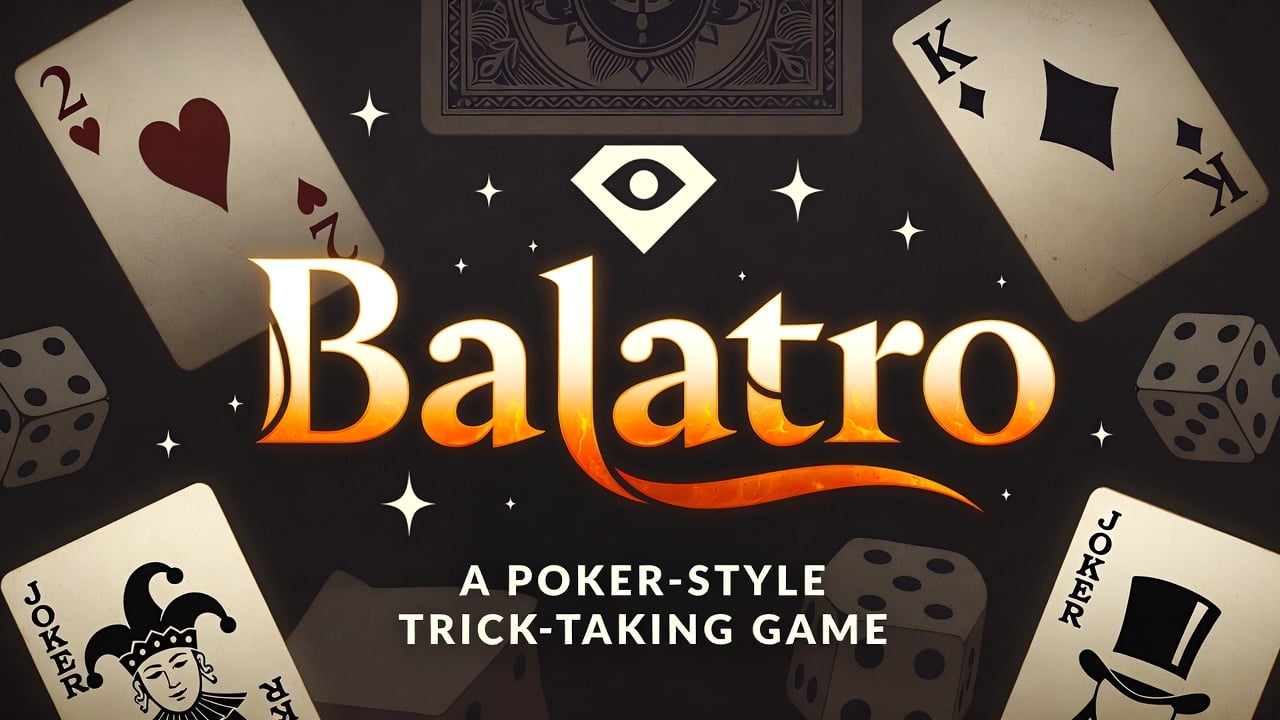
A single person made it. That fact still catches people off guard when they hear it, because Balatro plays like something a full studio would spend years polishing. LocalThunk, the solo developer behind the game, built the entire thing over 2 and a half years. The inspirations were Big Two, a popular card game in parts of Asia, and Luck Be a Landlord, a roguelike slot machine game. Neither of those references would suggest what Balatro became: a poker-themed deck-builder that sold over 1 million copies in its first month and earned $1 million in gross revenue within 8 hours of going live. Playstack published it. The rest was momentum.
By January 2025, sales had hit 5 million units. The mobile ports pulled in $1 million during their first week and $4.4 million across 2 months. The Metacritic score sits at 90. At The Game Awards 2024, Balatro took home Best Independent Game, Best Debut Indie Game, and Best Mobile Game. It was also nominated for Game of the Year, making it the first solo-developed project to ever receive that nomination. Then, at the 25th Game Developers Choice Awards, it won Game of the Year outright, along with Best Debut, Innovation Award, and Best Design. BAFTA gave it Debut Game. The DICE Awards handed it Outstanding Achievement for an Independent Game, Strategy/Simulation Game of the Year, and Mobile Game of the Year.
So how did a card game about fake poker hands become this embedded in people’s lives?
Why Poker Mechanics Work Better as Fiction
Balatro borrows from poker but strips away real stakes, and that distinction matters. Games like solitaire, blackjack sims, and casino games have long used card logic to hold a player’s attention, but Balatro does something different by layering roguelike progression on top of familiar hand rankings. The result is a system where luck and strategy feed into each other across every run.
PEGI originally rated the game 18, partly due to its poker imagery, but reclassified it to a 12 rating in February 2025 after determining the fantastical elements removed it from any gambling context.
The Joker System and Why Runs Never Feel the Same
Balatro gives players a hand of cards and asks them to form poker hands to meet escalating score targets. That description sounds simple because the base mechanic is simple. Where the game gets its teeth is in the Joker cards, which are modifiers you collect between rounds. Each Joker changes the math in a different way. Some multiply the score of a specific hand type. Others activate when certain card suits or ranks appear. A few break the scoring rules entirely.
Because the Jokers you find are randomized, every run has a different internal logic. You might build a run around flushes one time and full houses the next, depending on what the shop offers you. The decisions stack. Selling a Joker to afford a better one, holding onto a weak card because it synergizes with a modifier you picked up 3 rounds ago, choosing when to skip a blind to preserve your resources. These choices feel meaningful because the feedback loop is immediate. You play a hand, the score ticks up with visible multipliers, and you see the consequence of your build right there on the screen.
Small Budget, Tight Design
LocalThunk worked alone, and that constraint produced a game with almost no excess. There are no cutscenes, no voice acting, no open world maps, no branching dialogue. The entire game is cards, modifiers, and numbers. The visual presentation leans on retro pixel art with a CRT filter, and the soundtrack sits in the background without demanding attention. Everything serves the loop.
That restraint helps explain why the game runs on nearly any device and why the mobile version performed so well financially. There was no complex porting process or stripped-down version for phones. The game was already compact enough to work on a smaller screen with touch controls.
When a TV Writer Calls Your Game the Most Addictive Thing Ever Made
Charlie Brooker, the creator of Black Mirror, called Balatro “possibly the most addictive thing ever created.” A scene in Black Mirror Season 7’s episode “Hotel Reverie” shows a character playing the game. Brooker had already been vocal about his own compulsive relationship with it before the episode aired.
That kind of cultural placement doesn’t happen because a marketing team arranged it. It happened because someone with a large platform could not stop playing.
What Comes Next
LocalThunk had planned a major update for 2025 but pushed it to 2026. The stated reason was to avoid crunch, which is a consistent problem in game development that solo developers can choose to sidestep when they control the schedule. The delay signals that LocalThunk is still actively working on the game and not moving on to something else.
A Game That Earns Its Grip
Balatro holds people because every run teaches them something new about how the systems interact. The scoring is transparent, the mechanics are learnable, and the randomization keeps the decision space from going stale. 5 million copies sold, a 90 on Metacritic, and a Game of the Year win at the Game Developers Choice Awards. For a game made by 1 person, those numbers speak with enough volume on their own.



How to Recover Lost Game Files from an External Drive on Mac

Mystery Anime You’ll Regret Starting at Midnight | Part 2

ARC Raiders Frozen Trail Guide: How to Board and Clear the Frigate

Rockstar Games Integrates Advanced Ray Tracing for GTA VI

How to Update Outdated Graphics Drivers for Better Gaming Performance and Higher FPS

The Most Popular Car Game Isn’t Where Players Stay Longest

Canada’s Gaming Audience Is Bigger Than the Old Stereotype

Mystery Anime You’ll Regret Starting at Midnight | Part 1

Anime You’ll Be Glad You Added to Your Fall Watchlist (Part 2) 🍂

WoW Forever Leveling: What Is New on the Road from 1 to 60

MM2 weapon rarity tiers explained for traders

Blox Fruits Physical vs Permanent Fruits: What’s the Difference?

What to Check Before Buying FC 27 Coins Online

Can You Stream Kick on Xbox: Complete Guide for Xbox Users

Pokémon Announces New Movie With a New Hero and Mimikyu

Double-Sentinel Defensive Holds Disrupt Fast Valorant Site Executes
-
 Anime3 weeks ago
Anime You’ll Be Glad You Added to Your Fall Watchlist (Part 2) 🍂
-
 Features2 weeks ago
WoW Forever Leveling: What Is New on the Road from 1 to 60
-
 Esports3 weeks ago
MM2 weapon rarity tiers explained for traders
-
 Features4 weeks ago
Blox Fruits Physical vs Permanent Fruits: What’s the Difference?
-
 Features4 weeks ago
What to Check Before Buying FC 27 Coins Online
-
 Social Media4 weeks ago
Can You Stream Kick on Xbox: Complete Guide for Xbox Users
-
 Anime4 weeks ago
Pokémon Announces New Movie With a New Hero and Mimikyu
-
 Esports4 weeks ago
Double-Sentinel Defensive Holds Disrupt Fast Valorant Site Executes
-
 Features2 weeks ago
Canada’s Gaming Audience Is Bigger Than the Old Stereotype
-
 Anime2 weeks ago
Mystery Anime You’ll Regret Starting at Midnight | Part 1
-
 Features1 week ago
The Most Popular Car Game Isn’t Where Players Stay Longest
-

 Features3 weeks ago
Why Sports Games Keep Getting Better at Simulating the Real Thing