
Features
Gran Turismo (1997) Now Finishes in Last Place
No longer the real driving simulator.

1997 Flashback: Gran Turismo
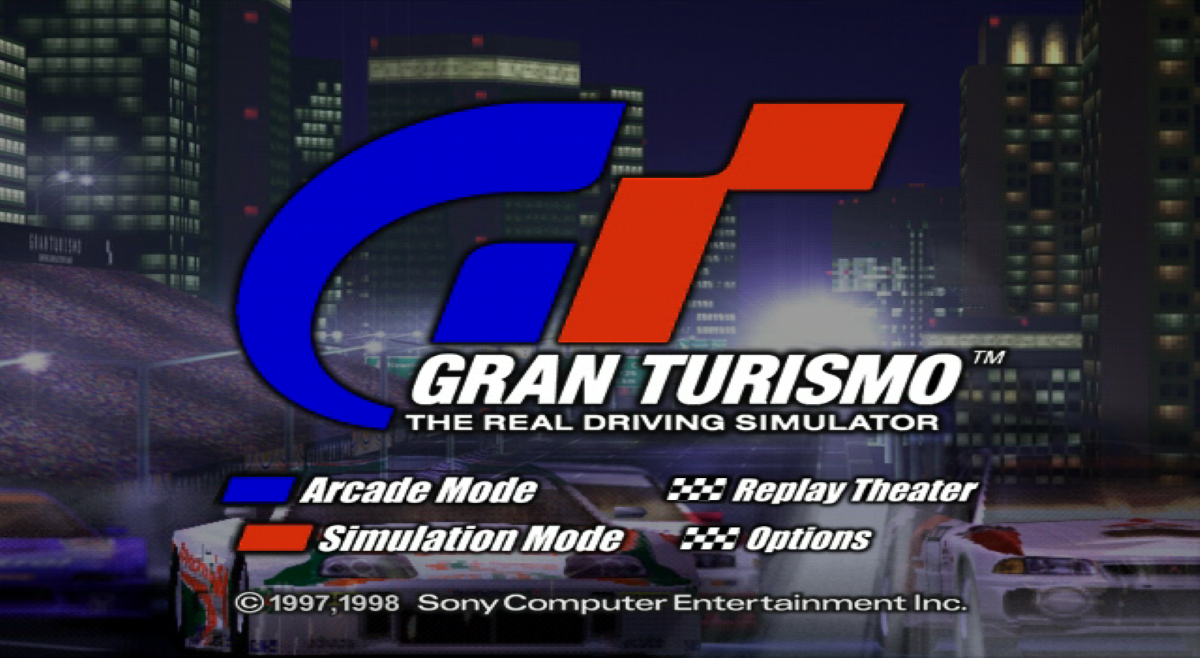
For a self-proclaimed real driving simulator, the original Gran Turismo must have seemed very unreal to those playing it in 1997, judging by its quality relative to the time. And whilst that quality most definitely doesn’t hold up today, it’s still worth looking back at what made it such a high octane, unencumbered, no holds barred race to the finish line.
For starters, there’s that legendary intro sequence which starts out on a silent and deserted race track. Gradually, the music picks up, vehicles begin flying by and the names of car manufacturers barrage the screen in one fast-paced racing orgy. It’s epic, memorable, and damn near sends a tingle up one’s spine. Once over, it just makes the player want to get out there on the circuit and dip into some of the car makes for themselves. Video game intros were never meant to be this good in 1997.
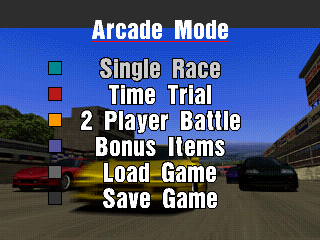
Of course, when first starting out, none of the car makes that the player delves into are going to be all that exceptional. That’s what gaining new licenses and winning races are for. To move up the grades and get hold of a better set of wheels, those activities are going to have to be engaged in so as to buy new cars with the prize money. It’s all part of GT or ‘Simulation’ mode, which cleverly lays out a clear progression system for the player to partake in. In today’s parlance, it’s basically story mode, and not every racing title at the time had one. Clearly, Gran Turismo was here to be much more than just an arcade racer (although, incidentally, it does have a designated Arcade Mode).
The other great time-dependent thing about the original Gran Turismo is its greater emphasis on realism when compared with the Need for Speed and Ridge Racer titles of the time. After all, it wasn’t called the real driving simulator for nothing – a clear statement on the part of the developers, and one which gamers at the time appreciated and understood. Here was a racer that they could really bite their teeth into over a long period of time, rather than just going out for a test drive or a quick spin. The only thing missing was vehicle damage, something which the later Forza Motorsport series would more than remedy.
And speaking of biting one’s teeth into a game, Gran Turismo sure does pack in a lot of content with which to do it. 180 cars and 11 tracks may not seem like a lot to us today, spoilt for choice as we are with Gran Turismo 7, but back in 1997 those numbers carried a lot of weight. To take one example, Need for Speed II from that same year could manage only 12 cars and 7 tracks. Yikes! Plus, barely any of those tracks can come close to the sheer epicness that is High Speed Ring, Deep Forest Raceway or Trial Mountain.
The reason why Gran Turismo hasn’t aged so well is due to the simple fact that racers in general don’t tend to age well. Unlike an adventure or RPG game, racers aren’t usually driven by ideas, narrative or storyline – all three of which are capable of lending a timeless quality to any game when executed right. By contrast, when it comes to racing (and especially the type of racing engendered by Gran Turismo), what matters most is, well . . . racing. And for that, visuals and gameplay are primary.
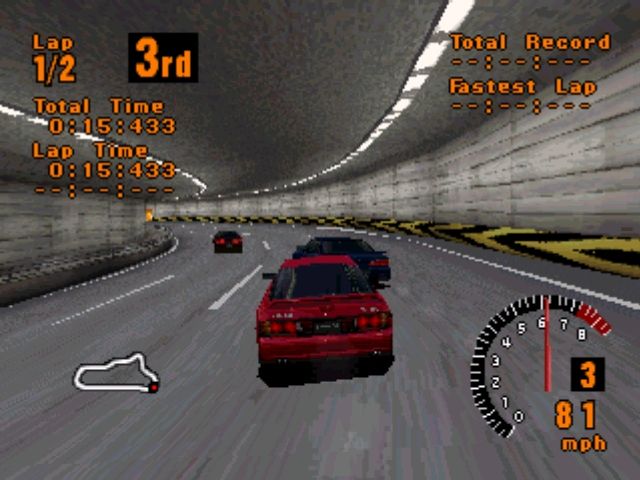
Unfortunately, as we all know, visuals and gameplay can easily be outdated and replaced by even better visuals and gameplay, ad infinitum. Which is why we need a new Gran Turismo game every few years, and why a racer is only ever as good as the technology of the day. Note how that’s emphatically not the case for quirky games with timeless art styles like, say, Mario or some of the classic Nintendo hits. So, ironically, by trying to be the real driving simulator, Gran Turismo is now very much the opposite of that 25 years later.
Still, such was its influence that Gran Turismo spawned a great franchise which soon took the reins (or, in this case, the steering wheel) and overtook Ridge Racer, remaining in pole position until the emergence of Forza Motorsport. Now it’s firmly back in the running with the emergence of Gran Turismo 7, going head to head with its competitors, although Need for Speed has also seen something of a resurgence as of late.
So, yes, Gran Turismo is still worth looking back at for its enduring legacy and historical significance. But is it still worth playing through in 2022?
Probably not.




Table and Mini Games In Grand Theft Auto 6 – What Can We Expect?

How to Recover Lost Game Files from an External Drive on Mac

Mystery Anime You’ll Regret Starting at Midnight | Part 2

ARC Raiders Frozen Trail Guide: How to Board and Clear the Frigate

Rockstar Games Integrates Advanced Ray Tracing for GTA VI

How to Update Outdated Graphics Drivers for Better Gaming Performance and Higher FPS

The Most Popular Car Game Isn’t Where Players Stay Longest

Canada’s Gaming Audience Is Bigger Than the Old Stereotype

Anime You’ll Be Glad You Added to Your Fall Watchlist (Part 2) 🍂

WoW Forever Leveling: What Is New on the Road from 1 to 60

MM2 weapon rarity tiers explained for traders
Canada’s Gaming Audience Is Bigger Than the Old Stereotype

Why Sports Games Keep Getting Better at Simulating the Real Thing

8 Underrated PC Games Worth Playing in 2026 (That Aren’t Getting the Attention They Deserve)

Mystery Anime You’ll Regret Starting at Midnight | Part 1
The Most Popular Car Game Isn’t Where Players Stay Longest
-
 Anime3 weeks ago
Anime You’ll Be Glad You Added to Your Fall Watchlist (Part 2) 🍂
-
 Features3 weeks ago
WoW Forever Leveling: What Is New on the Road from 1 to 60
-
 Esports3 weeks ago
MM2 weapon rarity tiers explained for traders
-
 Features2 weeks ago
Canada’s Gaming Audience Is Bigger Than the Old Stereotype
-
 Features3 weeks ago
Why Sports Games Keep Getting Better at Simulating the Real Thing
-
 Features3 weeks ago
8 Underrated PC Games Worth Playing in 2026 (That Aren’t Getting the Attention They Deserve)
-
 Anime2 weeks ago
Mystery Anime You’ll Regret Starting at Midnight | Part 1
-
 Features1 week ago
The Most Popular Car Game Isn’t Where Players Stay Longest
-

 Features3 weeks ago
From Consoles to Phones: How Canadian Gaming Became an Anytime Experience
-
 Gaming News1 week ago
Rockstar Games Integrates Advanced Ray Tracing for GTA VI
-
 Guides4 weeks ago
Minecraft All Biomes Seeds for Players Who Love Exploring
-
 Features6 days ago
ARC Raiders Frozen Trail Guide: How to Board and Clear the Frigate