
Features
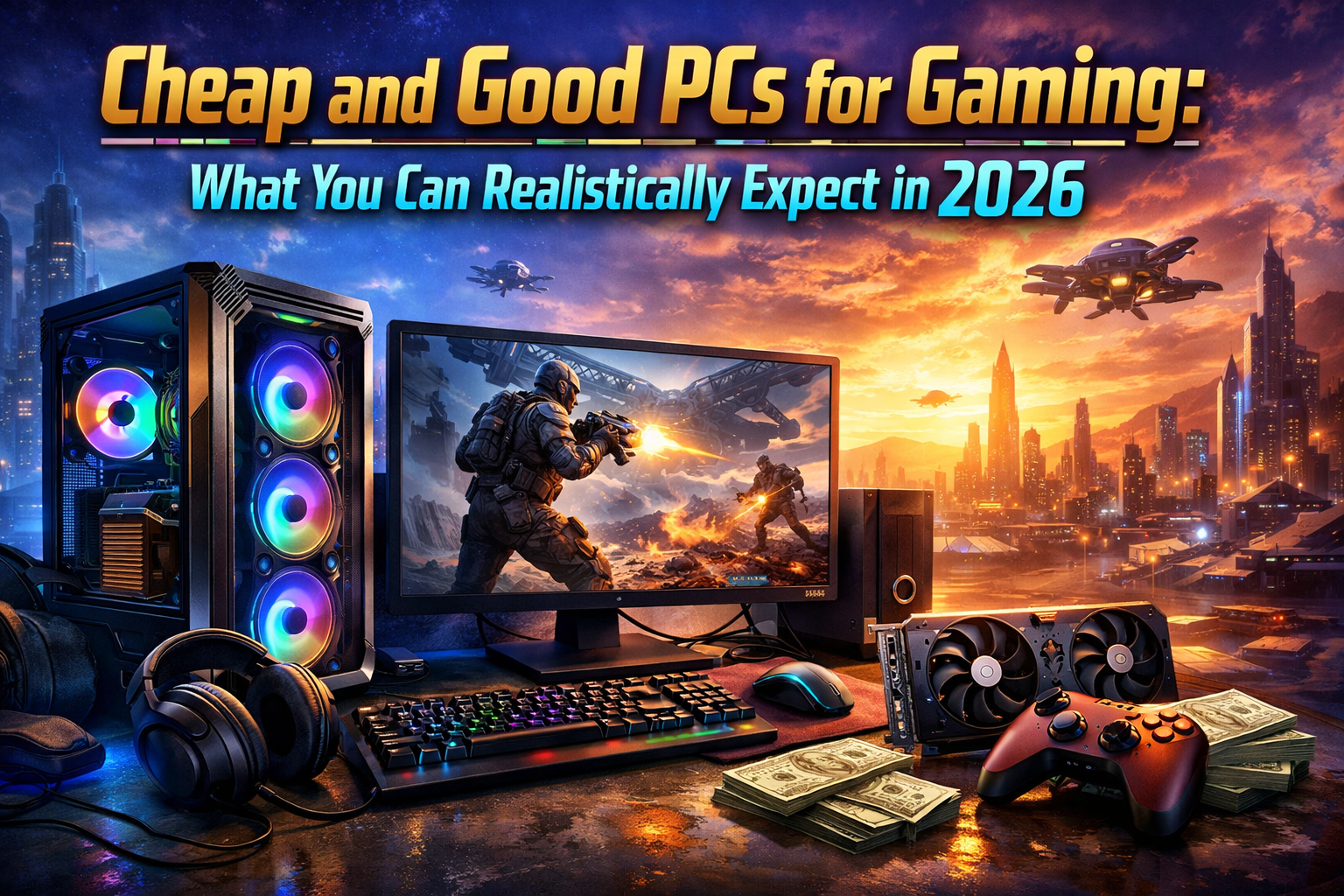
Cheap and good PCs for gaming: what you can realistically expect in 2026

The hardware landscape has shifted dramatically over the last twelve months, creating a rare window of opportunity for budget-conscious buyers. High prices defined the early 2020s, but the arrival of Intel’s Battlemage GPUs and AMD’s aggressive pricing on RDNA 4 cards has forced a market correction. You no longer need to spend a fortune to get high-quality textures and respectable frame rates in modern titles. Whether you plan to assemble components yourself or purchase a cheap and good PC for gaming from a dedicated specialist like HyperCyber, the performance-per-dollar ratio in 2026 is the best we have seen in years.
The processor sweet spot
Your choice of CPU now dictates the longevity of your entire system more than it did previously. The market has moved away from the core-count wars and settled on efficiency and cache performance. For a budget build in 2026, you are looking for chips that support modern instruction sets without carrying the premium price tag of flagship models.
- AMD Ryzen 5 7600 or the newer 9600X: these chips remain the kings of value, offering widespread motherboard compatibility and excellent single-core speed.
- Intel Core i5-13400F or 14400F: while slightly older, these processors are plentiful on the secondary market; however, keep in mind that they limit your future upgrade path compared to newer platforms.
- AM4 platform holdovers: the Ryzen 7 5700X3D is still viable for ultra-budget builds, providing a massive cache boost for older games.
Sticking to these mid-range options allows you to allocate more of your budget toward the graphics card, which remains the single most expensive component. Avoid the trap of overspending on a high-end CPU only to bottleneck it with a weak GPU.
Graphics cards and the new budget king
The most exciting development this year is the three-way fight for the entry-level market. NVIDIA’s RTX 50-series introduced high pricing at the top end, but its lower-tier cards face stiff competition. Intel has finally matured its drivers, making their B-series cards a genuine option for gamers who want 1440p capability without the “enthusiast” tax.
- Intel Arc B580: this new contender has disrupted the sub-$300 market by offering 12GB of VRAM and solid ray-tracing performance that punches above its weight.
- AMD Radeon RX 7600 XT: a reliable workhorse for 1080p high-refresh gaming, though it struggles slightly with the most demanding ray-tracing scenarios.
- Nvidia RTX 4060: prices have dropped significantly following the RTX 50-series launch, making this efficient card a bargain for those who rely on DLSS technology.
Video memory is the defining spec for 2026. Games now routinely demand more than 8 GB of VRAM for high texture settings, even at 1080p. Choosing a card with 12 GB or more is the smartest way to keep your system relevant for the next few years.
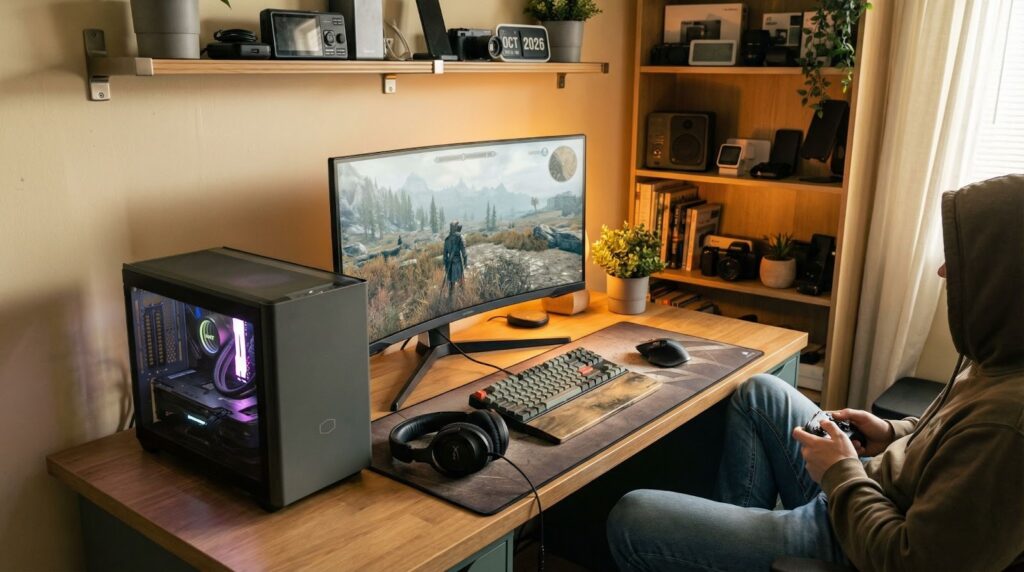
Memory and storage standards
We have officially moved past the transition period between DDR4 and DDR5. While DDR4 is still usable, the price difference has narrowed enough that DDR5 is the logical choice for any new system. It offers higher bandwidth, which directly benefits minimum frame rates in open-world titles.
- RAM capacity: While 16 GB is still functional, 32 GB has become the necessary standard for modern optimization.
- SSD speed: PCIe Gen 4 drives are now as cheap as Gen 3 used to be, so there is no reason to settle for slower speeds.
- Storage size: with games frequently exceeding 150 GB, a 1 TB drive fills up instantly; aim for 2 TB if your budget allows.
Do not underestimate the impact of fast storage on your gaming experience. Modern titles utilizing DirectStorage technology load assets directly from the SSD to the GPU, meaning an outdated SATA drive can result in visible texture popping and load stutters in titles optimized for DirectStorage.
Realistic performance expectations
It is important to keep your expectations grounded in reality when shopping in the budget tier. You will not be playing path-traced Cyberpunk 2077 at 4K resolution on a value machine. However, the definition of “budget performance” has evolved significantly.
A properly configured entry-level PC in 2026 should comfortably deliver:
- 60+ FPS at 1440p on high settings for most AAA titles.
- 120+ FPS at 1080p for competitive shooters like Valorant or Apex Legends.
- Access to upscaling tech like DLSS or FSR to extend the lifespan of your hardware.
The gap between budget and high-end is now mostly about resolution and extreme ray tracing features. If you are happy gaming at 1080p or 1440p, a well-planned budget system will serve you exceptionally well for years to come.



How to Recover Lost Game Files from an External Drive on Mac

Mystery Anime You’ll Regret Starting at Midnight | Part 2

ARC Raiders Frozen Trail Guide: How to Board and Clear the Frigate

Rockstar Games Integrates Advanced Ray Tracing for GTA VI

How to Update Outdated Graphics Drivers for Better Gaming Performance and Higher FPS

The Most Popular Car Game Isn’t Where Players Stay Longest

Canada’s Gaming Audience Is Bigger Than the Old Stereotype

Mystery Anime You’ll Regret Starting at Midnight | Part 1

Anime You’ll Be Glad You Added to Your Fall Watchlist (Part 2) 🍂

WoW Forever Leveling: What Is New on the Road from 1 to 60

MM2 weapon rarity tiers explained for traders

Blox Fruits Physical vs Permanent Fruits: What’s the Difference?

What to Check Before Buying FC 27 Coins Online

Pokémon Announces New Movie With a New Hero and Mimikyu

Double-Sentinel Defensive Holds Disrupt Fast Valorant Site Executes
Canada’s Gaming Audience Is Bigger Than the Old Stereotype
-
 Anime3 weeks ago
Anime You’ll Be Glad You Added to Your Fall Watchlist (Part 2) 🍂
-
 Features2 weeks ago
WoW Forever Leveling: What Is New on the Road from 1 to 60
-
 Esports3 weeks ago
MM2 weapon rarity tiers explained for traders
-
 Features4 weeks ago
Blox Fruits Physical vs Permanent Fruits: What’s the Difference?
-
 Features4 weeks ago
What to Check Before Buying FC 27 Coins Online
-
 Anime4 weeks ago
Pokémon Announces New Movie With a New Hero and Mimikyu
-
 Esports4 weeks ago
Double-Sentinel Defensive Holds Disrupt Fast Valorant Site Executes
-
 Features2 weeks ago
Canada’s Gaming Audience Is Bigger Than the Old Stereotype
-
 Anime2 weeks ago
Mystery Anime You’ll Regret Starting at Midnight | Part 1
-
 Features3 weeks ago
Why Sports Games Keep Getting Better at Simulating the Real Thing
-
 Features2 weeks ago
8 Underrated PC Games Worth Playing in 2026 (That Aren’t Getting the Attention They Deserve)
-
 Features1 week ago
The Most Popular Car Game Isn’t Where Players Stay Longest