
Features
When Mechanics Tell the Story: Games That Master Ludonarrative

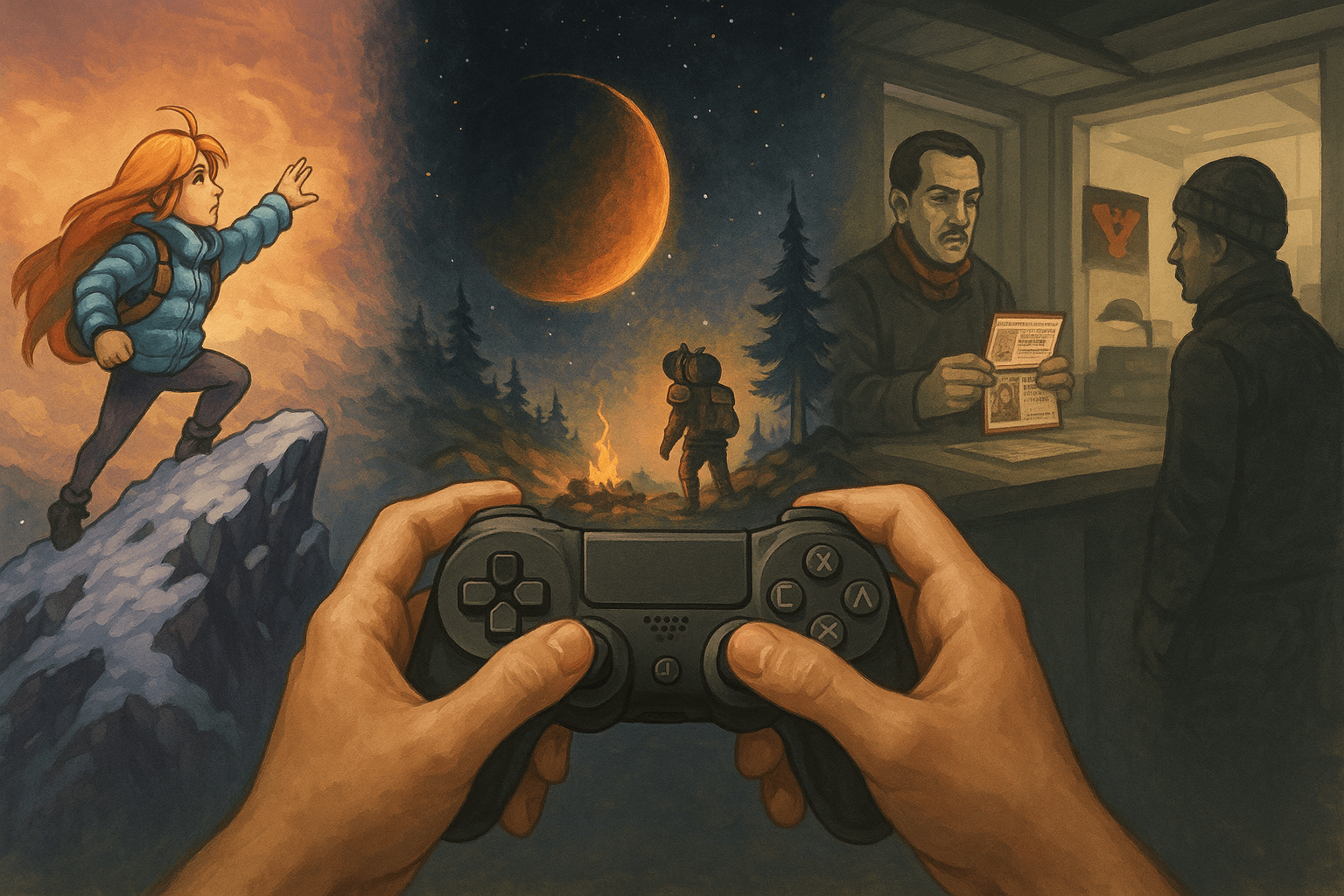
Some games don’t need flashy cutscenes or endless dialogue to tell a powerful story. They let the gameplay do the talking. In these worlds, every jump, every decision, and every failure becomes part of the narrative. This is the magic of ludonarrative—when game mechanics and story blend so tightly that you feel the plot in your hands, not just your head. Before diving into the best examples, it’s worth noting that even in unexpected places, like a sweepstakes casino, mechanics and narrative can work together to create memorable experiences.
What Is Ludonarrative?
Ludonarrative is a term that describes how gameplay (ludo) and storytelling (narrative) interact. When these elements are in harmony, players feel deeply connected to the world and characters. The story isn’t just told—it’s played. You experience the protagonist’s struggles and triumphs through the very actions you take. This approach stands out in an industry often dominated by cinematic storytelling and scripted moments.
Why Mechanics Matter More Than Cutscenes
Some of the most respected games in recent years have shown that you don’t need lengthy exposition or dramatic voiceovers to create emotional impact. Instead, they use clever design and player agency to deliver their message. The result is a more immersive and personal journey. You’re not just watching the story unfold—you’re living it.
Key Benefits of Ludonarrative-Driven Games
Developers who focus on ludonarrative create experiences that stick with players long after the credits roll. Here’s why:
- Deeper immersion: Players feel like they are part of the world, not just observers.
- Emotional resonance: The story feels earned, not given.
- Replay value: Different choices or playstyles can reveal new layers of meaning.
- Player agency: You control the pace and outcome, making each playthrough unique.
These benefits highlight why so many players consider ludonarrative-driven games to be some of the best in the industry.
Celeste: Climbing More Than a Mountain
Celeste is a tough-as-nails platformer that tells its story through every jump and fall. You play as Madeline, a young woman determined to climb Celeste Mountain. The game’s difficulty isn’t just for show—it’s a metaphor for Madeline’s internal battles with anxiety and self-doubt. Each challenging section reflects her struggle to overcome personal demons. There are no unnecessary cutscenes. Instead, the game uses tight controls, clever level design, and subtle visual cues to communicate Madeline’s journey.
How Celeste Nails Ludonarrative
- Every death is part of the story: Failure isn’t punished; it’s expected. Each retry mirrors Madeline’s perseverance.
- Minimalist storytelling: Dialogue is sparse but impactful. The mountain becomes a character itself.
- Mechanics reinforce theme: The feeling of overcoming tough obstacles matches the narrative of personal growth.
By the end, players aren’t just satisfied with beating a hard game—they feel like they’ve helped Madeline conquer something real.
Outer Wilds: Exploration as Narrative
Outer Wilds drops you into a mysterious solar system caught in a 22-minute time loop. There’s no quest log, no hand-holding. You learn by exploring, experimenting, and—often—failing. The story of ancient civilizations, cosmic mysteries, and existential questions unfolds as you piece together clues scattered across planets. Your curiosity drives the narrative forward.
What Makes Outer Wilds Unique
- Discovery through gameplay: The game never tells you what to do. You set your own goals.
- Time loop as a storytelling device: Each reset reveals new information, making every run meaningful.
- Environmental storytelling: Planets, ruins, and artifacts tell the story without words.
Outer Wilds proves that a sense of wonder and discovery can be more powerful than any scripted sequence.
Papers, Please: Morality at the Border
Papers, Please puts you in the shoes of a border inspector in a fictional totalitarian state. Your job is to check documents, stamp passports, and decide who gets in. Sounds simple, but the mechanics force you to make tough moral choices under pressure. Do you let a desperate family reunite, risking your own safety? Or do you follow the rules to the letter and sleep a little easier? The game never judges you, but every decision shapes your story.
Core Mechanics That Tell the Tale
- Time pressure: You must work quickly, increasing stress and the chance for mistakes.
- Resource management: Your family’s well-being depends on your efficiency.
- Branching outcomes: Small choices can lead to very different endings.
The result is a game where the story emerges from your actions, not from scripted events.
Essential Elements of Ludonarrative Mastery
Many games try to blend mechanics and story, but only a few truly succeed. Here are some common traits found in the best examples:
- Mechanics reflect the theme: Gameplay isn’t just fun—it means something.
- Player-driven progression: The story unfolds based on your choices and actions.
- Minimal reliance on cutscenes: The world and its rules do the heavy lifting.
Games that master these elements create a sense of ownership and connection that’s hard to match.
Notable Games That Let Mechanics Lead
While Celeste, Outer Wilds, and Papers, Please are standout examples, other titles also excel at telling stories through gameplay. Here’s a quick rundown of games where mechanics take center stage:
- Inside: A dark, atmospheric platformer where every puzzle feels like a narrative beat.
- Return of the Obra Dinn: Investigation and deduction drive the story, not dialogue.
- Journey: Wordless exploration and subtle multiplayer interactions tell a moving tale.
Each of these games proves that when mechanics and story work together, the result is unforgettable.
Conclusion
Ludonarrative isn’t just a buzzword—it’s a philosophy that puts players at the heart of the story. Games like Celeste, Outer Wilds, and Papers, Please show that you don’t need cutscenes or endless dialogue to create a powerful narrative. When the gameplay itself becomes the story, every moment feels authentic and earned. This approach continues to inspire both players and developers, raising the bar for what games can achieve.



Table and Mini Games In Grand Theft Auto 6 – What Can We Expect?

How to Recover Lost Game Files from an External Drive on Mac

Mystery Anime You’ll Regret Starting at Midnight | Part 2

ARC Raiders Frozen Trail Guide: How to Board and Clear the Frigate

Rockstar Games Integrates Advanced Ray Tracing for GTA VI

How to Update Outdated Graphics Drivers for Better Gaming Performance and Higher FPS

The Most Popular Car Game Isn’t Where Players Stay Longest

Canada’s Gaming Audience Is Bigger Than the Old Stereotype

Anime You’ll Be Glad You Added to Your Fall Watchlist (Part 2) 🍂

WoW Forever Leveling: What Is New on the Road from 1 to 60

MM2 weapon rarity tiers explained for traders
Canada’s Gaming Audience Is Bigger Than the Old Stereotype

Why Sports Games Keep Getting Better at Simulating the Real Thing
The Most Popular Car Game Isn’t Where Players Stay Longest

8 Underrated PC Games Worth Playing in 2026 (That Aren’t Getting the Attention They Deserve)

Mystery Anime You’ll Regret Starting at Midnight | Part 1
-
 Anime3 weeks ago
Anime You’ll Be Glad You Added to Your Fall Watchlist (Part 2) 🍂
-
 Features3 weeks ago
WoW Forever Leveling: What Is New on the Road from 1 to 60
-
 Esports3 weeks ago
MM2 weapon rarity tiers explained for traders
-
 Features2 weeks ago
Canada’s Gaming Audience Is Bigger Than the Old Stereotype
-
 Features3 weeks ago
Why Sports Games Keep Getting Better at Simulating the Real Thing
-
 Features1 week ago
The Most Popular Car Game Isn’t Where Players Stay Longest
-
 Features3 weeks ago
8 Underrated PC Games Worth Playing in 2026 (That Aren’t Getting the Attention They Deserve)
-
 Anime2 weeks ago
Mystery Anime You’ll Regret Starting at Midnight | Part 1
-
 Gaming News1 week ago
Rockstar Games Integrates Advanced Ray Tracing for GTA VI
-

 Features3 weeks ago
From Consoles to Phones: How Canadian Gaming Became an Anytime Experience
-
 Features6 days ago
ARC Raiders Frozen Trail Guide: How to Board and Clear the Frigate
-
 Guides4 weeks ago
Minecraft All Biomes Seeds for Players Who Love Exploring