
Esports
What Games Are in Esports — A Look at the Most Popular Titles

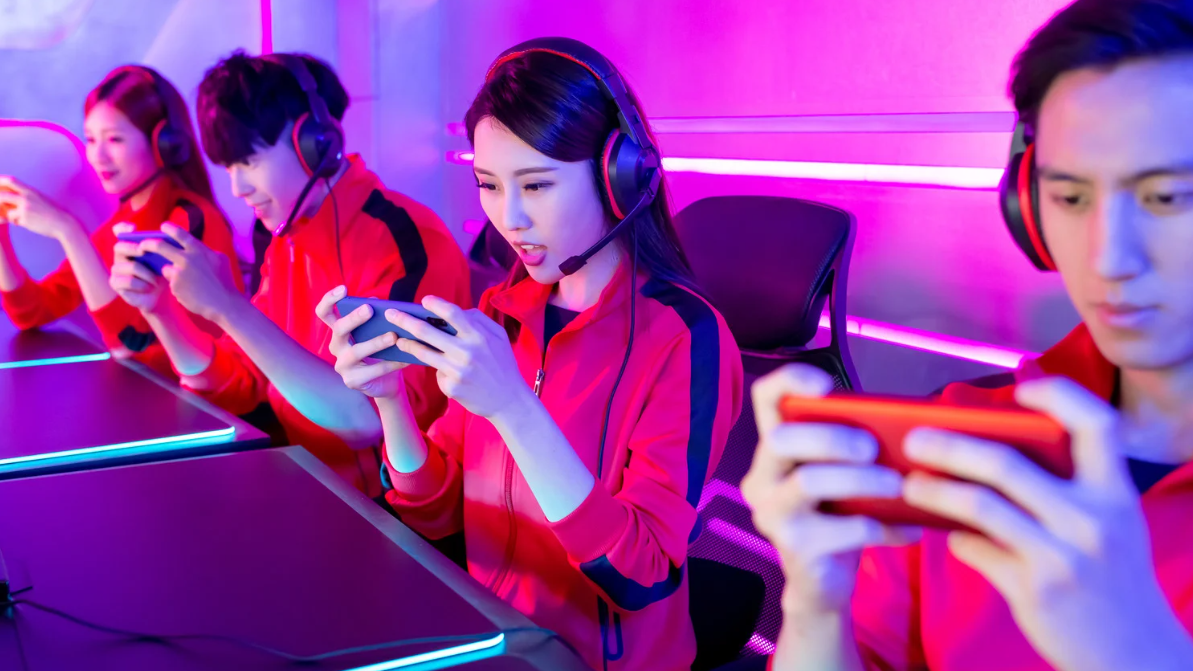
Esports has moved beyond hobby status — it’s now a global industry estimated at over $1.8 billion in 2025. Each season brings new titles, shifting metas, and record-breaking audiences. This overview looks at which games dominate, what keeps fans hooked, and how the landscape continues to evolve.
Digital gaming has, well, steadily drifted from bedrooms and small LAN parties to spotlights on a much bigger stage—now you’ve got tournaments cramming stadiums and prize funds that can seem almost unreal. It’s interesting, really: some new games catch fire every year, but the mainstays stick around, refusing to fade. From what recent esports reports suggest, 2025 seems to be shaping up as another big moment for watchers, partly as established favorites hold tight but also because there’s always some fresh title trying to earn its stripes.
Engagement, whatever that actually means, depending on the week, somehow keeps inching up, mostly thanks to online formats streamed across every continent. Looking at the trends, it feels like things such as free-to-play access—or cross-platform support—are less bonus features now and more like baseline requirements. Developers, for their part, seem determined to keep players busy, tossing out new updates with clockwork regularity (or at least, as often as their communities will tolerate). There’s no shortage of interested sponsors and influencers lurking at major events, either. If you glance across the genre spectrum, from tactical shooters to elaborate strategy games, it’s pretty clear these titles keep the esports scene moving—never really standing still for long.
The Business Behind the Boom
Prize pools make headlines, but sponsorship and streaming rights drive the real growth. NewZoo’s 2025 forecast puts global esports revenue near $1.8 billion, with roughly half coming from brand partnerships and live-stream advertising. For teams and organizers, steady revenue now depends on merchandising, media licensing, and regional league franchising — all signs that esports has matured into a structured entertainment market.
Defining the core of modern esports
At the center of all this, League of Legends may be the closest thing to a benchmark—though, of course, what counts as “leadership” can depend on which numbers you prefer to believe. Its game design balances complexity with accessibility, and the different regional leagues scattered across North America, Asia, Europe (it’s easy to lose track, honestly), come with enough drama for a full season of TV. Each year, the Worlds event, run by Riot Games, pulls in huge crowds—reports from 300Mind Studio suggest finals sometimes flirt with 5 million viewers, though it probably varies a bit by source.
On the FPS side, Counter-Strike 2 still holds its ground as the go-to tactical shooter for many. Tournament heavyweights like BLAST Premier and ESL One keep dozens, or really hundreds, of teams in the chase. Meanwhile, Mobile Legends: Bang Bang, favored especially in Southeast Asia, claims over 20 million monthly users—a staggering number, if not a bit hard to picture. Then there’s Dota 2, Fortnite, Valorant, all kinds of titles continuing to anchor the scene. The International’s prize pool, at least at its peak, reached $40 million, a figure other games seem to be almost imitating in spirit. You could argue these games share at least one thing: fairly energetic publisher support, not to mention communities willing to stick around for years.
Mobile, console, and online variants
Suddenly, mobile gaming isn’t just a side note. In places like Southeast Asia, Mobile Legends pulls the biggest numbers, while, in recent years, PUBG Mobile has basically exploded in popularity across India, China, and the Middle East. The 2024 PUBG Mobile Global Championship apparently offered $3 million as its prize purse. Traditional console titles—Call of Duty, Rocket League, and the rest—continue to hold their ground too, propped up by seasonal leagues, fresh content, and a fairly loyal bunch of competitors. Some scenes look entirely different: packed stadiums, Twitch streams running hot, and qualifier rounds that pull viewers in by the millions.
Blending local tournaments with headline-grabbing global events, this mix lets some communities grow quietly in their own corner, while flagship competitions glue the international calendar together. Any genre goes, more or less—whether it’s shooters, MOBAs, or sports sims—since the online framework keeps access open enough for pretty much anybody. It seems broadcasters have learned to use these models, and, as a result, sponsor interest hasn’t exactly dwindled.
What drives enduring popularity
If there’s a secret, it might just be the way content never stops. Titles like Fortnite and Valorant have leaned heavily into the free-to-play playbook, handling the endless ebb and flow of their player bases with new maps, skins, extra modes, all of that. (Honestly, sometimes it’s hard to keep up.) One source, SportsVenue Technology, claims almost 80 percent of top titles have free options in some form—not a shock, in hindsight. League of Legends, Dota 2… both seem to thrive on constant tweaks with seasonal patches, with seasonal patches disrupting strategies and pushing competitors to rethink their game every few months.
The communities—on Discord, Reddit, or just in the game lobby—engage in a rolling soap opera of updates and rivalry. And behind the curtain, organizers like Riot and Valve are believed to put serious resources behind keeping their tournaments slick and their orgs happy (although no system is perfect). Streamers and influencers add another layer, drawing in folks who might not even play but still want to follow the scene. You can’t really ignore things like server performance and the actual quality of live broadcasts anymore—these have just become basic expectations. So, with all these moving parts, the top games seem to float to the surface on the back of busy pro circuits, waves of dedicated individuals, and viewing experiences that mostly manage to keep everyone in the loop.
Esports Betting and Viewer Engagement
As esports tournaments continue to grow, betting platforms have followed suit. Titles like Counter-Strike 2, League of Legends, and Dota 2 now feature heavily on major sportsbooks, drawing bettors who already follow the competitive scene. Viewership numbers often spike around championship matches, and betting activity mirrors that same curve — fans like to be part of the action.
Many operators now promote welcome offers and seasonal promos, helping newer fans explore esports wagering safely and responsibly. Some of the most popular promotions currently available at bet365, for example, can be found on this page, which outlines verified sportsbook bonuses and codes. These incentives play a role in how audiences engage with tournaments, making the experience more interactive while reinforcing the importance of responsible gaming.
Emerging genres and regional favorites
Of course, you can’t just zoom in on giants—plenty of smaller or niche games stubbornly hold their own. Fighting games? Street Fighter, Super Smash Bros., and Tekken draw some of the liveliest crowds around, especially at big gatherings like EVO. Even though it doesn’t get as much attention, real-time strategy titles—think StarCraft II or Age of Empires—still pull a dedicated audience, even if it’s not exactly headline news. Sports games, too: FIFA (now EA FC, after all the rebranding noise) and NBA 2K don’t slouch when it comes to annual tournaments. According to recent esports data, Rocket League, with its odd but entertaining blend of soccer and rocket-powered cars, seems to be gaining a surprising foothold in Europe and North America.
Overwatch has taken a bit of a backseat since its high-flying 2019 stretch, but you’ll see it bounce back now and then when big league showdowns and team stories pop up. Zoom out, and the regional landscape gets even more varied. For instance, Free Fire draws major crowds across Latin America. Southeast Asia leans into its local MOBA competitions. Korea, meanwhile, has a reputation (deserved or not) for an enduring love of RTS. At the end of the day, the scene is really shaped by a tug-of-war between what communities care about and whatever developers are ambitious (or stubborn) enough to push forward.
If anything, 2025 feels less like a settled moment in esports and more like an open field—tactical shooters, mobile MOBAs, battle royales, and whatever comes next, all carving out space. Colossal events, shifting metas, and a buzz that rarely goes quiet keep things, well, moving forward, even if nobody’s sure exactly which direction it’s all headed.
What’s Next for Esports
With new tech such as VR integration, AI-driven analytics, and short-form broadcast highlights, esports could reach broader audiences than ever. Developers are also pushing sustainability — fewer mega-events, more regional leagues, and hybrid online-offline formats to cut costs. Whether mobile or PC leads the next phase, 2026 is likely to blur the line between gaming, streaming, and mainstream sports even further.
Source: Canva editor



How to Recover Lost Game Files from an External Drive on Mac

Mystery Anime You’ll Regret Starting at Midnight | Part 2

ARC Raiders Frozen Trail Guide: How to Board and Clear the Frigate

Rockstar Games Integrates Advanced Ray Tracing for GTA VI

How to Update Outdated Graphics Drivers for Better Gaming Performance and Higher FPS

The Most Popular Car Game Isn’t Where Players Stay Longest

Canada’s Gaming Audience Is Bigger Than the Old Stereotype

Mystery Anime You’ll Regret Starting at Midnight | Part 1

Anime You’ll Be Glad You Added to Your Fall Watchlist (Part 2) 🍂

WoW Forever Leveling: What Is New on the Road from 1 to 60

MM2 weapon rarity tiers explained for traders

Blox Fruits Physical vs Permanent Fruits: What’s the Difference?

What to Check Before Buying FC 27 Coins Online

Can You Stream Kick on Xbox: Complete Guide for Xbox Users

Pokémon Announces New Movie With a New Hero and Mimikyu

Double-Sentinel Defensive Holds Disrupt Fast Valorant Site Executes
-
 Anime3 weeks ago
Anime You’ll Be Glad You Added to Your Fall Watchlist (Part 2) 🍂
-
 Features2 weeks ago
WoW Forever Leveling: What Is New on the Road from 1 to 60
-
 Esports3 weeks ago
MM2 weapon rarity tiers explained for traders
-
 Features4 weeks ago
Blox Fruits Physical vs Permanent Fruits: What’s the Difference?
-
 Features4 weeks ago
What to Check Before Buying FC 27 Coins Online
-
 Social Media4 weeks ago
Can You Stream Kick on Xbox: Complete Guide for Xbox Users
-
 Anime4 weeks ago
Pokémon Announces New Movie With a New Hero and Mimikyu
-
 Esports4 weeks ago
Double-Sentinel Defensive Holds Disrupt Fast Valorant Site Executes
-
 Features2 weeks ago
Canada’s Gaming Audience Is Bigger Than the Old Stereotype
-
 Anime2 weeks ago
Mystery Anime You’ll Regret Starting at Midnight | Part 1
-

 Features2 weeks ago
8 Underrated PC Games Worth Playing in 2026 (That Aren’t Getting the Attention They Deserve)
-

 Features3 weeks ago
Why Sports Games Keep Getting Better at Simulating the Real Thing