
Features
Why Sports Games Keep Getting Better at Simulating the Real Thing

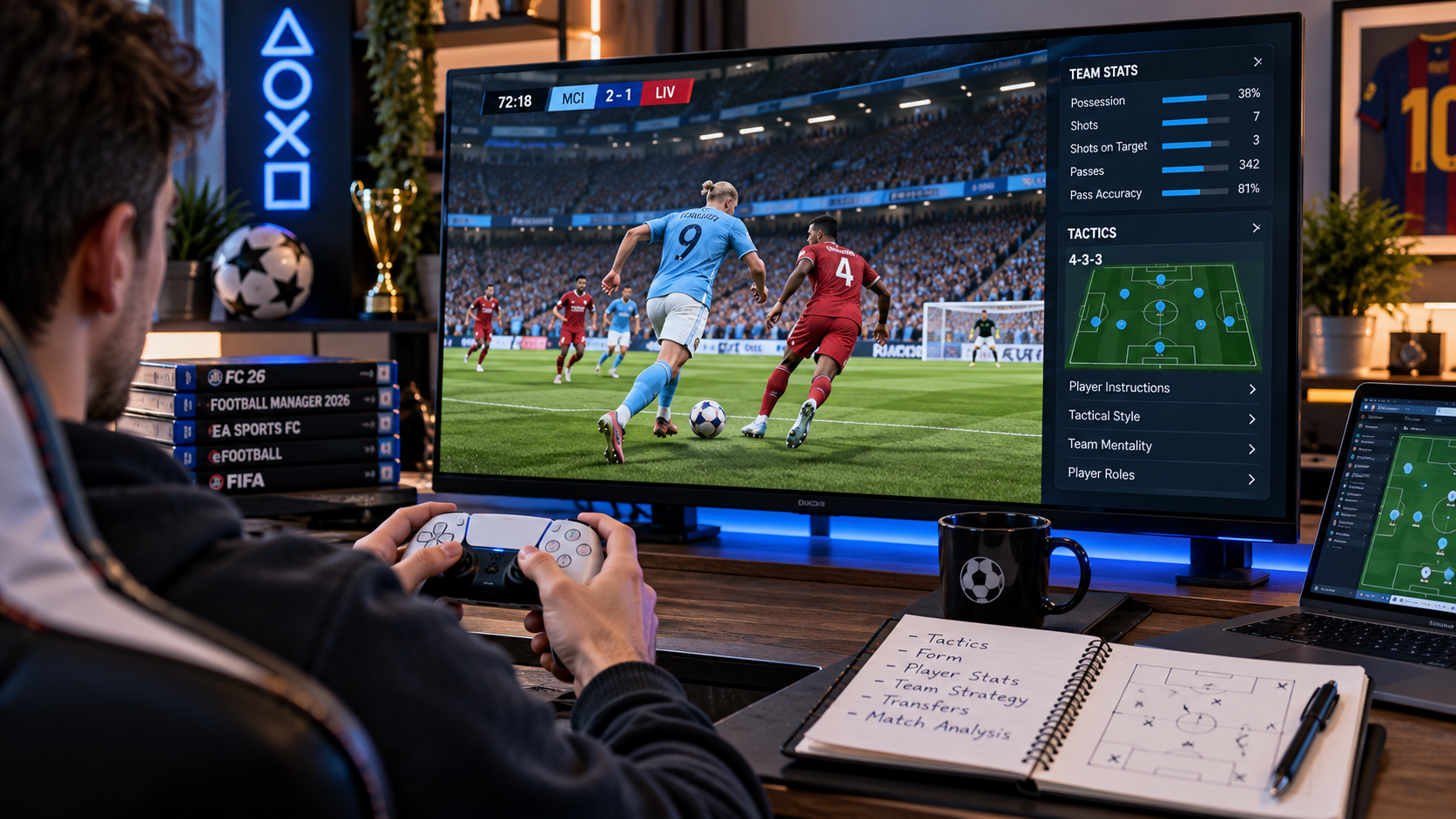
There was a time when sports games could get away with looking the part.
A football game needed recognizable players, decent-looking stadiums and controls that felt responsive. A basketball game needed believable shooting and passing. If the graphics were impressive enough, most players were willing to overlook the occasional strange animation or unrealistic tactical decision.
That standard has changed.
Modern sports games are increasingly expected to simulate the experience of the sport rather than simply recreate its appearance. Players want footballers to move differently based on their attributes, teams to behave according to their tactical instructions, and entire seasons to develop in ways that feel unpredictable.
In other words, realism has become about much more than graphics.
Realism Starts With Player Behaviour
One of the easiest ways to tell how far sports games have come is by watching individual players.
Older sports titles often made everyone feel roughly the same. Faster players were obviously quicker, stronger players were harder to push off the ball, but the differences could sometimes feel superficial.
Modern games are much more interested in creating individual identities.
Acceleration, stamina, strength, positioning, decision-making and technical ability can all affect how a player behaves. A defender isn’t simply a character with a high defensive rating. Their positioning and reactions can influence whether they step forward, hold their line or react late to an attacking run.
That makes the experience feel less like controlling a collection of numbers and more like managing a group of different personalities and skill sets.
It also creates something important for sports games: unpredictability.
A highly rated player can still make a mistake. A weaker team can occasionally outperform expectations. A perfectly executed tactic can fall apart because an individual decision goes wrong.
Those moments are frustrating when they happen to you, but they are also what make simulations convincing.
Tactics Have Become a Game Within the Game
Football is particularly interesting because so much of the sport happens away from the ball.
A player might make a run that creates space for somebody else. A midfielder may move into a particular position to give a defender another passing option. A team pressing high up the pitch can completely change the way an opponent builds an attack.
Recreating those relationships is extremely difficult.
Yet tactical systems have become a much bigger part of modern football games. Players can increasingly experiment with formations, pressing styles, defensive lines, attacking patterns and individual instructions.
This reflects what has happened in real football too. Organizations such as UEFA use a combination of coaching expertise, technology, match footage and data to examine technical, tactical and physical aspects of elite football. Their performance analysis work demonstrates just how much information can now be used to understand what happens during a match.
For game developers, that creates an interesting challenge.
The goal isn’t simply to give players more tactical options. Those options have to produce believable consequences.
If you change your defensive line, the game should make that decision matter. If you instruct your team to press aggressively, there should be advantages and disadvantages. If your midfield becomes overloaded, opponents should be able to exploit it.
That’s when tactics stop being menu settings and start becoming part of the simulation.
Statistics Are Becoming Gameplay
Statistics used to be something you checked after the match.
Now they increasingly influence what happens during it.
Modern sports games can track an enormous amount of information: possession, passing accuracy, shot locations, player positions, distance covered, successful tackles, expected goals and countless other measurements.
The interesting part isn’t necessarily seeing those numbers on a screen.
It’s seeing how they influence the decisions you make.
If your opponent is consistently attacking one side of the pitch, you might change your defensive approach. If one of your midfielders is losing possession repeatedly, you may adjust their role. If your striker isn’t receiving enough service, changing the team’s attacking instructions might make more sense than simply replacing the player.
That creates a feedback loop.
You make a decision → the simulation reacts → you study the result → you make another decision.
It’s one of the reasons sports management games can become so addictive without relying on traditional action gameplay.
Real Football Is Providing the Blueprint
The relationship between real football and football games has become increasingly interesting.
Game developers don’t need to invent every tactical concept from scratch. The real sport already provides an enormous laboratory of formations, systems and strategic ideas.
Football analysts are constantly studying how teams defend, attack, press and transition between phases of play. The FIFA Training Centre gives coaches and football professionals access to training sessions, match analysis and technical resources covering different aspects of the modern game.
That kind of information can also influence what players expect from football simulations.
If football fans understand concepts like pressing traps, defensive blocks or attacking overloads from watching real matches, they naturally expect games to represent those concepts convincingly.
The audience has become more knowledgeable, so the games have had to become more sophisticated.
Even Small Details Can Make a Difference
Interestingly, realism doesn’t always come from a huge new feature.
Sometimes it’s the small things.
A player’s body shape when receiving a pass.
The way a goalkeeper adjusts their position.
A defender taking an extra step before committing to a challenge.
A striker making a run slightly earlier because they have better positioning.
A manager changing tactics after conceding a goal.
These details may not appear in a trailer, but they can completely change how a game feels after several hours.
It’s similar to watching a good sports broadcast. You don’t necessarily notice every camera angle or replay individually. Instead, all those small elements combine to create the feeling that you’re watching an actual sporting event.
Games are trying to achieve the same effect.
Career Modes Make Realism More Complicated
There’s another reason sports simulations have become more sophisticated: players aren’t only playing individual matches anymore.
Career modes can turn a single team into a long-term project.
You have transfers to consider, player development, contracts, injuries, squad depth and tactical changes. A decision made in one season can affect what happens several seasons later.
That’s where simulation becomes particularly powerful.
A football game can create situations that weren’t specifically written by the developers. A young player might unexpectedly become a star. A key signing might fail to adapt. An aging veteran could suddenly become important because of an injury crisis.
The player ends up creating their own story.
That is one of the biggest advantages sports games have over traditional scripted games.
Instead of following a fixed narrative, you’re participating in a system that can generate one.
Realism Doesn’t Mean Perfect Accuracy
There’s an important distinction between realistic and accurate.
A simulation doesn’t have to predict exactly what would happen in real life to feel convincing.
In fact, perfect predictability would probably make a sports game less interesting.
If the best team always won, the highest-rated player always performed perfectly and every tactical decision produced an obvious result, there wouldn’t be much reason to keep playing.
Real sport is full of uncertainty.
A team can dominate possession and still lose. A favorite can struggle against an unexpected tactical setup. A substitute can change a match. A goalkeeper can produce an extraordinary performance.
Sports games need room for those possibilities.
The challenge for developers is creating uncertainty without making the game feel random.
That’s a difficult balance.
Players need to believe that their decisions matter while also accepting that they can’t control everything.
The Future May Be About Systems, Not Graphics
Graphics will obviously continue improving, but the biggest advances in sports games may eventually become less visible.
Better artificial intelligence could allow opponents to recognize patterns more intelligently. More advanced simulations could make individual players react differently to situations. Deeper career systems could produce more believable long-term consequences.
The most impressive feature might not be something you can see in a screenshot.
It could be an AI manager recognizing that your team has been exploiting the same weakness for five matches and finally changing its defensive setup.
Or a young player gradually changing their playing style because of coaching and experience.
Or a team developing a completely different tactical identity after a change in management.
That’s the kind of detail that can make a digital sporting world feel alive.
And it follows the same principle that has made other parts of gaming more immersive: the world becomes more convincing when its systems interact naturally.
Even outside traditional sports simulations, games built around complex systems are becoming increasingly detailed. The growing variety of interactive experiences available today — including different casino games and other highly system-driven formats — shows how much modern players have come to expect from digital environments.
The Real Goal Is Making Players Believe
Ultimately, sports games don’t need to reproduce reality perfectly.
They need to make players believe in the reality of what is happening on screen.
When a tactical adjustment changes the flow of a match, when a player’s strengths and weaknesses become obvious through their behaviour, or when an unexpected event creates a memorable career-mode story, the simulation starts feeling convincing.
That’s where modern sports games have made perhaps their biggest leap.
The future isn’t simply about better faces, sharper stadiums or prettier animations.
It’s about creating sports worlds that understand why things happen — and then giving players enough freedom to influence what happens next.
That is what can turn a sports game from something that looks like the real thing into something that actually feels like it.



How to Recover Lost Game Files from an External Drive on Mac

Mystery Anime You’ll Regret Starting at Midnight | Part 2

ARC Raiders Frozen Trail Guide: How to Board and Clear the Frigate

Rockstar Games Integrates Advanced Ray Tracing for GTA VI

How to Update Outdated Graphics Drivers for Better Gaming Performance and Higher FPS

The Most Popular Car Game Isn’t Where Players Stay Longest

Canada’s Gaming Audience Is Bigger Than the Old Stereotype

Mystery Anime You’ll Regret Starting at Midnight | Part 1

Anime You’ll Be Glad You Added to Your Fall Watchlist (Part 2) 🍂

WoW Forever Leveling: What Is New on the Road from 1 to 60

MM2 weapon rarity tiers explained for traders

Blox Fruits Physical vs Permanent Fruits: What’s the Difference?

What to Check Before Buying FC 27 Coins Online

Pokémon Announces New Movie With a New Hero and Mimikyu

Double-Sentinel Defensive Holds Disrupt Fast Valorant Site Executes
Canada’s Gaming Audience Is Bigger Than the Old Stereotype
-
 Anime3 weeks ago
Anime You’ll Be Glad You Added to Your Fall Watchlist (Part 2) 🍂
-
 Features2 weeks ago
WoW Forever Leveling: What Is New on the Road from 1 to 60
-
 Esports3 weeks ago
MM2 weapon rarity tiers explained for traders
-
 Features4 weeks ago
Blox Fruits Physical vs Permanent Fruits: What’s the Difference?
-
 Features4 weeks ago
What to Check Before Buying FC 27 Coins Online
-
 Anime4 weeks ago
Pokémon Announces New Movie With a New Hero and Mimikyu
-
 Esports4 weeks ago
Double-Sentinel Defensive Holds Disrupt Fast Valorant Site Executes
-
 Features2 weeks ago
Canada’s Gaming Audience Is Bigger Than the Old Stereotype
-
 Anime2 weeks ago
Mystery Anime You’ll Regret Starting at Midnight | Part 1
-

 Features2 weeks ago
8 Underrated PC Games Worth Playing in 2026 (That Aren’t Getting the Attention They Deserve)
-
 Features1 week ago
The Most Popular Car Game Isn’t Where Players Stay Longest
-

 Features2 weeks ago
From Consoles to Phones: How Canadian Gaming Became an Anytime Experience