
Features
Why Montreal is the Video Game Capital of Canada

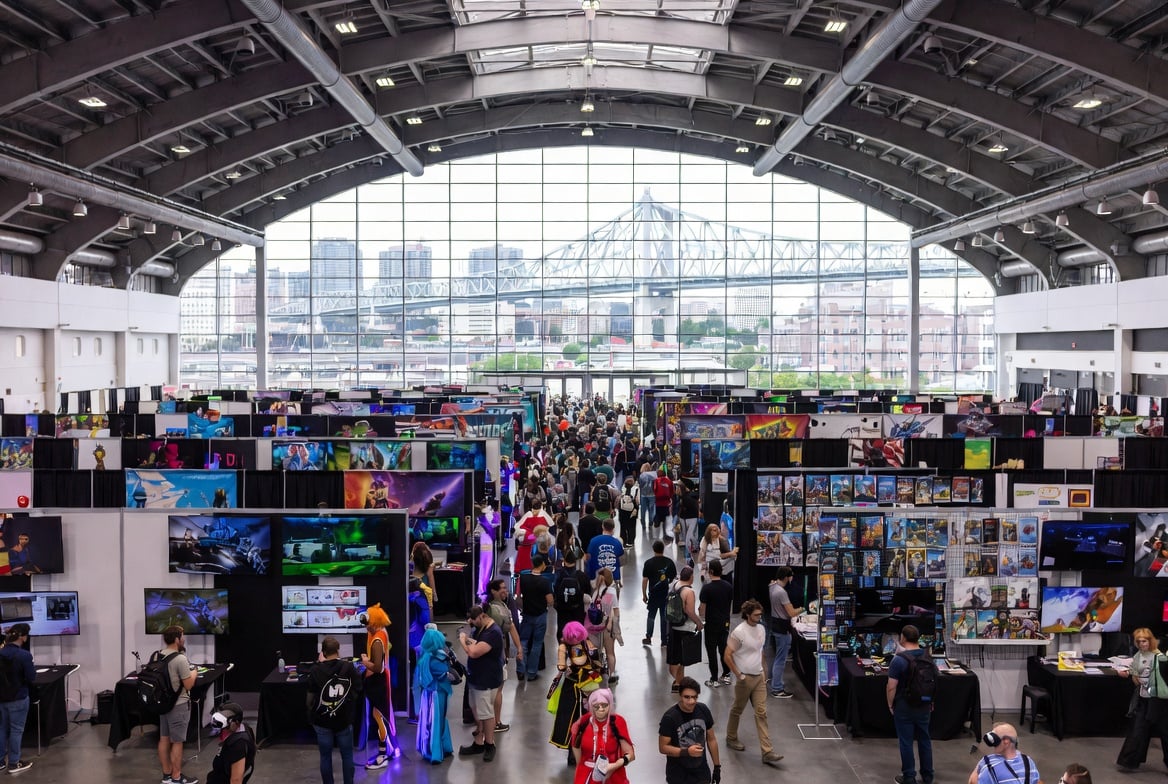
Montreal Leads Canada’s Video Game Industry
Montreal is the video game capital of Canada because it has the strongest mix of major studios, trained talent, tax support, creative culture and international reputation in the country. Greater Montréal is ranked by Montréal International as the No. 1 video game production centre in Canada and one of the world’s top video game hubs, with more than 250 studios across Québec and over 13,500 industry workers.
Canada’s video game sector is already large, but Québec gives Montreal its strongest advantage. The Entertainment Software Association of Canada reported 821 video game studios, 34,010 employees and a $5.1 billion GDP contribution nationwide; Québec had 257 studios and 15,220 employees, more video game employees than any other province in that report.
Montreal Became a Global Hub After Ubisoft Arrived
Montreal’s modern gaming boom began when Ubisoft arrived in 1997. That move helped prove that a major international studio could build world-class games in the city, and it encouraged other publishers to follow. Montréal International says that since Ubisoft’s arrival, many of the world’s largest video game producers have chosen the region for its creative and artistic energy.
Major names now connected to the Montreal ecosystem include Ubisoft, EA, WB Games, Eidos, Epic Games, Gameloft, Take-Two and Behaviour Interactive. This matters because big studios create senior jobs, train developers, attract global projects and support smaller independent studios through talent movement and collaboration.
Montreal Has the Talent Pipeline Studios Need
Montreal has the talent pipeline studios need because the city is surrounded by education programs focused on technology, art, animation, design and interactive media. Montréal International highlights more than 90 university, college and vocational programs connected to the sector, giving companies regular access to junior developers, artists, designers, producers, testers and technical specialists.
This talent pool is not only technical. Game production needs writers, animators, sound designers, UI artists, localization specialists, data analysts, community managers and marketers. Montreal’s bilingual French-English environment also helps studios build games for North American and European markets from the same city.
Montreal Offers Strong Tax Credits and Business Support
Montreal offers strong tax credits and business support, which is one of the biggest reasons international studios choose the city. Québec’s multimedia tax credit can support eligible labour costs, and official budget documents show total rates of up to 37.5% for eligible commercial multimedia titles available in French, 30% for eligible commercial titles not available in French, and 26.25% for other multimedia titles.
The system has changed since 2025, with part of the credit becoming non-refundable while the refundable portion is gradually reduced through 2028. Even with that shift, the combined headline rates remain important for studios because game development is labour-intensive and payroll is often the largest cost.
Montreal’s Ecosystem Goes Beyond Game Studios
Montreal’s ecosystem goes beyond game studios, which is why the city is hard to copy. A successful game hub needs more than programmers and artists; it needs audio providers, quality assurance teams, localization companies, motion capture, publishing support, animation, VFX, AI research, cloud infrastructure and business services. Montréal International describes the region as a complete ecosystem with service providers in areas such as audio, QA, publishing and localization.
This ecosystem helps both AAA and indie studios. Large publishers can scale big productions, while smaller studios can outsource specialized work instead of building every department internally. Even searches like Relax gaming casino Canada show how broad the word “gaming” can be online, but Montreal’s reputation is built mainly on video game creation, interactive entertainment and digital production.
Montreal Produces Games Recognized Worldwide
Montreal produces games recognized worldwide, and that global visibility strengthens its status. Studios in the city have worked on or created major franchises and titles such as Assassin’s Creed, Batman: Arkham Origins, Deus Ex, Rise of the Tomb Raider and Dead by Daylight. These projects show that Montreal is not just a support location; it is a place where internationally known games are designed, produced and shipped.
This track record matters for recruitment. Developers want to work where ambitious projects are made, and publishers want to invest where teams have already proven they can deliver.
Why Montreal Beats Other Canadian Cities
Montreal beats other Canadian cities because it combines scale, specialization and identity. Toronto may have more companies in some datasets, and Vancouver has a strong development scene, but Montreal’s advantage is its concentration of large employers, public support, specialized training, lower operating-cost appeal and long history as a production centre.
Statistics Canada also supports the broader point that Québec is Canada’s leading province by video game jobs, while administrative data shows the Canadian industry grew rapidly from 2013 to 2022.



Table and Mini Games In Grand Theft Auto 6 – What Can We Expect?

How to Recover Lost Game Files from an External Drive on Mac

Mystery Anime You’ll Regret Starting at Midnight | Part 2

ARC Raiders Frozen Trail Guide: How to Board and Clear the Frigate

Rockstar Games Integrates Advanced Ray Tracing for GTA VI

How to Update Outdated Graphics Drivers for Better Gaming Performance and Higher FPS

The Most Popular Car Game Isn’t Where Players Stay Longest

Canada’s Gaming Audience Is Bigger Than the Old Stereotype

Anime You’ll Be Glad You Added to Your Fall Watchlist (Part 2) 🍂

WoW Forever Leveling: What Is New on the Road from 1 to 60

MM2 weapon rarity tiers explained for traders
Canada’s Gaming Audience Is Bigger Than the Old Stereotype
Rockstar Games Integrates Advanced Ray Tracing for GTA VI

Why Sports Games Keep Getting Better at Simulating the Real Thing

8 Underrated PC Games Worth Playing in 2026 (That Aren’t Getting the Attention They Deserve)

Mystery Anime You’ll Regret Starting at Midnight | Part 1
-
 Anime3 weeks ago
Anime You’ll Be Glad You Added to Your Fall Watchlist (Part 2) 🍂
-
 Features3 weeks ago
WoW Forever Leveling: What Is New on the Road from 1 to 60
-
 Esports3 weeks ago
MM2 weapon rarity tiers explained for traders
-
 Features2 weeks ago
Canada’s Gaming Audience Is Bigger Than the Old Stereotype
-
 Gaming News1 week ago
Rockstar Games Integrates Advanced Ray Tracing for GTA VI
-
 Features3 weeks ago
Why Sports Games Keep Getting Better at Simulating the Real Thing
-
 Features3 weeks ago
8 Underrated PC Games Worth Playing in 2026 (That Aren’t Getting the Attention They Deserve)
-
 Anime2 weeks ago
Mystery Anime You’ll Regret Starting at Midnight | Part 1
-
 Features2 weeks ago
The Most Popular Car Game Isn’t Where Players Stay Longest
-
 Guides4 weeks ago
Minecraft All Biomes Seeds for Players Who Love Exploring
-
 Features1 week ago
ARC Raiders Frozen Trail Guide: How to Board and Clear the Frigate
-

 Features3 weeks ago
From Consoles to Phones: How Canadian Gaming Became an Anytime Experience