
Technology
Blockchain Gaming Explained: Why NFTs in Video Games Matter (Despite the Backlash)

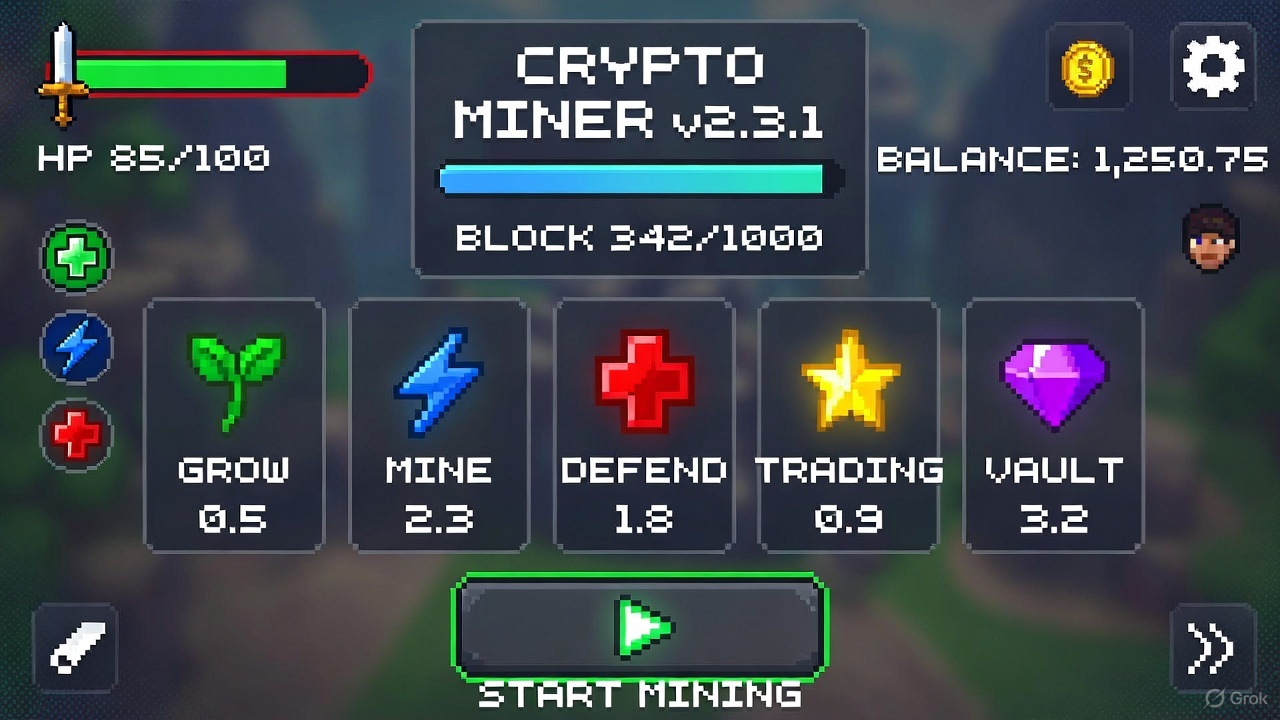
Blockchain gaming has become one of the most controversial topics in the video game industry. While crypto enthusiasts see it as the future, traditional gamers often view it as a cash grab. The reality is more nuanced – blockchain technology offers genuine benefits for gaming, even if current implementations leave much to be desired.
What Is Blockchain Gaming?
Blockchain games incorporate distributed ledger technology into gameplay mechanics. The most common implementation involves minting in-game items as NFTs (non-fungible tokens), allowing players to truly own their digital assets and trade them with others.
Many blockchain games use cryptocurrency for in-game currencies, and some offer play-to-earn mechanics where players can generate real income through gameplay.
The Ownership Problem Blockchain Solves
Traditional online games have a fundamental problem: you don’t actually own anything you “earn” in the game. When servers crash or shut down, your items disappear.
Remember when Call of Duty Warzone 2.0 servers kept crashing in November 2022, causing players to lose items they’d spent hours unlocking? If those items had been minted as NFTs on a blockchain, they’d still exist in players’ wallets regardless of server issues.
Game companies can also arbitrarily remove items from your account, ban you without recourse, or shut down games entirely – taking all your “owned” items with them.
How Big Is Blockchain Gaming?
According to Dapp Radar, blockchain games generate over 20 million daily transactions across popular blockchain protocols. That’s more transactions than every other blockchain use case combined.
However, the overall transaction volume remains lower than decentralized finance applications, suggesting blockchain gaming has captured user engagement but not necessarily high-value economic activity yet.
The Play-to-Earn Revolution
Games like Axie Infinity introduced viable ways to earn money while playing. Players breed and train NFT creatures they can sell for cryptocurrency. While most players won’t get rich, the earning potential attracts gamers who spend hours playing anyway.
This creates new revenue streams for developers too. They can generate provable scarcity for in-game assets and earn royalties on secondary sales when players trade items.
Real Advantages of Blockchain Gaming
True Digital Ownership
With blockchain games, you verifiably own the assets you earn. Unlike traditional games where the developer controls everything, blockchain-based items exist independently of the game company. You can trade them, sell them, or keep them regardless of what happens to the game.
Transparency and Provable Scarcity
When a developer says they’re releasing exactly 1,000 legendary swords, you can verify that claim using a blockchain explorer. Traditional games require trusting the developer – blockchain gaming provides proof.
Even Online Casinos are going the crypto route. Online Crypto Casinos are emerging. An Online Crypto Casino is more transparent than the traditional ones. These types are “Provably Safe” Gambling Platforms
The Interoperability Dream
Mike Shinoda, Linkin Park co-founder, tweeted in 2022: “Imagine taking your favorite skin from Valorant, and using it [in] Fortnite. And not paying extra, because you own it. Then using it in CoD, Minecraft, even Twitter, IG.”
While technically difficult, this vision is possible. NFT games could recognize items from other games by reading players’ wallet contents. Games built on the same engine could more easily share assets.
Complete cross-game interoperability won’t happen soon, but it represents blockchain gaming’s most exciting long-term potential.
Enhanced Security
Blockchain games use encrypted ledgers to store player account information, making them less vulnerable to hacks that expose personal data – a persistent problem with traditional online games.
Major Challenges Holding Back Adoption
Technical Barriers
Many players find setting up crypto wallets confusing and intimidating. Developers must learn to integrate blockchain networks before adding NFTs or cryptocurrency – a significant learning curve.
Regulatory Uncertainty
The SEC has scrutinized cryptocurrency and NFT projects, claiming many may be unregistered securities. Game developers must ensure their implementations pass the Howey Test or risk legal trouble.
The Howey Test determines whether something is an investment contract based on: “an investment of money in a common enterprise with an expectation of profit primarily derived from the efforts of others.”
Scalability Issues
As games grow popular, transaction volume increases. Blockchain games face scalability problems depending on which distributed ledger technology they use. Success requires blockchains with low transaction fees and high throughput.
Gamer Backlash
This might be the biggest obstacle. When Square Enix announced plans to add NFTs to popular gaming series, the reaction was overwhelmingly negative. Gaming news sites called it a “blatant cash grab,” and players felt the company prioritized profit over gameplay.
The crypto and traditional gaming communities remain largely separate, with traditional gamers viewing blockchain integration with extreme skepticism.
The Future of Blockchain Gaming
Major Companies Are Investing
Sony recently filed a patent for an NFT gaming framework stating “the digital asset may be used, via the NFT, across different computer simulations and/or across plural different computer simulation platforms.”
How Sony plans to implement this remains unclear, but it signals serious interest from gaming industry giants in blockchain technology.
Money Is Pouring In
Despite the crypto bear market, 2022 saw massive fundraising in blockchain gaming. According to Block Data, Animoca Brands raised over $565 million that year alone.
This capital could drive significant developments over the next decade, even if mainstream adoption remains years away.
Developer Interest vs Player Resistance
Companies like Square Enix, Ubisoft, and Electronic Arts have expressed interest in blockchain gaming. However, their announcements have been met with player hostility.
This disconnect suggests blockchain gaming’s path to mainstream adoption will be rocky. Developers need to demonstrate genuine value to players rather than appearing to chase cryptocurrency trends.
Which Blockchain Works Best for Gaming?
Successful blockchain games require distributed ledgers with:
- Low transaction fees
- High transaction throughput
- Security and reliability
- Publicly auditable records
Networks like Hedera have positioned themselves as ideal for gaming applications. Hedera’s governing council includes Ubisoft and Electronic Arts, while gaming companies like Animoca Brands have partnered with the platform.
As Yat Siu, Animoca Brands co-founder, stated: “We are very excited to work with Hedera, which offers some highly appealing uses for gaming, particularly in the area of high-transaction scenarios. We believe this partnership will result in more efficient validation of play-to-earn activities, including addressing issues such as the multi-billion dollar problem of cheating in games.”
Bottom Line: Potential vs Reality
Blockchain gaming offers genuine advantages – true ownership, transparency, potential interoperability, and new revenue models for players and developers. The technology solves real problems with traditional online gaming.
However, current implementations often feel more focused on monetization than improving gameplay. Technical barriers, regulatory uncertainty, and intense player skepticism create significant obstacles.
The future of blockchain gaming depends on whether developers can demonstrate value to traditional gamers rather than just crypto enthusiasts. Until blockchain integration enhances rather than exploits the gaming experience, mass adoption will remain elusive.
The technology has promise. The execution needs work.


How to Recover Lost Game Files from an External Drive on Mac

Mystery Anime You’ll Regret Starting at Midnight | Part 2

ARC Raiders Frozen Trail Guide: How to Board and Clear the Frigate

Rockstar Games Integrates Advanced Ray Tracing for GTA VI

How to Update Outdated Graphics Drivers for Better Gaming Performance and Higher FPS

The Most Popular Car Game Isn’t Where Players Stay Longest

Canada’s Gaming Audience Is Bigger Than the Old Stereotype

Mystery Anime You’ll Regret Starting at Midnight | Part 1

Anime You’ll Be Glad You Added to Your Fall Watchlist (Part 2) 🍂

WoW Forever Leveling: What Is New on the Road from 1 to 60

MM2 weapon rarity tiers explained for traders

Blox Fruits Physical vs Permanent Fruits: What’s the Difference?

What to Check Before Buying FC 27 Coins Online

Pokémon Announces New Movie With a New Hero and Mimikyu

Double-Sentinel Defensive Holds Disrupt Fast Valorant Site Executes
Canada’s Gaming Audience Is Bigger Than the Old Stereotype
-
 Anime3 weeks ago
Anime You’ll Be Glad You Added to Your Fall Watchlist (Part 2) 🍂
-
 Features2 weeks ago
WoW Forever Leveling: What Is New on the Road from 1 to 60
-
 Esports3 weeks ago
MM2 weapon rarity tiers explained for traders
-
 Features4 weeks ago
Blox Fruits Physical vs Permanent Fruits: What’s the Difference?
-
 Features4 weeks ago
What to Check Before Buying FC 27 Coins Online
-
 Anime4 weeks ago
Pokémon Announces New Movie With a New Hero and Mimikyu
-
 Esports4 weeks ago
Double-Sentinel Defensive Holds Disrupt Fast Valorant Site Executes
-
 Features2 weeks ago
Canada’s Gaming Audience Is Bigger Than the Old Stereotype
-
 Anime2 weeks ago
Mystery Anime You’ll Regret Starting at Midnight | Part 1
-

 Features3 weeks ago
Why Sports Games Keep Getting Better at Simulating the Real Thing
-
 Features2 weeks ago
8 Underrated PC Games Worth Playing in 2026 (That Aren’t Getting the Attention They Deserve)
-

 Features2 weeks ago
From Consoles to Phones: How Canadian Gaming Became an Anytime Experience