
Technology
Level Up Your Audio: How to Score the Next Big Indie Game from Your Bedroom

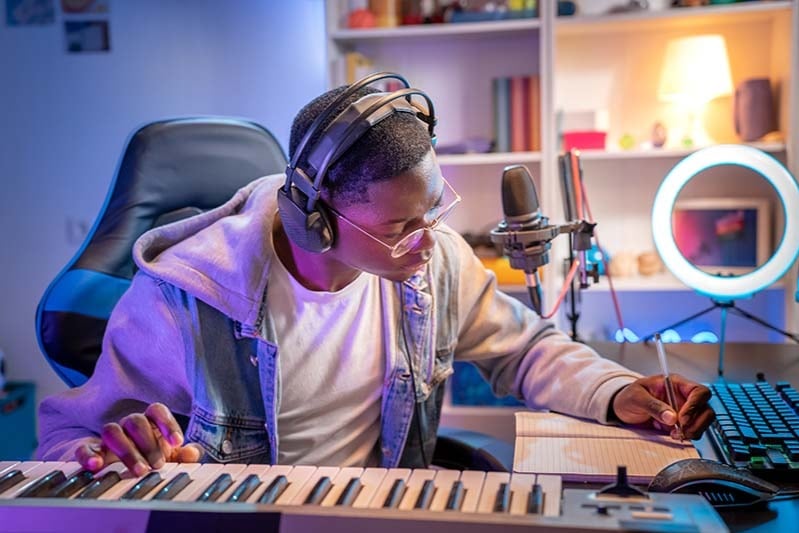
The video game industry has undergone a seismic structural shift. For decades, the market was a walled garden guarded by massive AAA studios with Hollywood-sized budgets, leaving independent developers fighting for absolute scraps. But today, the indie scene is an undeniable juggernaut that regularly brings the traditional gaming industry to its knees.
But you do not need to book out a multi-million-dollar commercial facility or hire a 50-piece live orchestra to score a commercial success. If you are strategic when setting up your studio without blowing your budget, you can create breathtaking, emotional, and dynamic video game soundtracks using nothing more than the computer sitting on your desk right now.
According to market research from VG Insights, indie titles now account for roughly 98% of all games released on Steam. But they aren’t just taking up space – they are dominating the cultural conversation. Solo developers and small teams have produced astronomical breakout hits. Palworld shattered records by selling over 15 million copies on Steam in its first month, while games like Hollow Knight, Vampire Survivors, and Hades have redefined entire genres and swept award shows.
With this relentless explosion of independent games comes a massive, unprecedented demand for original, evocative soundtracks. Developers need music that gives their pixel art or 3D worlds an emotional heartbeat. Fortunately, just as game engine software has democratized game development, the barrier to entry for professional music production has been completely vaporized.
You do not need to book out a multi-million-dollar commercial facility, hire an acoustic engineer, or pay for a 50-piece live orchestra to score a commercial success. If you are strategic when setting up your studio without blowing your budget, you can create breathtaking, emotional, and dynamic video game soundtracks using nothing more than the computer sitting on your desk right now.
Here is exactly what it takes to start composing for indie games (and even the booming indie animation scene) straight from your home studio.
The Indie Boom: Games, Animation, and the Need for Audio
The independent renaissance is not strictly limited to video games. The same democratization of software that gave us Stardew Valley has bled into the animation sector. While massive Japanese studios still dominate mainstream anime, western indie animation has exploded on platforms like YouTube. Shows like The Amazing Digital Circus (by Glitch Productions) and Hazbin Hotel (which started as an indie pilot by SpindleHorse Toons before being picked up by A24) prove that independent creators are bypassing traditional gatekeepers across all visual media.
What do indie games and indie web series have in common? They both live and die by their audio.
A developer can program the tightest combat mechanics in the world, but if the boss fight music sounds like a cheap, generic royalty-free loop, the player will feel absolutely nothing. Indie developers know that music is the ultimate emotional anchor for their projects. They are actively scouring social media, YouTube, and developer forums for composers who can deliver high-quality, custom soundtracks. And the best part? They don’t care if you recorded it in an elite studio or in your bedroom, as long as it sounds incredible.
The Core Essentials: Building Your Digital Orchestral Pit
The enduring myth that you need a room full of expensive, flashing hardware and floor-to-ceiling acoustic foam to produce professional audio is entirely false. If you are already a PC gamer, you likely own the most expensive piece of the puzzle. The modern home studio requires only a few core components to get off the ground and start syncing audio to gameplay.
The Computer (Your Gaming PC is Perfect)
Audio production requires serious processing power to handle dozens of instrument tracks, complex synthesizers, and heavy digital effects simultaneously. Fortunately, the exact same specifications that make a great gaming PC are exactly what you need for music production.
- The Processor (CPU): A fast multi-core processor (like an Intel i7 or AMD Ryzen 7) allows your music software to run multiple instruments without glitching or freezing.
- The Memory (RAM): This is arguably the most important spec for a composer. If you want to load up massive, realistic orchestral libraries (like a full digital string section), those sounds are loaded directly into your RAM. A gaming PC with 16GB or 32GB of RAM will easily handle professional-level composing templates.
The DAW (Your Musical Canvas)
The heart of your home studio is the Digital Audio Workstation, or DAW. If you have ever used a video editing program like Adobe Premiere or DaVinci Resolve, you already understand the concept of a DAW. It is simply a non-linear editor designed strictly for sound.
Instead of splicing video clips together on a timeline, you are arranging drum beats, basslines, and sweeping melodies. Popular DAWs like FL Studio, Ableton Live, Logic Pro (for Mac users), and Reaper provide you with an infinite number of digital tracks. The DAW acts as your tape machine, your mixing console, and your instrument rack, allowing you to record, edit, and export your final soundtrack.
The Hardware: Headphones and Audio Interfaces
To actually mix your music accurately, you cannot rely on consumer gaming headsets. Standard gaming headsets from brands like Razer or SteelSeries artificially boost the bass and treble to make explosions and footsteps sound more intense. If you mix your music on them, your headphones will lie to you, and your track will sound muddy and weak on other systems. You need a flat-response pair of wired studio monitor headphones (like the Beyerdynamic DT 770 or Audio-Technica ATH-M50x) that provide a brutally honest, neutral representation of your audio.
The Hands-On Element: A MIDI Controller (Optional but Highly Recommended)
While you can draw every single note in your DAW using only your computer mouse, physically playing melodies on a keyboard injects a human, emotional feel into your music that is essential for storytelling in games. A simple $100 USB MIDI controller keyboard plugs directly into your PC and allows you to play your software instruments in real-time, tap out drum beats on velocity-sensitive pads, and experiment with chord progressions organically.
The Virtual Orchestra: Software Synths and Plugins
In the past, capturing the sweeping, cinematic sound of a role-playing game or the aggressive tone of a sci-fi shooter required thousands of dollars of analog synthesizers or a massive budget to record live musicians. Today, you can load up software instruments (known as VST plugins or instruments) that replicate everything from a screeching cyberpunk synthesizer to a delicate solo cello with hyper-realistic accuracy.
This digital approach is exactly how some of the most iconic indie game soundtracks of the last decade were created. When solo developer Toby Fox designed the cultural phenomenon Undertale, he composed the entire legendary, nostalgic soundtrack using affordable software tools and soundfonts. Eric Barone created the beloved Stardew Valley music the exact same way, and it went on to sell over 30 million copies. Lena Raine composed the award-winning, emotionally devastating soundtrack for the indie platformer Celeste using a combination of digital synthesizers and software pianos.
Today, the software available to home producers is staggering, allowing you to build an entire virtual orchestra on your hard drive.
Arturia: The Retro Synth Powerhouse
If you are scoring a game with a retro, synthwave, or 1980s sci-fi aesthetic, you need authentic analog tones. Arturia’s V Collection is the industry standard for this. They meticulously emulate tens of thousands of dollars worth of classic, vintage hardware synthesizers (like the Roland Juno, Yamaha CS-80, and Moog synthesizers) in software form. You get all the warmth, pitch-drift, and fat analog tone of the original hardware without the massive price tag or maintenance issues.
Spectrasonics: The Cinematic Atmosphere
When scoring deep space exploration, psychological horror, or massive ambient environments, composers reach for Spectrasonics Omnisphere. Omnisphere is a legendary powerhouse software synthesizer capable of creating the most complex, cinematic atmospheric pads imaginable. It blends traditional synth oscillators with heavily manipulated audio samples (like a burning piano or the sound of a stalactite being struck in a cave) to create otherworldly soundscapes that instantly set the mood of a game level.
Native Instruments: The Hyper-Realistic Orchestra
If your game requires a soaring, traditional orchestral score, you don’t need to hire a string quartet. Native Instruments provides Kontakt, the industry-standard software sampler. Through Kontakt, you can load up massive orchestral libraries featuring heavily detailed recordings of real violins, brass sections, and choirs. You play the notes on your MIDI keyboard, and the software triggers perfectly captured audio of world-class musicians playing those exact notes. With a bit of practice, a home producer can program an orchestral track that is entirely indistinguishable from a live Hollywood recording.
The Global Indie Team: Collaborating Across Continents
Perhaps the greatest advantage of the modern indie game boom is the connective power of the internet. You do not need to pack up your life and move to game development hubs like Los Angeles, Tokyo, or London to break into the industry.
Because audio files and game builds are entirely digital, home producers are seamlessly collaborating with indie development teams spread across the globe. The workflow is entirely remote and incredibly efficient. A programmer in Sweden can build a prototype for a boss fight, send a gameplay video capture via Discord to a composer living in Brazil, and have a fully mastered, custom boss-fight theme delivered via cloud storage just a few days later.
Communication platforms, cloud storage, and video conferencing have erased geographical borders. You can join game jams on platforms like itch.io, connect with developers on Twitter or Reddit, and build a massive portfolio of game audio without ever leaving your bedroom studio.
Thanks to the sheer computing power of modern PCs and the unparalleled accessibility of digital audio tools, the line between a “bedroom producer” and a “professional game composer” has been completely erased. The indie game market is hungrier than ever for unique, emotional, and driving music that pushes their art to the next level. Launch that DAW, load up a synthesizer, and start writing the soundtrack to the next great indie adventure.
About the Author
Jim Cook is a music producer, educator, and drummer. As the founder of Embervane, he helps aspiring creators strip away the academic fluff, master modern studio tools, and turn raw musical ideas into finished, release-ready tracks. When he isn’t producing or teaching, he’s usually analyzing vintage mixing gear emulations or playing video games.



Level Up Your Audio: How to Score the Next Big Indie Game from Your Bedroom
The Parent Companies Behind Your Favorite Games

A Must watch Wholesome Anime That Feels Surprisingly Relatable!

Steal a Brainrot Items Guide: How to Get Rare Brainrots and Build a Stronger Base

Best MM2 Weapons to Collect: Knives, Guns and Godlys Explained

Table and Mini Games In Grand Theft Auto 6 – What Can We Expect?

How to Recover Lost Game Files from an External Drive on Mac

Mystery Anime You’ll Regret Starting at Midnight | Part 2

WoW Forever Leveling: What Is New on the Road from 1 to 60

MM2 weapon rarity tiers explained for traders

Canada’s Gaming Audience Is Bigger Than the Old Stereotype

ARC Raiders Frozen Trail Guide: How to Board and Clear the Frigate

8 Underrated PC Games Worth Playing in 2026 (That Aren’t Getting the Attention They Deserve)

The Most Popular Car Game Isn’t Where Players Stay Longest

Why Sports Games Keep Getting Better at Simulating the Real Thing

Mystery Anime You’ll Regret Starting at Midnight | Part 1
-
 Features4 weeks ago
WoW Forever Leveling: What Is New on the Road from 1 to 60
-
 Esports4 weeks ago
MM2 weapon rarity tiers explained for traders
-
 Features3 weeks ago
Canada’s Gaming Audience Is Bigger Than the Old Stereotype
-
 Features2 weeks ago
ARC Raiders Frozen Trail Guide: How to Board and Clear the Frigate
-
 Features4 weeks ago
8 Underrated PC Games Worth Playing in 2026 (That Aren’t Getting the Attention They Deserve)
-
 Features3 weeks ago
The Most Popular Car Game Isn’t Where Players Stay Longest
-
 Features4 weeks ago
Why Sports Games Keep Getting Better at Simulating the Real Thing
-
 Anime3 weeks ago
Mystery Anime You’ll Regret Starting at Midnight | Part 1
-

 Gaming News2 weeks ago
Rockstar Games Integrates Advanced Ray Tracing for GTA VI
-

 Features4 weeks ago
From Consoles to Phones: How Canadian Gaming Became an Anytime Experience
-
 Anime2 weeks ago
Mystery Anime You’ll Regret Starting at Midnight | Part 2
-
 Esports4 weeks ago
Why Esports Platforms Need Different Payment Rails Than Traditional Game Stores