
Esports
Double-Sentinel Defensive Holds Disrupt Fast Valorant Site Executes

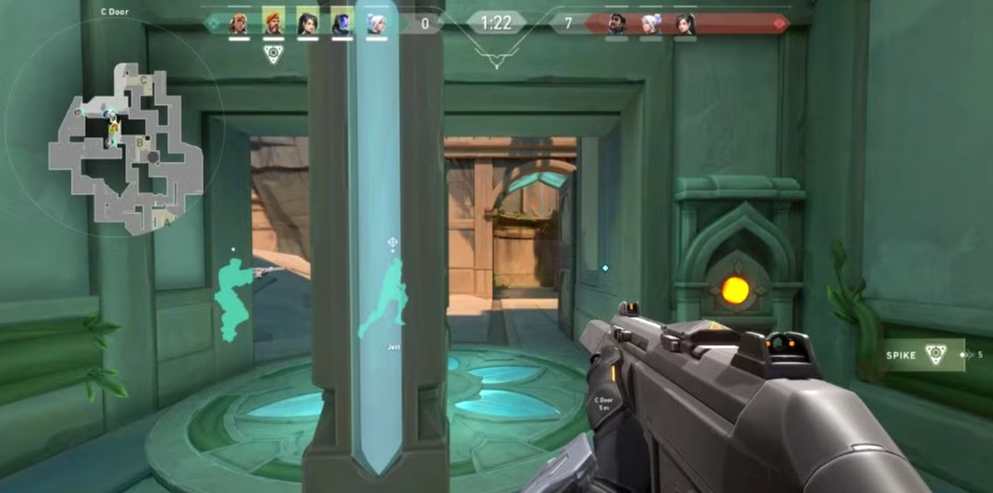
The relentless increase in offensive pacing has forced professional teams to seek new methods to shut down explosive rounds. Watching tier-1 competitive matches closely, I notice how pairing two Sentinel agents transforms open bombsites into an impassable obstacle course. Combining Cypher’s traps, Deadlock’s sensors, or Killjoy’s Nanoswarms strips the attacking side of its primary weapon: raw entry speed behind duelist flashes. Even an impeccably coordinated push stalls when duelists lose mobility in narrow site chokepoints and walk into defensive crossfires. In this breakdown, we will examine how double-Sentinel setups neutralize fast site executes, which ability combinations anchor a deep defense, and why attackers are forced into slow, information-heavy defaults.
Synergy of Static Traps Along Primary Chokepoints
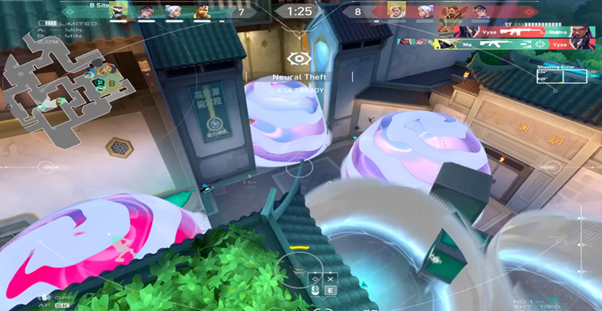
The effectiveness of a double-Sentinel pairing rests on completely shutting down primary attack corridors with mutually reinforcing utility. When Killjoy and Cypher lock down a site together, attackers cannot simply dash or blast-pack onto the objective using Jett or Raze. Dense gadget placement creates an unbroken defensive barrier across narrow lanes, where any attempt to rush through ends in instant crowd control and forfeited momentum.
This saturation of defensive devices forces attackers to burn precious clock clearing every single corner before initiating a hit. Tracking team playbooks during the qualifiers for valorant champions 2026 via official broadcasts, I frequently observe how futile aggressive split-pushes look against an entrenched utility web. A Cypher Trapwire layered with an activated Killjoy Nanoswarm at Ascent’s A-main instantly deletes the first player crossing the threshold, halting the entire five-man push and trapping them in the choke.
Where attacking teams used to deliberately sacrifice utility to trade out a single detected trap and flood the site through sheer numbers, a second layer of denial shuts that plan down. Right after triggering a tripwire, pushing players stumble into a Deadlock Sonic Sensor or a Sage Slow Orb, finding themselves completely isolated with no room to fall back. In my view, layering complementary slowing and damage utility turns bombsite entrances into lethal meat grinders for any entry duelist.
Flank Control and Freeing Up Team Resources
Running a second Sentinel grants the defense tremendous flexibility in redistributing players across the map. A single Sentinel reliably locks down an entire sector using autonomous cameras and sound sensors, allowing teammates to rotate faster on early sound cues toward active danger zones. On maps like Sunset or Lotus, a Killjoy and Deadlock duo can effectively anchor two-thirds of the territory with just two players, completely shutting down unexpected flank routes from enemy lurkers.
This defensive posture forces attackers to waste valuable time clearing every corner, stripping them of any element of surprise. Tracking balance changes and timing adjustments in Valorant patch notes 13.00 on the official portal, it is easy to see how developers deliberately tune the operational range of autonomous gadgets. Even so, combining static detection tools still yields comprehensive intelligence on enemy movement, letting anchors on the opposite bombsite play without fear of a backstab.
That autonomy completely shifts the responsibilities of defensive duelists and initiators. Players piloting Jett or Omen no longer have to sit passively on-site waiting for the hit to land. Instead, they can contest neutral zones like mid with aggressive early peeks, taking early duels and securing vital information about the opponent’s intentions without risking the bombsite behind them.
Neutralizing the Attackers’ Post-Plant Potential
A double-Sentinel utility kit proves just as decisive during retakes as it does when stonewalling site entries. Attacking rosters are accustomed to flooding a site in seconds before falling back to long-range positions for post-plant molly lineups. Against two Sentinels, however, attackers frequently stall in narrow chokepoints, failing to establish crossfires before defensive reinforcements arrive. Delays at the front line force uncomfortable, rushed Spike plants in exposed spots where defenders can easily deny the plant timer with simple spam.
In retake scenarios, an surviving Sentinel like Cypher or Sage brings massive value through preserved utility. A well-placed Spycam instantly spots attackers tucked behind cover, while a Sage Barrier Orb cuts off direct sightlines for lineup shooters back in spawn. Paired with Deadlock GravNet nets or Sage Slow Orbs, this utility denies attackers the space to swing out and pick off defusers from range.
Based on my observations, the attacking side surrenders over half of its post-plant advantage whenever it is forced to burn key smoke covers early just to bypass static traps. Stripped of smokes and defensive line-of-sight blocks, attackers end up pinned on an open site against a structured retake. The clock advantage evaporates, turning the post-plant phase into a straightforward cleanup for a coordinated defense.
Economic Exhaustion of the Attacking Side
Constantly attempting to break through a double-Sentinel defense places an unsustainable strain on the attacking team’s economy. Attackers are forced to burn Sova Shock Bolts, KAY/O knives, or Fade Prowlers round after round simply to clear a path through the traps. Once that path-clearing utility runs dry, the offense has to walk into direct gunfights empty-handed against fully equipped anchors.
This asymmetrical resource trade leads to systematic losses in crucial rifle rounds. Lineups built around raw pacing rapidly spiral into strings of half-buys, since investing in expensive Vandals or Phantoms offers little value without supporting utility. In these matchups, even elite rosters like Paper Rex or Fnatic find themselves forced into eco rounds far more often, as standard 600 to 800-credit utility investments vanish within the first ten seconds without dealing any health damage.
In my view, steadily draining the attackers’ economy is the primary hidden strength of double-Sentinel compositions at the professional level. Persistent credit deficits strip the offense of strategic flexibility, locking players into predictable force-buys relying on Sheriffs or Spectres. The defense simply needs to maintain disciplined banks, hold long-range angles, and pick apart an under-equipped opponent from comfortable positions.
Conclusion
Running double-Sentinel setups on defense clearly exposes the limits of pure mechanical aggression in competitive Valorant. Fast bombsite hits that once yielded cheap round conversions now crash directly into multi-layered spatial control and entrenched utility webs. I am convinced that attacking rosters must abandon one-dimensional rush strategies in favor of patient, broad-map pressure. Tier-1 success currently belongs to teams capable of methodically dismantling defensive setups without bleeding out half their roster during the opening seconds of a site push.



Double-Sentinel Defensive Holds Disrupt Fast Valorant Site Executes

Blox Fruits Physical vs Permanent Fruits: What’s the Difference?

What to Check Before Buying FC 27 Coins Online

Pokémon Announces New Movie With a New Hero and Mimikyu

Can You Stream Kick on Xbox: Complete Guide for Xbox Users

One Piece Is Everywhere Right Now – and It’s Exposing a Problem With How Gaming Teaches Players to Gamble

Why Game Clips Stall on Instagram Reels

The Truth About Family Co-Op Games That Keep Everyone Included

This Unexpected Frieren x MapleStory Crossover Looks Too Perfect

6 Years Later, Haikyu!! Returns in the Last Way Fans Expected

The shared design language of video games and interactive digital entertainment

Why Have Animal Characters Taken Over Every Corner Of Gaming?

6 Gaming Platforms That Push Originality to the Forefront

How Much Does Player Housing Really Cost in WoW Midnight?

Anime You’ll Be Glad You Added to Your Fall Watchlist (Part-1)

From Arcade Cabinets to Digital Cards: The Psychology of the Push-Your-Luck Mechanic
-
 Anime3 weeks ago
This Unexpected Frieren x MapleStory Crossover Looks Too Perfect
-
 Anime1 week ago
6 Years Later, Haikyu!! Returns in the Last Way Fans Expected
-
 Culture4 weeks ago
The shared design language of video games and interactive digital entertainment
-
 Features4 weeks ago
Why Have Animal Characters Taken Over Every Corner Of Gaming?
-
 Features3 weeks ago
6 Gaming Platforms That Push Originality to the Forefront
-
 Features4 weeks ago
How Much Does Player Housing Really Cost in WoW Midnight?
-
 Anime3 weeks ago
Anime You’ll Be Glad You Added to Your Fall Watchlist (Part-1)
-
 Features1 week ago
From Arcade Cabinets to Digital Cards: The Psychology of the Push-Your-Luck Mechanic
-
 Features7 days ago
Struckd on Windows: Making 3D Games Without Writing a Line of Code
-

 Features1 week ago
Why Randomness Makes Some Video Games So Interesting
-

 Features1 week ago
Keyboard vs Controller Gaming: Which One Is Better?
-

 Features1 week ago
5 Masterful Video Games Where The Element of Chance Shaped the Narrative