
Features
POE 2 Currency Guide: Everything You Need to Know About Orbs, Shards & Trade

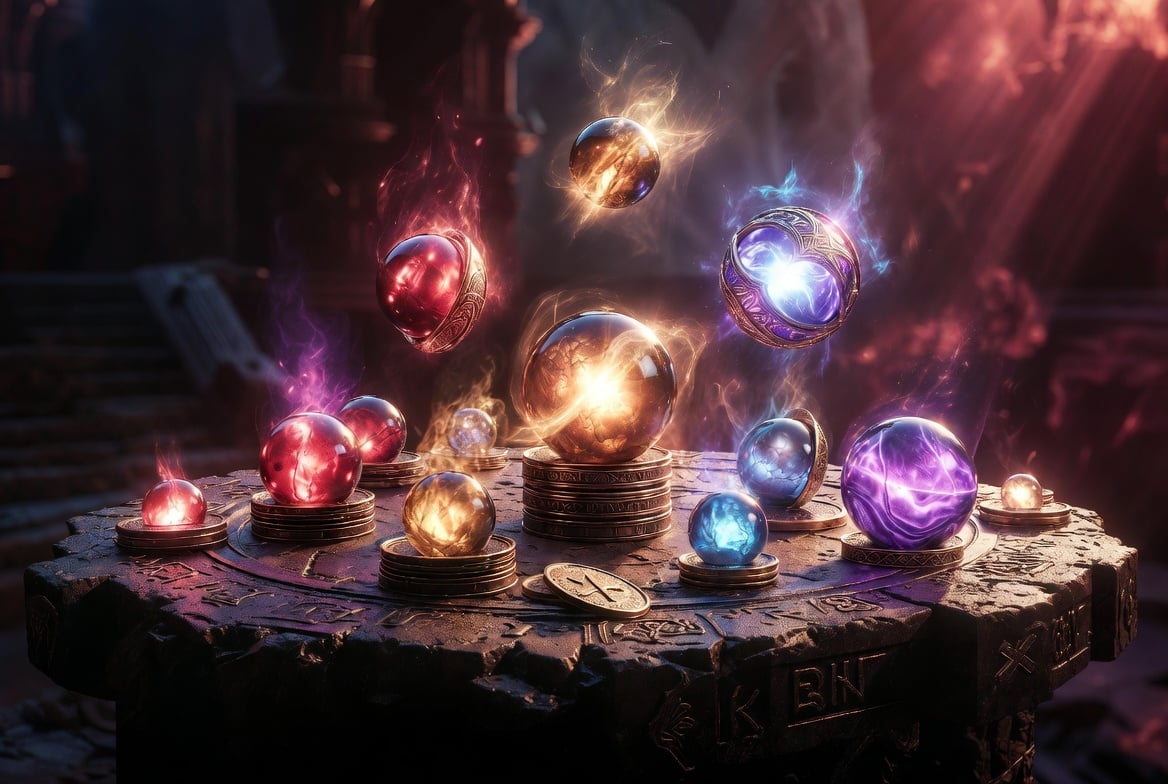
Path of Exile 2 does not hold your hand when it comes to its economy. Drop into the game without context and the currency system can feel like a foreign language — dozens of different orbs, shards, and fragments dropping from enemies, each with a name that tells you almost nothing about what it actually does. But once the logic behind the system clicks, it becomes one of the most satisfying parts of the game. Understanding what you have, what it is worth, and how to use it well separates players who scrape through content from those who build freely and trade confidently.
This guide walks through the core currency types, how they function, and how trade works in practice.
Why POE 2 Uses Items as Currency
Most games use a single gold-style currency as the medium of exchange. POE 2 takes a different approach: the things players use to modify, craft, and upgrade their gear are also the things they use to pay for items from other players. There is no separate “money” — the currency is the crafting material.
This creates a system where understanding the economy and understanding crafting are essentially the same skill. When you know what an Orb of Alteration does to a magic item, you also know why other players want it and roughly how much they are willing to pay for things denominated in it. The economy and the gameplay are inseparable in a way that feels deliberate and rewarding to learn.
The Core Orbs
Orb of Transmutation turns a normal item into a magic item with one or two random modifiers. It sits at the low end of the value spectrum but serves an important early-game function, particularly for players working through campaign content and experimenting with gear before investing heavily.
Orb of Alteration rerolls the modifiers on a magic item. Because magic items with specific modifier combinations feed into certain crafting recipes and builds, Alterations see consistent demand and circulate widely in trade. They are one of the more reliable mid-tier currencies for smaller transactions.
Orb of Augmentation adds a modifier to a magic item that only has one. Often paired with Alterations in crafting sequences, it rarely stands alone as a trade currency but is consumed in volume by active crafters.
Orb of Alchemy upgrades a normal item to rare, applying several random modifiers at once. This is a significant step up in crafting potential, and Alchemies carry proportionally more value in trade than the lower-tier orbs.
Chaos Orb rerolls all modifiers on a rare item simultaneously. For a long stretch of POE 2’s endgame, Chaos Orbs function as the primary unit of account in player-to-player trade — the benchmark against which most item prices are set. If you learn the value of one currency first, make it this one.
Exalted Orb adds a single new modifier to a rare item that still has open affix slots. Because rare items with strong bases and good modifier combinations are valuable, and because adding a targeted modifier without destroying what is already there is a high-stakes move, Exalted Orbs carry substantial weight. They represent a tier of currency where players begin thinking carefully before spending.
Divine Orb rerolls the numerical values of all existing modifiers on an item without changing what those modifiers are. A pair of boots with excellent movement speed and resistance rolls can become exceptional with a Divine Orb — or disappointing. They sit near the top of the general currency hierarchy and are used both for high-end crafting and as a benchmark for the most expensive trade transactions.
Orb of Annulment removes a single random modifier from an item. Its value comes from the fact that it can salvage a crafting project that went slightly wrong — removing one bad modifier while leaving the rest intact. In the right situation it is irreplaceable, which gives it consistent trade value despite being situational.
Shards and Fragments
Many of the orbs above exist in shard form — Transmutation Shards, Alteration Shards, and so on. These drop more frequently than whole orbs and accumulate in stacks that automatically combine into full orbs once you have enough. Rather than cluttering the economy with micro-transactions, shards give the game a natural flow where small drops still feel meaningful because they are always working toward something larger.
Scroll Fragments follow the same logic for Scrolls of Wisdom, which identify unidentified items. While Scrolls of Wisdom are not a trade currency in any meaningful sense, understanding the shard-to-orb relationship helps new players stop vendoring shards before they understand what they are holding.
How Trade Actually Works
POE 2’s trade ecosystem operates largely through community-built tools and the official trade site, where players list items with price tags denominated in currency. Searching for a specific item, messaging the seller, and completing the exchange in-game is the standard flow.
A few things make this system work better in practice. Pricing items accurately requires checking what similar items are currently listed for — not what you hope they are worth, but what the market reflects at that moment. Items that have been sitting in your shop tab for days without interest are almost always overpriced. Adjusting downward until things sell teaches you the real value of what you are finding faster than any guide can.
For players who want to engage with the trade economy without spending hours farming specific currency types, the broader ecosystem around POE 2 includes resources that make that easier. Platforms covering poe 2 currency give players a way to source specific orbs or stacks when a build requires materials they have not naturally accumulated yet — a practical option for those whose time for grinding is limited but whose interest in the endgame is not.
Building a Feel for Value
The most useful thing a new player can do is start paying attention to what drops and what does not. Chaos Orbs and Exalted Orbs feel meaningful when they hit the ground. Transmutations and Augmentations feel routine. That instinct, built through play, is the foundation of everything else.
From there, checking the trade site regularly — even just browsing to see what items cost in what currencies — builds an intuitive sense of the economy that no amount of reading fully replicates. The system rewards curiosity and attention, and it pays that investment back in the ability to build better characters, trade more confidently, and get more out of every hour spent in the game.



Anime You’ll Be Glad You Added to Your Fall Watchlist (Part-1)

6 Gaming Platforms That Push Originality to the Forefront

Why Gamers Love Predicting What Happens Next

This Unexpected Frieren x MapleStory Crossover Looks Too Perfect

Why Have Animal Characters Taken Over Every Corner Of Gaming?

How Much Does Player Housing Really Cost in WoW Midnight?

The shared design language of video games and interactive digital entertainment

Why Game Culture Needs More Specialist Commentary

How Online Gaming Communities Have Evolved Over the Years

The Top 10 Highest-Rated Anime of All Time Just Changed, Did Your Favorite Make the Cut?

How to Trade in MM2: Fair Trades and No Scams

When Chance Became a Game Mechanic Instead of a Technical Limitation
The Growing Appeal of Games That Challenge the Mind

Luck and Strategy Across Modern Game Genres

What Classic Games Still Teach Modern Developers About Creativity

Frieren: Beyond Journey’s End Creator Recommends the Next Hit Action Fantasy Series
-
 Features3 weeks ago
How Online Gaming Communities Have Evolved Over the Years
-
 Anime3 weeks ago
The Top 10 Highest-Rated Anime of All Time Just Changed, Did Your Favorite Make the Cut?
-
 Esports4 weeks ago
How to Trade in MM2: Fair Trades and No Scams
-
 Features4 weeks ago
When Chance Became a Game Mechanic Instead of a Technical Limitation
-
Features3 weeks ago
The Growing Appeal of Games That Challenge the Mind
-
 Features4 weeks ago
Luck and Strategy Across Modern Game Genres
-
 Features4 weeks ago
What Classic Games Still Teach Modern Developers About Creativity
-
 Anime2 weeks ago
Frieren: Beyond Journey’s End Creator Recommends the Next Hit Action Fantasy Series
-

 Anime3 weeks ago
Why Are Anime-Inspired Game Podcasts Gaining So Much Attention?
-
 Anime1 week ago
This Unexpected Frieren x MapleStory Crossover Looks Too Perfect
-
 Features2 weeks ago
From Loot Boxes to Live Experiences: How AI Is Blurring the Line Between Video Games and Interactive Entertainment
-
 Culture2 weeks ago
The shared design language of video games and interactive digital entertainment