
Features
Steal a Brainrot Traits Guide: How to Get Them and Boost Your Income

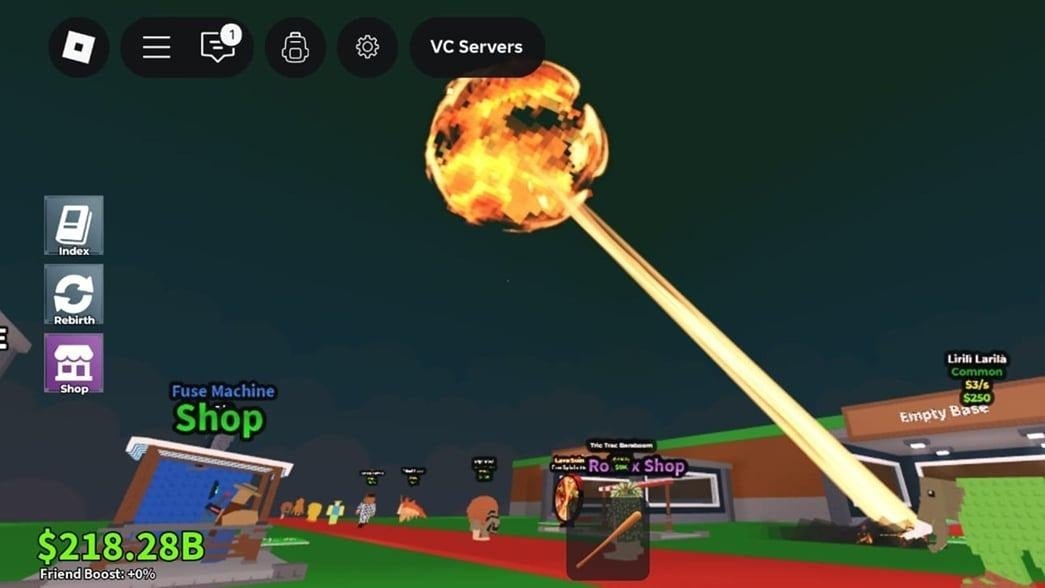
Two players can own the same Brainrot and collect very different amounts of Cash. Before you assume one of them has found a secret version, look above the character. A mutation, several traits and a player-specific income boost can make a familiar unit produce a very unfamiliar number.
Traits are worth understanding because they change more than the appearance of your base. They can make an ordinary copy a useful earner, complicate a trade comparison and tempt you into paying for an impressive number that does not mean what you think it does. The aim is to identify the exact version, understand how it earns and decide whether obtaining it improves your next session.
Read the whole Brainrot before comparing it
A mutation and a trait are separate modifiers. A Brainrot can have one mutation, such as Gold, while carrying multiple traits. Traits have their own visual effects and income contributions. A Gold character with Fire is therefore a different comparison from an otherwise identical Gold character without it.
This matters when browsing steal a brainrot items: a familiar name or rarity label does not tell you which copy a listing describes. Identify the mutation and named traits before using the displayed earning rate to compare it with your own collection. A gear item or Lucky Block is also a different purchase from a named Brainrot already carrying a particular trait.
Start with the character’s ordinary base income, then its mutation and traits. Keep any rebirth, friend or account-level boosts separate. For comparisons, use the same boost conditions on both sides; a seller’s screenshot and your base may not share them. A higher screenshot total alone is not proof of a better underlying copy.
How to get traits during normal play
Natural weather offers an accessible place to start. Community references identify Wet with rain, Snowy with snow and Comet-struck with falling stars. Watch the Red Carpet when one of those events is active and inspect the actual Brainrot before buying it. Weather creates an opportunity; it does not promise that your preferred character will appear and receive the effect.
The references describe natural weather traits on eligible spawned Brainrots. Do not assume that leaving your entire collection at home through a rain event applies Wet to every resident. Watch for the visual change and check the resulting income. A weather effect over the map is not the same thing as confirmation that a particular unit has gained a trait.
Administrator events provide another route. Fire, for example, is associated with a solar-flare effect during Admin Abuse, with the trait applied to affected Brainrots. Event rules matter: which units are eligible, whether a particular effect can reach them in a base, and whether the event is currently running can differ between traits.
That is why an old event guide should not become your permanent farming schedule. A trait can remain on an existing copy after the event that originally supplied it has ended. Seeing that copy in someone’s base does not establish that you can obtain a fresh one through the same route today.
If you want a specific existing version, acquiring that already-modified Brainrot is a separate route from waiting for a new application. Check the actual item and current in-game exchange options. Buying equipment does not let you select a weather trait and attach it to any character you own.
Understand the addition before chasing the biggest multiplier
The community trait reference lists Fire as a +5 contribution, Wet as +1.5, Snowy as +2 and Comet-struck as +2.5. These figures enter an additive modifier calculation alongside the mutation multiplier. They are not instructions to multiply every number together. The reference follows community wiki examples and explicitly says the formula is not independently verified in-game, so treat the following as a calculation model and confirm the displayed result.
For a concrete example, use Frigo Camelo’s reported ordinary income of $2,000 per second, before player boosts. Gold contributes a 1.25 mutation multiplier. Under that community model, these versions compare as follows; they are calculated examples, not a claim that each combination is currently available to obtain.
| Frigo Camelo version | Combined modifier | Calculated Cash per second |
|---|---|---|
| Default, no traits | 1 | $2,000 |
| Gold, no traits | 1.25 | $2,500 |
| Gold with Fire | 1.25 + 5 = 6.25 | $12,500 |
| Gold with Fire and Wet | 1.25 + 5 + 1.5 = 7.75 | $15,500 |
The last line is $2,000 multiplied by 7.75. Multiplying 1.25 by 5 by 1.5 would give $18,750, which answers a different calculation and overstates this example. For the positive traits shown here, add their contributions inside the bracket first.
There is also a useful spending lesson. Fire adds $10,000 per second to this $2,000-base example whether the starting copy is Default or Gold. Its percentage increase looks larger on the Default copy because the starting income is lower. A dramatic percentage is not the same thing as a larger absolute gain.
Compare the extra income you would actually receive
When browsing a steal a brainrot store, compare copies with the same character, mutation and boost assumptions before judging a trait premium. Treat the asking price as a marketplace price, not an official exchange rate between real money and in-game Cash. An extra $10,000 per second does not establish what that improvement should cost in dollars.
For a purchase paid with in-game Cash, you can make a different calculation. Suppose a hypothetical replacement costs an extra $1 million and increases your production by $10,000 per second. It would take 100 seconds of uninterrupted earning to recover that extra outlay. That excludes other costs, collection limits and the possibility of losing the unit; it is a comparison method rather than a promised result.
If your base is full, compare the replacement with the unit that would leave. A new copy earning $12,500 per second replaces an $8,000 earner with a gain of $4,500, not $12,500. That smaller difference is the number that belongs in your upgrade calculation.
Keep the useful copy and protect the progress
Income is only one reason to keep a Brainrot. Check the current rebirth requirements and any recipe you are planning before giving up a copy. A productive replacement may still leave you needing the exact character you just surrendered. Decide whether the next purchase is for earnings, progression or collection so those goals do not quietly compete for the same resources.
For broader acquisition routes, Goomba Stomp’s rare-Brainrot and base-building guide provides the wider context. Here, the useful habit is simpler: read the whole item, compare like with like and check the income in your own conditions.
Have a free slot and enough Cash ready when you watch an event, and keep an eye on your base while chasing a new arrival. Traits reward paying attention, but a glowing effect is only worthwhile if the copy helps you progress and you manage to keep it.



Steal a Brainrot Traits Guide: How to Get Them and Boost Your Income

FC 27 Coins: Best Wingers for Different Budgets

Tamon’s B-Side Season 2 Is Officially Confirmed! Here’s Everything We Know So Far

Nintendo Black Friday 2026: NZ Switch 2 Bundles and the US$50 Discount

What Pachinko, Arcade Cabinets and Video Games Have in Common

Why Gaming Platforms Offer Different Experiences Across Europe

Most anticipated video games of 2027

Rust Is Still the Most Stressful Game on Steam, and That’s the Point
The Parent Companies Behind Your Favorite Games

Best DNS Servers for Gaming in 2026: 6 Options for Speed and Stability

How to Grow a Gaming TikTok From Zero in 2026: 8 Steps

This New Fall Romance Anime Will Make You Fall in Love!

Level Up Your Audio: How to Score the Next Big Indie Game from Your Bedroom

Mr Villain’s Day Off Might Become Your Next Favourite Comfort Show! 🐼💕

Online games with cryptocurrencies — what does the gameplay look like?

Cat Girl, Fox Girl, Wolf Ears: Designing a Kemonomimi Character
-
Features4 weeks ago
The Parent Companies Behind Your Favorite Games
-
 Technology4 weeks ago
Best DNS Servers for Gaming in 2026: 6 Options for Speed and Stability
-
 Social Media4 weeks ago
How to Grow a Gaming TikTok From Zero in 2026: 8 Steps
-
 Anime3 weeks ago
This New Fall Romance Anime Will Make You Fall in Love!
-
 Technology4 weeks ago
Level Up Your Audio: How to Score the Next Big Indie Game from Your Bedroom
-
 Anime1 week ago
Mr Villain’s Day Off Might Become Your Next Favourite Comfort Show! 🐼💕
-
 Features3 weeks ago
Online games with cryptocurrencies — what does the gameplay look like?
-
 Anime3 weeks ago
Cat Girl, Fox Girl, Wolf Ears: Designing a Kemonomimi Character
-

 Anime2 weeks ago
The Perfect Season to Rewatch Laid-Back Camp (Yuru Camp) Is Finally Here! 🍂🏕️
-

 Features3 weeks ago
GTA 6 Might Be the Most Anticipated Game Ever… If Not, What Was?
-

 Features4 weeks ago
What It Takes to Stream One Game to Hundreds of Screens at Once
-

 Technology4 weeks ago
How Does AI Marketing Increase the Reach of Gaming Blogs?