
Features
Rust Is Still the Most Stressful Game on Steam, and That’s the Point

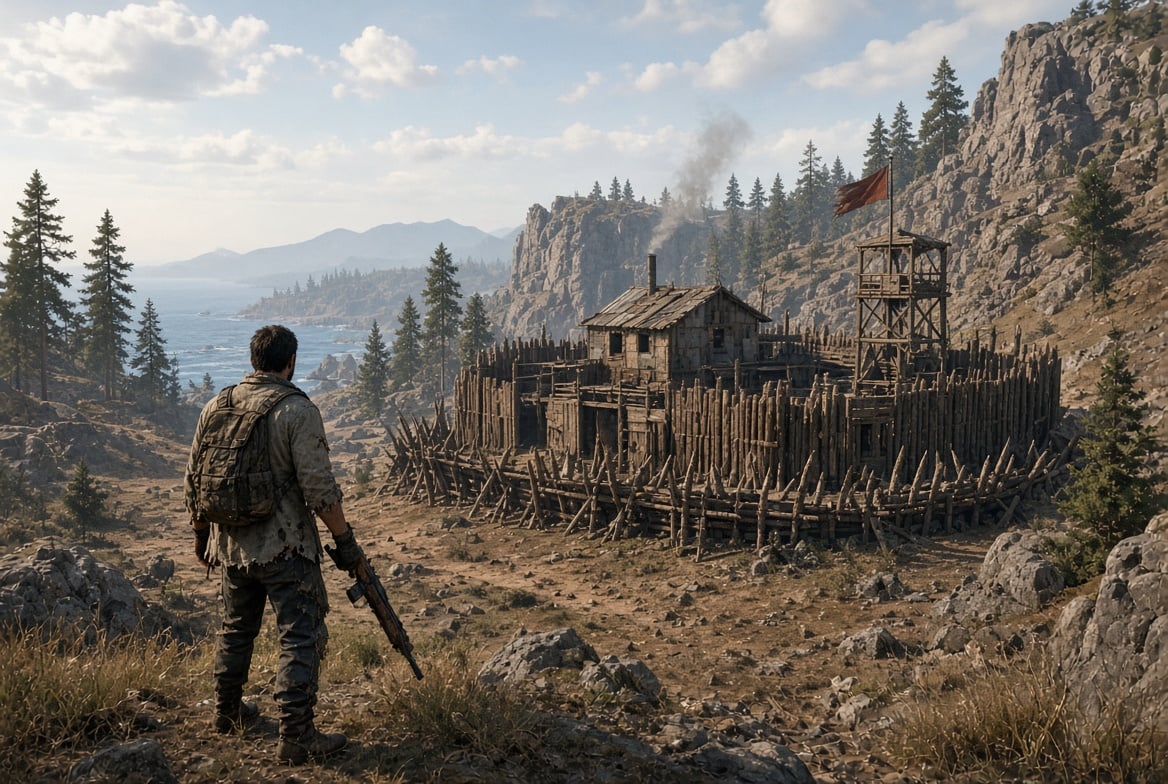
There is a specific kind of dread that only Rust produces. It is the feeling of logging in after a day away, not knowing whether the base you spent hours building is still standing or whether you are about to load into a pile of rubble and an empty tool cupboard. No other survival game commits to that stakes-are-real design as completely, and nearly a decade after launch it is still the reason Rust has a population most of its imitators would envy.
Rust is a game about defending what you build in a world where everyone else is incentivized to take it. You start naked on a beach with a rock, and everything after that, the tools, the base, the weapons, the loot, is accumulated under constant threat. Resource gathering, base design, raid defense, and raw combat all stack into a single loop, and failing at any one of them can undo the others. A perfect base with no one awake to defend it still falls to a determined raid.
Awareness is survival
The players who last on a Rust server are not necessarily the best shots, though it helps. They are the ones who always know what is happening around them: who is roaming nearby, which base just went into raid, where the loot and the threats are at any given moment. Rust punishes the player who tunnels on one task and loses track of the map, and it rewards the one who treats awareness as a resource to be managed like any other.
That is a familiar pattern to anyone who has watched competitive survival games mature. When a game ties real loss to a lapse in attention, players will chase every possible way to never be caught off guard. Rust’s community has always had a vocal third-party-tools scene for exactly that reason, and the demand tracks the stakes: the more a server punishes a bad moment, the more players look for anything that removes the blind spots. The Rust cheat providers in that scene are selling one thing, the same thing they sell in every high-stakes multiplayer game: player ESP and a radar so you are never the one caught off guard, with aimbot help for when a roam turns into a firefight.
The design that makes it work
What keeps Rust compelling is that the stress is earned, not arbitrary. Every loss has a cause you can point to: a wall you left too weak, a roam you took at the wrong time, a tool cupboard you forgot to lock down. The game is brutally fair in that sense, and that fairness is why the community keeps grinding through wipe after wipe. A game where loss felt random would have shed its players years ago; a game where loss always traces back to a decision keeps them coming back to make better decisions.
It also explains why the scene around it, the base-design guides, the raid calculators, the roam tutorials, and the dedicated tools communities, is as deep as it is. All of it is downstream of the same thing: a game where attention and preparation are the difference between keeping everything and losing everything generates an enormous appetite for anything that sharpens either one.
Still the benchmark
Plenty of survival games have launched with better graphics, smoother onboarding, and friendlier early hours. None of them have managed to replicate the specific tension that makes Rust worth playing, because that tension comes from the one design choice most games are too afraid to make: letting players lose, completely and permanently, when they get it wrong. Rust is still the most stressful game on Steam, and the players who stay are the ones who understand that the stress is the entire point.



Rust Is Still the Most Stressful Game on Steam, and That’s the Point

Silver Wolf, Acheron and Jing Yuan Among Six Characters Returning in Honkai: Star Rail 4.7

The leading gaming podcasts worth listening to today

Mr Villain’s Day Off Might Become Your Next Favourite Comfort Show! 🐼💕

MW4 Season 1 Tips: How to Get Better at Modern Warfare 4 Multiplayer

From Los Santos to Leonida: Why Side Activities Will Be GTA 6’s Secret Weapon

The Perfect Season to Rewatch Laid-Back Camp (Yuru Camp) Is Finally Here! 🍂🏕️

GTA 6 Might Be the Most Anticipated Game Ever… If Not, What Was?
The Parent Companies Behind Your Favorite Games

Steal a Brainrot Items Guide: How to Get Rare Brainrots and Build a Stronger Base

A Must watch Wholesome Anime That Feels Surprisingly Relatable!

Best DNS Servers for Gaming in 2026: 6 Options for Speed and Stability

This New Fall Romance Anime Will Make You Fall in Love!

How to Grow a Gaming TikTok From Zero in 2026: 8 Steps

Level Up Your Audio: How to Score the Next Big Indie Game from Your Bedroom

Best MM2 Weapons to Collect: Knives, Guns and Godlys Explained
-
Features4 weeks ago
The Parent Companies Behind Your Favorite Games
-
 Features4 weeks ago
Steal a Brainrot Items Guide: How to Get Rare Brainrots and Build a Stronger Base
-
 Anime4 weeks ago
A Must watch Wholesome Anime That Feels Surprisingly Relatable!
-
 Technology3 weeks ago
Best DNS Servers for Gaming in 2026: 6 Options for Speed and Stability
-
 Anime3 weeks ago
This New Fall Romance Anime Will Make You Fall in Love!
-
 Social Media3 weeks ago
How to Grow a Gaming TikTok From Zero in 2026: 8 Steps
-
 Technology3 weeks ago
Level Up Your Audio: How to Score the Next Big Indie Game from Your Bedroom
-
 Features4 weeks ago
Best MM2 Weapons to Collect: Knives, Guns and Godlys Explained
-

 Features3 weeks ago
Online games with cryptocurrencies — what does the gameplay look like?
-

 Anime2 weeks ago
Cat Girl, Fox Girl, Wolf Ears: Designing a Kemonomimi Character
-
 Anime2 weeks ago
The Perfect Season to Rewatch Laid-Back Camp (Yuru Camp) Is Finally Here! 🍂🏕️
-
 Anime4 days ago
Mr Villain’s Day Off Might Become Your Next Favourite Comfort Show! 🐼💕