
Features
What Pachinko, Arcade Cabinets and Video Games Have in Common

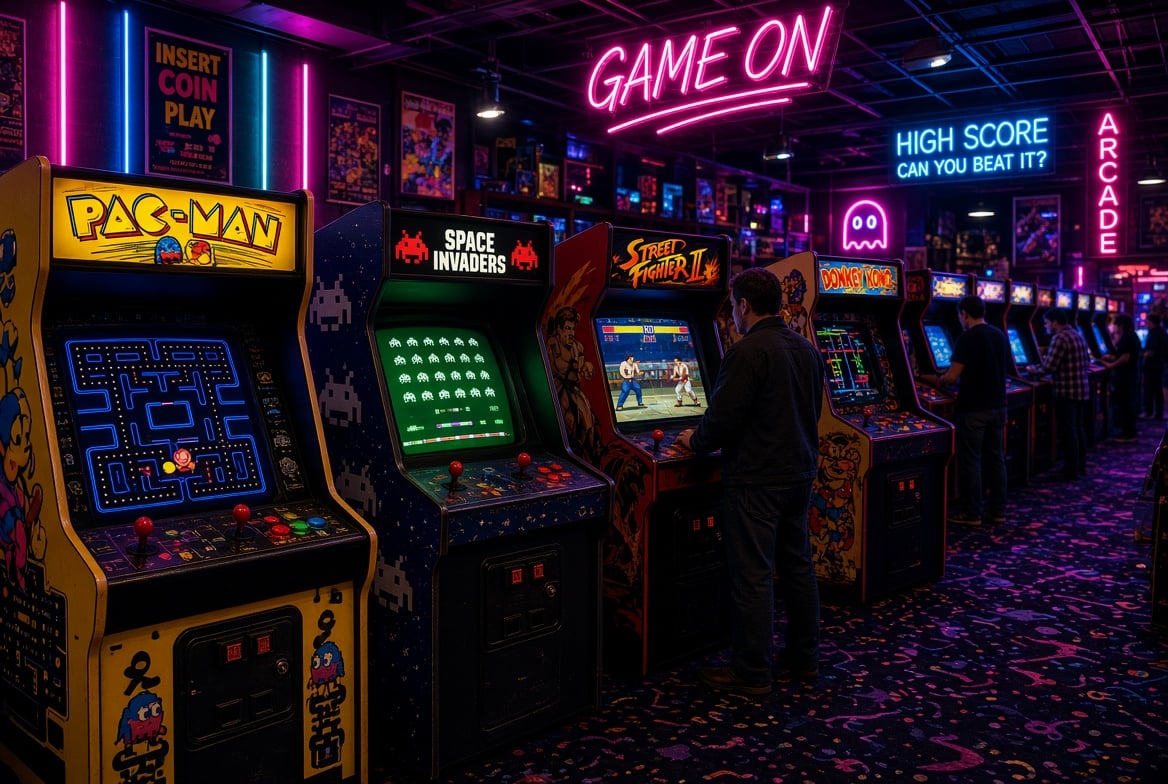
Nagoya, late 1940s. Japan is still rebuilding after the war, and pachinko parlors are spreading through the city. On an upright wooden board, a steel ball clips a nail, changes direction and drops toward a pocket. The player can watch the whole thing happen.
Decades later, a video slot can stretch a few seconds of suspense into a bonus round, and a Plinko board can keep you watching a single drop on a phone. Pachinko offers a good place to see how much of a game’s appeal can fit between making a move and finding out the result.
A Western Parlor Game Gets a Japanese Rewrite
Pachinko didn’t start in Japan. Its ancestor is bagatelle, a European table game where players knocked balls into pins and pockets, and later the American Corinth Bagatelle that turned it into a toy.
Japanese makers turned the board upright in the 1920s and 1930s. Nagoya became a center of pachinko manufacturing after the war. The industry also took root farther east. In 1949, Heiwa began making machines in Kiryu, Gunma.
The big early leap came from Takeichi Masamura in the late 1940s. His nail layout, still called the Masamura gauge, made the ball’s path less predictable and more fun to watch, and it became the template for decades of machines.
From Spinning Drums to Animated Screens
For years the action was purely mechanical. You fired balls with a spring lever, watched them bounce through the nails, and hoped one dropped into a winning pocket.
Electric launchers arrived later, and with them a dial that let players set the shooting strength. Then in 1980 Sankyo introduced the Fever machine, with a center feature that triggered a big payout mode when matching symbols lined up.
Those center features started as physical drums and moved to LCD screens through the 1990s. The pachinko arcade experience still revolves around that screen, where the machine’s music changes the moment a win kicks off. Sound, light and a tense countdown became the real show, and the steel balls turned into the stage crew.
Ball Drops Go Online
When Plinko appeared on The Price Is Right in January 1983, the board would have looked familiar to a pachinko player. A contestant dropped a chip and watched it zigzag through rows of pegs toward a cash prize. Online casino versions put multipliers along the bottom, but the pleasure of following each bounce survives on a phone screen.
The biggest change comes when the ball lands. At a pachinko machine, a win sends steel balls rattling into the tray. In online Plinko, the win appears as a change in the player’s balance. Withdrawing it is a separate step, and the figures in this guide to fast payout casinos show how the wait varies by site and payment method.
Anime Moved Into the Cabinet
Once screens took over, licenses followed. CR Neon Genesis Evangelion hit parlors in 2004, and became one of the best-selling pachinko series ever, with new versions still arriving years later.
The machines don’t just slap a logo on the glass. They recreate key scenes, use original voice actors and run full animated sequences during payout modes, which is why fans sometimes visit parlors just to see new footage.
Anime fans had already seen familiar faces in the parlors by the time Evangelion arrived. Heiwa released its first Lupin the Third pachinko machine in 1998. In 2003, Sammy brought Hokuto no Ken (Fist of the North Star) to a pachislot cabinet, giving fans another way to visit that world long after the original TV run.
The Business Behind the Glass
The money involved explains a lot. Sammy’s 2003 Hokuto no Ken pachislot sold over 600,000 units, a number that put it among the biggest cabinet launches Japan had seen.
A year later, in October 2004, Sammy merged with Sega to form Sega Sammy Holdings. That one deal put the company behind Sonic the Hedgehog under the same roof as one of the country’s top cabinet makers.
The overlap still shows. Sega’s arcade animators and sound teams sit close to the pachinko side, and the polish players know from Yakuza (now Like a Dragon) shares a lot of DNA with the cabinets in the parlors that series recreates.
Pachislot and the Road to the Video Slot
Japan also produced pachislot, a hybrid of pachinko and Western reel slots with stop buttons that give players a timing element. It spread from the 1960s and 1980s onward and borrowed heavily from pachinko’s lights, music and story-driven bonus modes.
American cabinets were making their own jump to video. Fortune Coin’s 1976 slot replaced physical reels with a screen. The machine was built in Kearny Mesa, California, and went on trial at the Las Vegas Hilton.
The resemblance to pachinko is easiest to see when a bonus round begins. The music changes, an animation fills the screen and a cabinet that was showing the same few symbols a moment ago suddenly has a scene to play out. Rockstar recreated some of that parlor atmosphere in GTA Online’s Diamond Casino in July 2019, years before the anticipation surrounding GTA 6.
Seeing Pachinko for Yourself
The parlor scene has shrunk a lot. Japan had around 18,000 parlors in the mid-1990s and well under 8,000 by 2024, but the bigger halls still pack hundreds of machines under one roof.
If you’re visiting, Tokyo’s Akihabara, Shinjuku and Ikebukuro have large parlors near the stations, and most open around 10 a.m. and close late in the evening. Balls usually rent for 4 yen each, while 1-yen corners let newcomers try a machine for about 1,000 yen.
Bring earplugs. The volume is part of the experience, and anime machines are easiest to find on the upper floors where the newest cabinets sit.



What Pachinko, Arcade Cabinets and Video Games Have in Common

Why Gaming Platforms Offer Different Experiences Across Europe

Most anticipated video games of 2027

Rust Is Still the Most Stressful Game on Steam, and That’s the Point

Silver Wolf, Acheron and Jing Yuan Among Six Characters Returning in Honkai: Star Rail 4.7

The leading gaming podcasts worth listening to today

Mr Villain’s Day Off Might Become Your Next Favourite Comfort Show! 🐼💕

MW4 Season 1 Tips: How to Get Better at Modern Warfare 4 Multiplayer
The Parent Companies Behind Your Favorite Games

A Must watch Wholesome Anime That Feels Surprisingly Relatable!

Best DNS Servers for Gaming in 2026: 6 Options for Speed and Stability

How to Grow a Gaming TikTok From Zero in 2026: 8 Steps

This New Fall Romance Anime Will Make You Fall in Love!

Level Up Your Audio: How to Score the Next Big Indie Game from Your Bedroom

Online games with cryptocurrencies — what does the gameplay look like?

Cat Girl, Fox Girl, Wolf Ears: Designing a Kemonomimi Character
-
Features4 weeks ago
The Parent Companies Behind Your Favorite Games
-
 Anime4 weeks ago
A Must watch Wholesome Anime That Feels Surprisingly Relatable!
-
 Technology4 weeks ago
Best DNS Servers for Gaming in 2026: 6 Options for Speed and Stability
-
 Social Media4 weeks ago
How to Grow a Gaming TikTok From Zero in 2026: 8 Steps
-
 Anime3 weeks ago
This New Fall Romance Anime Will Make You Fall in Love!
-
 Technology4 weeks ago
Level Up Your Audio: How to Score the Next Big Indie Game from Your Bedroom
-
 Features3 weeks ago
Online games with cryptocurrencies — what does the gameplay look like?
-
 Anime2 weeks ago
Cat Girl, Fox Girl, Wolf Ears: Designing a Kemonomimi Character
-

 Anime2 weeks ago
The Perfect Season to Rewatch Laid-Back Camp (Yuru Camp) Is Finally Here! 🍂🏕️
-
 Anime7 days ago
Mr Villain’s Day Off Might Become Your Next Favourite Comfort Show! 🐼💕
-

 Features4 weeks ago
What It Takes to Stream One Game to Hundreds of Screens at Once
-
 Features2 weeks ago
GTA 6 Might Be the Most Anticipated Game Ever… If Not, What Was?