
Features
Why Gamers Love Predicting What Happens Next

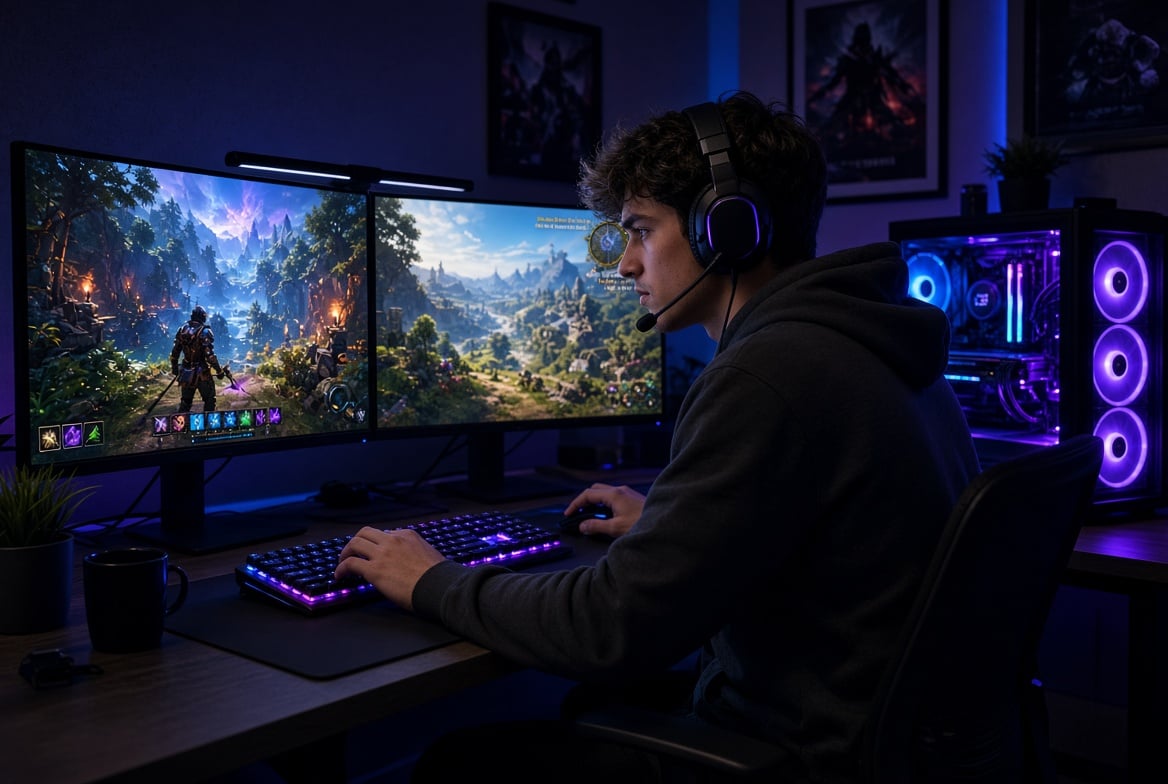
There is a particular thrill that comes right before an unknown outcome resolves. A player watches a loot box animation slow down before revealing its contents, waits for a boss fight’s final health bar to drain, or holds their breath as a competitive match reaches its final round. That moment of anticipation, where the outcome is unknown but guessable, taps into something deeply satisfying about how the human brain processes uncertainty and reward. Gaming culture has always been built around this tension, but in recent years it has expanded well beyond in-game mechanics into an entirely new space: predicting outcomes of events happening outside the game itself.
This shift makes sense once you consider what gamers already enjoy. Strategy, probability, and the satisfaction of being proven right are baked into nearly every genre, from card games that reward reading an opponent’s next move to esports titles where reaction time and forecasting blend. As digital tools have matured, this same instinct has found new outlets, letting players apply their analytical habits to real-world events, esports tournaments, and even abstract questions about the future. Understanding why this appeals so strongly to gamers requires looking at the psychology, the culture, and the mechanics that make prediction feel like a game in its own right.
The Psychology Behind Guessing Right
Humans are pattern-seeking by nature, and gamers tend to be especially attuned to spotting trends because so much of gaming rewards recognizing patterns quickly. A player who has spent years learning enemy attack cycles or reading opponent behavior in a shooter has trained a skill set that transfers naturally to forecasting. When that skill produces a correct guess, the brain releases a small hit of dopamine, the same chemical response tied to leveling up or landing a difficult combo. This is part of why predicting an outcome, even one unrelated to a game, can feel like an extension of play rather than something separate from it.
There is also a sense of agency involved. Watching a live event passively is one thing, but forming a prediction beforehand turns the viewer into an active participant with something at stake, even if that something is just personal credibility. Gamers are conditioned to seek this kind of involvement because most games are built around constant decision-making rather than passive observation. Sitting on the sidelines without a stake in the outcome can feel unnatural to someone accustomed to controlling variables and shaping results.
Social validation plays a role too. Correctly calling an outcome, whether it is which team wins a tournament or how a plot twist unfolds in a story-driven game, gives players something to share with friends or online communities. Being right in public carries a small reputational reward, similar to climbing a leaderboard. This desire to demonstrate foresight is not unique to gaming, but gaming culture has normalized broadcasting predictions through streams, forums, and social channels in a way few other hobbies have.
Uncertainty itself is part of the appeal, not an obstacle to it. If outcomes were fully predictable, the excitement of forecasting them would disappear entirely. Games are designed with enough randomness to keep players engaged over long periods, and the same principle applies to predicting real-world events. A moderate level of unpredictability, paired with enough information to make an informed guess, creates the ideal balance between challenge and reward.
Finally, there is the practice of mental rehearsal. Competitive gamers often visualize scenarios before they happen, running through possible plays and countermoves in their heads. Predicting outside events uses a similar cognitive muscle, requiring a player to weigh available information, imagine different paths forward, and settle on the most plausible one. This same instinct is now what draws so many gamers toward Dexsport’s prediction markets, where that mental exercise gets a structured outlet instead of staying confined to speculation among friends.
From In-Game Bets to Real-World Forecasts
Long before formal systems existed for predicting outside events, gamers were already wagering informally on smaller in-game outcomes. Cosmetic item trades tied to match results, side bets among friends about who would win a round, and community polls guessing tournament brackets all existed well before dedicated prediction tools became common. This grassroots behavior shows that the appetite for forecasting was present long before the infrastructure caught up to it.
Esports growth accelerated this trend considerably. As tournaments began drawing audiences comparable to traditional sports, viewers wanted more than just spectating. They wanted a way to test their read on team form, player performance, and strategic matchups. This created demand for structured systems where predictions about match outcomes, tournament winners, or even statistical performance markers could be tracked and compared against actual results.
Platforms have capitalized on this demand by giving players a structured way to forecast outcomes across esports, real-world events, and other categories, turning what used to be casual guessing among friends into an organized activity with clearer stakes and outcomes. Unlike traditional betting, which often centers narrowly on win or lose outcomes, these markets can cover a wider range of questions, including specific in-match statistics or broader event outcomes, giving gamers more ways to apply their knowledge of a scene they already follow closely.
How Prediction Markets Actually Work
At their core, prediction markets operate on a simple premise: participants stake something of value on which outcome they believe will occur, and the price or odds shift based on collective belief before the event resolves. If more people believe one outcome is likely, the implied probability for that outcome rises, while less popular outcomes see their implied probability fall. This creates a constantly moving reflection of group sentiment rather than a fixed number set by a single authority.
This significantly differs from a standard sportsbook. Traditional betting odds are usually set by an operator trying to balance risk on both sides, while prediction markets are shaped more directly by participant activity itself. The market essentially becomes a live poll of informed opinion, weighted by how much people are willing to put behind their belief. For gamers who enjoy reading trends and community sentiment, this structure feels intuitive because it resembles how in-game economies or item markets already fluctuate based on demand.
Resolution is usually straightforward once the underlying event concludes. If a prediction concerned who would win a tournament, the market settles based on the confirmed result, and payouts adjust according to the odds at the time each participant made their prediction. This clear, verifiable resolution process appeals to players who value transparent rules, a trait carried over from competitive gaming, where fairness and clearly defined outcomes matter enormously.
Why Esports Fans Are Natural Predictors
Esports fans often possess a depth of knowledge that rivals traditional sports analysts, tracking player statistics, team roster changes, and patch updates that can shift competitive balance overnight. This granular familiarity gives them a genuine analytical edge when forecasting outcomes, since a single game update can completely alter which strategies or characters are currently favored. Few casual observers would notice these shifts, but dedicated fans track them closely.
The pace of esports also plays a role. Matches often unfold quickly, with momentum swinging within minutes, which means predictions can be made not just before an event starts but throughout its progression. This creates continuous opportunities for engagement rather than a single moment of anticipation, keeping fans mentally invested for the full duration of an event rather than only at the beginning and end.
Community discussion adds another layer. Esports fandoms tend to be vocal, analyzing team compositions and strategies across forums and social channels well before a match begins. This constant exchange of opinions sharpens individual predictions, since fans are exposed to counterarguments and alternative viewpoints that challenge their initial assumptions, refining their forecasting instincts over time in a way passive viewing never could.
The Broader Appeal Beyond Gaming Circles
While gamers have embraced prediction-based engagement enthusiastically, the underlying appeal extends to anyone who enjoys forming opinions about uncertain outcomes. Political forecasting, economic indicators, and entertainment award shows all attract similar behavior from people who have never touched a controller. What sets gamers apart is not the desire to predict itself but the comfort with digital tools and structured systems that make participating in these markets feel familiar rather than intimidating.
Gamers also bring a tolerance for complexity that benefits them in this space. Many games require tracking multiple variables simultaneously, whether that means resource management, cooldown timers, or opponent positioning. This mental habit translates well to evaluating events with several contributing factors, such as a tournament with many teams or a real-world event influenced by shifting circumstances. Where someone unfamiliar with layered systems might feel overwhelmed, gamers often find this kind of complexity engaging rather than off-putting.
The Lasting Pull of Educated Guesswork
The appeal of predicting outcomes is unlikely to fade, because it draws on instincts gamers have cultivated for years: reading patterns, managing risk, and finding satisfaction in being proven right. What has changed is the availability of structured, transparent systems that let this instinct extend beyond the games themselves into esports scenes, real-world events, and beyond, giving players new arenas to apply skills they already value. As these systems continue to mature, they are likely to attract even more players who see forecasting not as a departure from gaming but as a natural continuation of it.



How to Recover Lost Game Files from an External Drive on Mac

Mystery Anime You’ll Regret Starting at Midnight | Part 2

ARC Raiders Frozen Trail Guide: How to Board and Clear the Frigate

Rockstar Games Integrates Advanced Ray Tracing for GTA VI

How to Update Outdated Graphics Drivers for Better Gaming Performance and Higher FPS

The Most Popular Car Game Isn’t Where Players Stay Longest

Canada’s Gaming Audience Is Bigger Than the Old Stereotype

Mystery Anime You’ll Regret Starting at Midnight | Part 1

Anime You’ll Be Glad You Added to Your Fall Watchlist (Part 2) 🍂

WoW Forever Leveling: What Is New on the Road from 1 to 60

MM2 weapon rarity tiers explained for traders

One Piece Is Everywhere Right Now – and It’s Exposing a Problem With How Gaming Teaches Players to Gamble

Why Game Clips Stall on Instagram Reels

Blox Fruits Physical vs Permanent Fruits: What’s the Difference?

What to Check Before Buying FC 27 Coins Online

Can You Stream Kick on Xbox: Complete Guide for Xbox Users
-
 Anime3 weeks ago
Anime You’ll Be Glad You Added to Your Fall Watchlist (Part 2) 🍂
-
 Features2 weeks ago
WoW Forever Leveling: What Is New on the Road from 1 to 60
-
 Esports3 weeks ago
MM2 weapon rarity tiers explained for traders
-
 Features4 weeks ago
One Piece Is Everywhere Right Now – and It’s Exposing a Problem With How Gaming Teaches Players to Gamble
-
 Social Media4 weeks ago
Why Game Clips Stall on Instagram Reels
-
 Features4 weeks ago
Blox Fruits Physical vs Permanent Fruits: What’s the Difference?
-
 Features4 weeks ago
What to Check Before Buying FC 27 Coins Online
-
 Social Media4 weeks ago
Can You Stream Kick on Xbox: Complete Guide for Xbox Users
-

 Anime4 weeks ago
Pokémon Announces New Movie With a New Hero and Mimikyu
-
 Esports4 weeks ago
Double-Sentinel Defensive Holds Disrupt Fast Valorant Site Executes
-
 Features2 weeks ago
Canada’s Gaming Audience Is Bigger Than the Old Stereotype
-
 Anime2 weeks ago
Mystery Anime You’ll Regret Starting at Midnight | Part 1