
Features
How Online Gaming Communities Have Evolved Over the Years

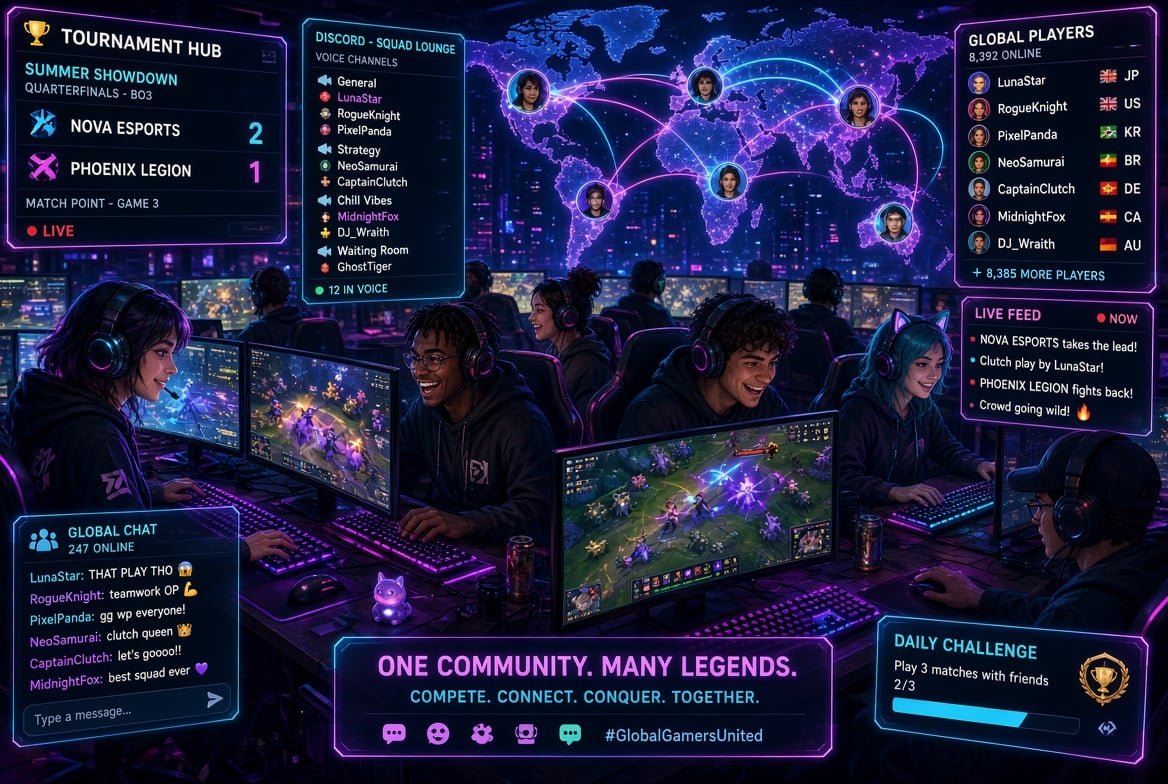
If you have been playing games for a couple of decades, you will relate to this! Getting a friend online was not as easy as it is now; it meant hoping the phone line stayed free long enough for the connection to hold. Today you can drop into online gaming communities that never sleep, and players across time zones know your habits before you’ve said a word to them.
That change is here due to many factors, and faster internet is number one on the list. Cheaper hardware is at number two! Together, they brought more people through the door. Then platforms built specifically for talking mid-game did the rest. You can see the result now! Digital gaming culture feels less like a hobby you mention in passing. It’s closer to a second social life, complete with slang your parents won’t recognize.
The Rise of Online Multiplayer Gaming
Before broadband reached most homes, multiplayer usually meant a couch and a couple of controllers. It also meant waiting to see whoever turned up on a Friday night. If you wanted something more, dial-up was your way in. Long before consoles caught up, a small but stubborn crowd used them to fight it out in games such as Quake and Warcraft. PC gaming got there first.
Once broadband spread and consoles added real online support, everything else in the gaming kingdom moved faster. And multiplayer gaming today is no longer a niche thing only PC owners brag about. Your cousin with a console, and even from a smartphone, can suddenly join a match against someone three states away. He does not need extra installs.
From there, the scale kept climbing and climbing more. Battle royales pull in a hundred strangers at once, and you know, MMOs built entire economies run by players today. That is how online multiplayer games have become the default way we picture gaming now. And those good old single-player releases today feel like the exception instead of the rule.
How Communities Shape Modern Games
Not long ago, developers used to build a game and ship it. Then they would move on to the next project or a sequel. That’s not how it works anymore. Gaming communities now shape decisions before a game even launches. They keep shaping it well after release too. You can see that pressure in feedback threads and in the patch notes that follow.
- Player feedback changes balance decisions fast now. A weapon that feels overpowered gets flagged within hours of a patch going live. And a studio increasingly responds within the same week. There is no waiting for a quarterly update like it used to be a decade ago.
- Modding communities stretch a game’s life far past its original release. Skyrim and Minecraft still feel relevant. It is partly because players kept building on top of them long after the developers moved on to other projects.
- Content producers set your expectations about the launch of a product before you even play the game. A poor-quality early-access version might just get away with itself, whereas a refined launch might just get destroyed by the community at its very inception.
- Esports scenes push developers toward better tools for watching a match, not just playing one. A game built without competitive play in mind often gets reworked once a scene forms around it anyway.
- Community managers now sit inside the development process itself. Studios hire people specifically to turn player frustration into design notes, something that barely existed a decade ago.
The Role of Discord, Forums, and Social Platforms
Nearly all gaming communication used to happen through clunky in-game chat boxes and/or third-party voice tools before Discord came along. Forums addressed the gaps. But they moved slowly by nature, built for long threads rather than the momentary coordination a raid or a ranked match actually needs.
Discord solved a problem players had been patching together workarounds for. Now voice channels and text chat live are in a single app. It explains why it spread fast, especially among younger players. There was a concern for parents initially who pay attention to who their kids talk to online. It pushed hard for better moderation. That pressure helped shape features designed to give families more control over a safe online experience.
Social media networks other than Discord are just as important in their own right. The forum discussion helps understand strategy in ways the patch notes cannot explain. The use of X (Twitter) is relevant in getting the most significant response to an issue with the update. From all that, one has more communication channels with other gamers and developers than ever before.
Staying Safe While Gaming Online
As online gaming trends pull more of your day into shared servers and voice chats, safety doesn’t get simpler just because you’ve done this before. More time online usually means more exposure to scams and fake accounts. Harassment becomes more likely too, simply because you’re talking to more people than you used to.
Basic digital habits matter the most. A strong-cum-unique password goes a long way toward keeping your account intact. Two-factor authentication, wherever it is offered, adds another layer of account protection and is worth using. Some Mac gamers add extra protection on public networks with a free VPN for Mac, though good habits always come first.
None of this takes the place of good judgment, which can make far more difference to the overall atmosphere of a play session than any specific tool. Signing off to sleep is just as useful, and is often undervalued. The best communities tend to be those where players take care of each other, rather than those with the most locked-down security system.
What the Future Holds for Online Gaming Communities
How this develops will be less dependent on the introduction of any specific innovation and more on how gamers continue to adapt to what comes next. There are several possible futures that seem obvious from where we’re headed:
- Cross-platform play will likely become the default rather than the exception. Splitting a community by console already feels old-fashioned to newer players.
- AI-assisted moderation will handle more of the toxic chat problem going forward. Most players will still want a real person somewhere in the loop for anything serious, though.
- Cloud gaming could widen who gets to join a community in the first place. Players on older hardware may finally sit at the same table as everyone else.
- Player-run events and tournaments will likely keep growing outside official esports structures. Communities that don’t want to wait on a studio to organize something will keep building their own version instead.
Conclusion
That’s really the throughline here. Communities didn’t just grow around games. They started shaping what games have become all these years. This relationship shows no sign of slowing down. Online gaming communities will keep changing and growing. Also, the pull toward shared experience over solo play looks like it is here to stay for a long time until anything more engaging comes out.



How to Recover Lost Game Files from an External Drive on Mac

Mystery Anime You’ll Regret Starting at Midnight | Part 2

ARC Raiders Frozen Trail Guide: How to Board and Clear the Frigate

Rockstar Games Integrates Advanced Ray Tracing for GTA VI

How to Update Outdated Graphics Drivers for Better Gaming Performance and Higher FPS

The Most Popular Car Game Isn’t Where Players Stay Longest

Canada’s Gaming Audience Is Bigger Than the Old Stereotype

Mystery Anime You’ll Regret Starting at Midnight | Part 1

Anime You’ll Be Glad You Added to Your Fall Watchlist (Part 2) 🍂

WoW Forever Leveling: What Is New on the Road from 1 to 60

MM2 weapon rarity tiers explained for traders

One Piece Is Everywhere Right Now – and It’s Exposing a Problem With How Gaming Teaches Players to Gamble

Why Game Clips Stall on Instagram Reels

Blox Fruits Physical vs Permanent Fruits: What’s the Difference?

What to Check Before Buying FC 27 Coins Online

Can You Stream Kick on Xbox: Complete Guide for Xbox Users
-
 Anime3 weeks ago
Anime You’ll Be Glad You Added to Your Fall Watchlist (Part 2) 🍂
-
 Features2 weeks ago
WoW Forever Leveling: What Is New on the Road from 1 to 60
-
 Esports3 weeks ago
MM2 weapon rarity tiers explained for traders
-
 Features4 weeks ago
One Piece Is Everywhere Right Now – and It’s Exposing a Problem With How Gaming Teaches Players to Gamble
-
 Social Media4 weeks ago
Why Game Clips Stall on Instagram Reels
-
 Features4 weeks ago
Blox Fruits Physical vs Permanent Fruits: What’s the Difference?
-
 Features4 weeks ago
What to Check Before Buying FC 27 Coins Online
-
 Social Media4 weeks ago
Can You Stream Kick on Xbox: Complete Guide for Xbox Users
-

 Anime4 weeks ago
Pokémon Announces New Movie With a New Hero and Mimikyu
-
 Esports4 weeks ago
Double-Sentinel Defensive Holds Disrupt Fast Valorant Site Executes
-
 Features2 weeks ago
Canada’s Gaming Audience Is Bigger Than the Old Stereotype
-
 Anime2 weeks ago
Mystery Anime You’ll Regret Starting at Midnight | Part 1