
Esports
From Bedroom Coders to Stadium Legends: Examining the Professionalization of Digital Sport

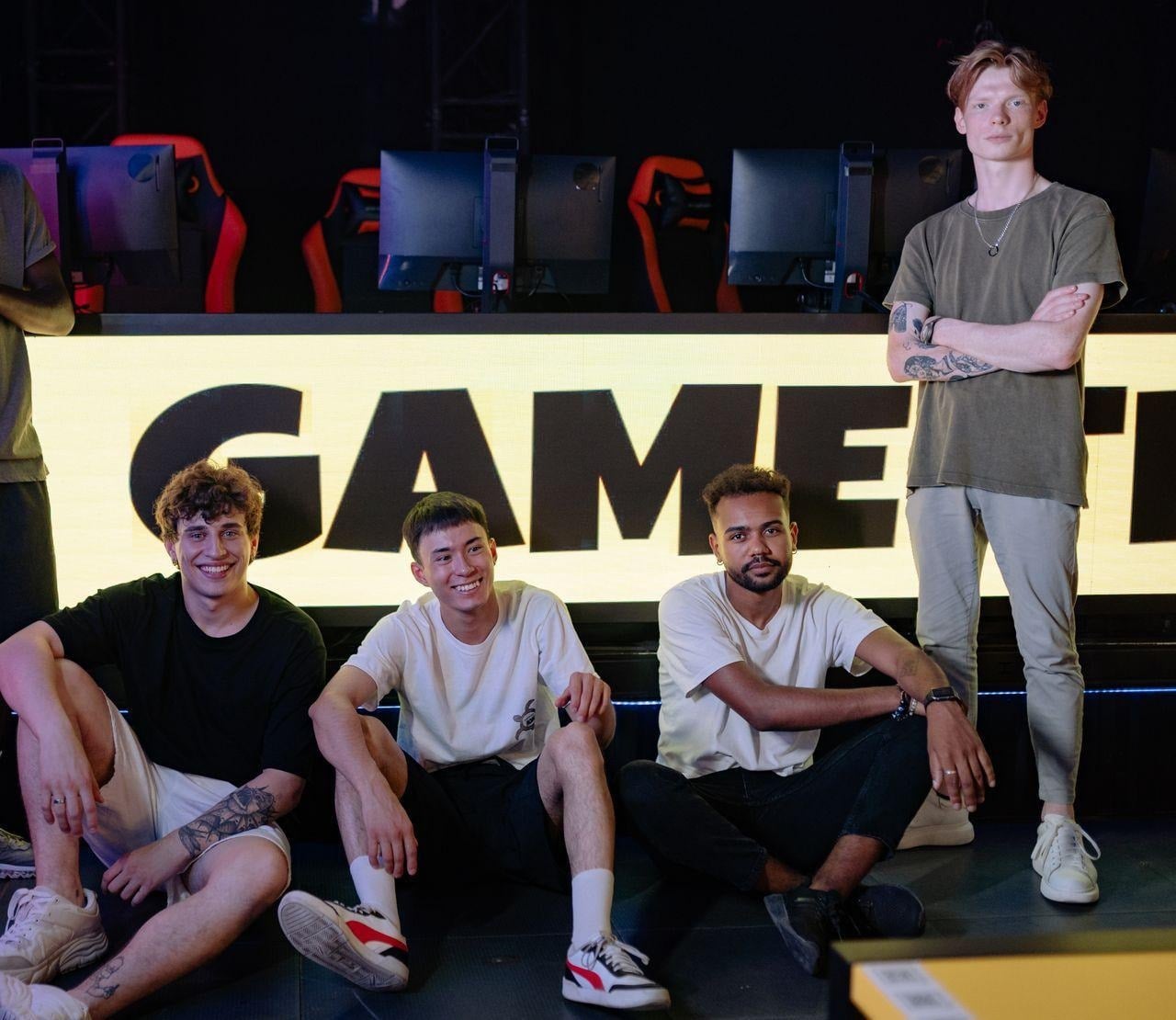
In October 1972, a handful of Stanford grad students packed into the university’s AI Lab to compete against one another in a game called Spacewar!. The winner, a PhD student named Bruce Baumgart, walked off with a year’s subscription to Rolling Stone and some free beer. Just under fifty years later, Dota 2’s The International handed out a prize pool of just over $40 million at a single tournament in Bucharest, crowdfunded almost entirely by the players themselves. Team Spirit, the winning squad, split $18.2 million of it.
Somewhere between those two events, esports stopped being something people did after class and turned into an actual industry. Games like League of Legends, Dota 2, Counter-Strike 2, and Valorant now run flourishing leagues and tournament circuits deep enough to employ people who never touch a keyboard in competition: coaches, scouts, data analysts, broadcast crews, and an entire betting market built around match schedules and team form.
Where it actually started
Arcades and console leaderboards kept the competitive itch alive through the 1970s and 80s, mostly informal, mostly local. Nintendo tried to formalize things with the Nintendo World Championships, a traveling tour that hit 29 cities in 1990. Competitors played a custom gray cartridge that mashed together Super Mario Bros., Rad Racer, and Tetris into a single timed run, and those cartridges are now among the rarest, most expensive pieces of gaming memorabilia in existence. It was a novelty, though, not a foundation. The real shift came with the rise of PC gaming later that decade. Online play changed the math entirely. Instead of two people crowded around one console, thousands of players in different cities could compete against each other, compare scores, and start organizing something that looked a lot like a season.
The modders who built the games nobody asked for
Most of the games that built modern esports weren’t designed by esports companies. They were hobby projects, put together by people messing around with someone else’s game engine.
Dota started in 2003 as a fan-made Warcraft III scenario, built by a modder known only as Eul. When he moved on, a college student named Steve “Guinsoo” Feak took over the project, added a recipe system for items, and threw in a boss character he named Roshan, after his bowling ball. Feak eventually handed the map to a pseudonymous designer called IceFrog, who spent years obsessively rebalancing hero stats and patching the game almost weekly. Valve hired IceFrog in 2009 to build a standalone sequel. That sequel became Dota 2.
Counter-Strike has a similar backstory. Minh Le, a computer science student at Simon Fraser University who went by “Gooseman” online, built it as a Half-Life mod with Jess Cliffe in 1999. Valve bought the rights within a year. Neither game started with a business plan. They started because a couple of people wanted a different game than the one they were playing, and had the tools to build it themselves.
Turning a hobby into an industry
Competitive players used to practice alone or with a few friends before showing up to whatever local tournament would have them. That’s mostly gone now. A top esports team today runs a coaching staff, analysts who dig through replay data for patterns, scouts tracking rival rosters, and a support staff handling everything from travel to sleep schedules.
Broadcasting changed just as much. Matches used to be one person narrating over a webcam. Now professional casters work alongside analysts breaking down draft strategy in real time, in productions that look and sound like a regional sports network covering the playoffs. Tournaments fill actual arenas, not convention center side rooms.
Sponsorship money followed the audience. Early sponsors were gaming hardware companies, which made sense at the time. These days Coca-Cola sponsors the League of Legends World Championship, Mercedes-Benz has backed ESL events, and AT&T has put its name on team jerseys. Merchandise sales and streaming deals now sit on top of the prize money, and for some organizations bring in more revenue than the tournaments themselves.
A parallel industry has grown around betting on all of it. Specialized platforms compile match schedules, team form, and head-to-head records for bettors, supporting competitive meta-analysis that looks a lot like what a coaching staff does internally, just aimed at odds instead of strategy.
The catch: publishers still own everything
None of this changes who’s actually in charge. The company that made the game still controls the game, and by extension, controls the sport built around it.
That’s not a hypothetical problem. In 2019, Blizzard suspended a professional Hearthstone player named Ng Wai Chung, known as Blitzchung, and pulled his prize money after he voiced support for the Hong Kong protests during a post-match interview. The backlash was loud enough that Blizzard reversed course within a week, cutting the suspension and returning the money. But the incident made the point clearly: there’s no independent governing body in esports the way there is in traditional sports. If a publisher decides to shut down a tournament, change the rules mid-season, or discipline a player for something unrelated to how they played, there’s no commissioner’s office to appeal to.
Riot Games made a quieter version of the same point in 2018, when it replaced the League of Legends Championship Series’ open promotion and relegation system with a franchise model. Existing teams had to pay a flat $10 million just to keep their spot in the league; smaller teams that had fought their way up through the old ranked system were simply locked out. Riot framed it as stability for investors. Critics called it the end of the sport’s one meritocratic on-ramp. Both were right, which is usually how these disputes go.
That tension probably isn’t going away. The industry that grew out of a handful of Stanford students trying to out-shoot each other in a spaceship simulator is now, by Statista’s count, a billion dollar industry, and it still runs, ultimately, at the discretion of whoever owns the game.
Image Source: Pexels



Minecraft All Biomes Seeds for Players Who Love Exploring

Double-Sentinel Defensive Holds Disrupt Fast Valorant Site Executes

Blox Fruits Physical vs Permanent Fruits: What’s the Difference?

What to Check Before Buying FC 27 Coins Online

Pokémon Announces New Movie With a New Hero and Mimikyu

Can You Stream Kick on Xbox: Complete Guide for Xbox Users

One Piece Is Everywhere Right Now – and It’s Exposing a Problem With How Gaming Teaches Players to Gamble

Why Game Clips Stall on Instagram Reels

This Unexpected Frieren x MapleStory Crossover Looks Too Perfect

Why Have Animal Characters Taken Over Every Corner Of Gaming?

6 Years Later, Haikyu!! Returns in the Last Way Fans Expected

6 Gaming Platforms That Push Originality to the Forefront

How Much Does Player Housing Really Cost in WoW Midnight?

Why Randomness Makes Some Video Games So Interesting

Struckd on Windows: Making 3D Games Without Writing a Line of Code

Anime You’ll Be Glad You Added to Your Fall Watchlist (Part-1)
-
 Anime4 weeks ago
This Unexpected Frieren x MapleStory Crossover Looks Too Perfect
-
 Features4 weeks ago
Why Have Animal Characters Taken Over Every Corner Of Gaming?
-
 Anime2 weeks ago
6 Years Later, Haikyu!! Returns in the Last Way Fans Expected
-
 Features4 weeks ago
6 Gaming Platforms That Push Originality to the Forefront
-
 Features4 weeks ago
How Much Does Player Housing Really Cost in WoW Midnight?
-
 Features2 weeks ago
Why Randomness Makes Some Video Games So Interesting
-
 Features2 weeks ago
Struckd on Windows: Making 3D Games Without Writing a Line of Code
-
 Anime3 weeks ago
Anime You’ll Be Glad You Added to Your Fall Watchlist (Part-1)
-

 Features6 days ago
Why Side Activities Make Open Worlds Feel More Alive
-

 Features2 weeks ago
From Arcade Cabinets to Digital Cards: The Psychology of the Push-Your-Luck Mechanic
-

 Features2 weeks ago
Keyboard vs Controller Gaming: Which One Is Better?
-

 Features2 weeks ago
5 Masterful Video Games Where The Element of Chance Shaped the Narrative