
Features
What Modern Games Can Learn from Indie Video Game Design

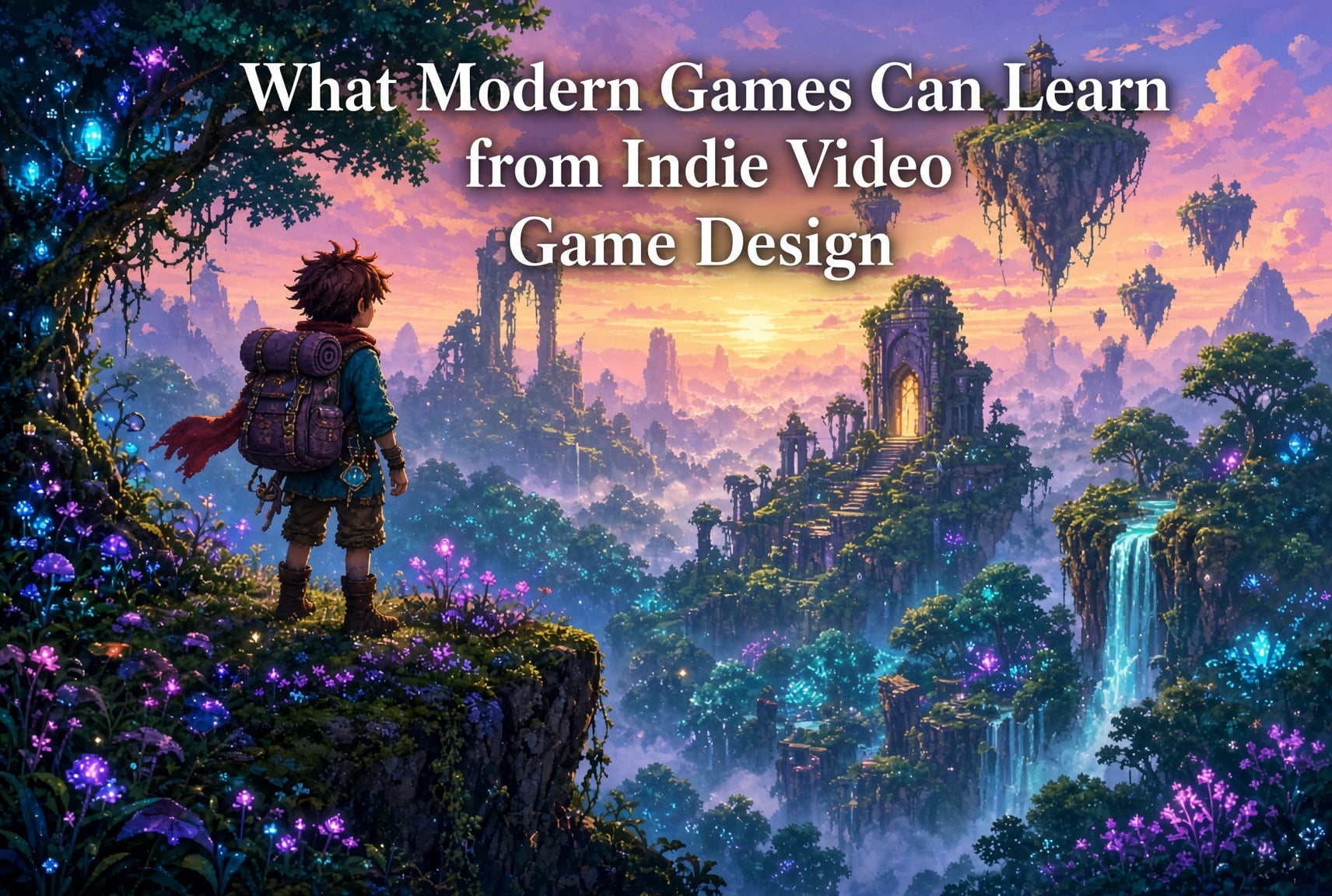
Indie games are often remembered for one unusual idea rather than a long list of features. A striking art style, a clever interaction, or an unforgettable sound can give a small game a personality of its own. That focus on identity has lessons for other corners of interactive entertainment.
The comparison extends to slot games, even though their outcomes are driven by chance rather than player skill. Studios such as edge labs develop slots and other casino-style titles, where visual direction, feedback, and the feel of each interaction still matter. Indie design offers a useful lens for thinking about those details without pretending the genres work in the same way.
Start With a World Players Can Recognize
A memorable indie game rarely feels like a collection of unrelated screens. Its colors, music, characters, and interface all support one idea. Modern slot games can benefit from the same discipline. A theme is more convincing when it influences the entire presentation, not just the background behind the reels.
A coherent world gives every animation a purpose.
- Choose a limited visual palette that makes the game recognizable at a glance.
- Use symbols and characters that belong to the same fictional world.
- Make bonus animations feel connected to the theme rather than pasted on.
- Keep menus and controls visually consistent with the rest of the game.
Make Small Interactions Feel Deliberate
Independent developers know that responsiveness can make a simple mechanic satisfying. A jump, dash, or menu selection needs clear feedback. Slot interfaces face a related design challenge: players should immediately understand what happened after they press a button or trigger a feature.
A readable highlight can communicate more than a screen full of effects.
- Use animations to clarify outcomes, not to obscure them.
- Give important buttons a consistent response when pressed.
- Keep symbols, counters, and feature instructions easy to read.
- Offer sound and motion settings for players who prefer a quieter experience.
Translate the Principles, Not the Mechanics
The most useful ideas from indie design are not features that can be copied unchanged. They are habits of communication. A platformer can ask a player to master timing; a slot game should never imply that timing changes a random result. But both can aim for an interface that feels polished and understandable.
| Indie design habit | Application to slot presentation | Benefit for players |
| Distinct visual identity | Consistent symbols, colors, and interface | A more memorable theme |
| Readable feedback | Clear feature cues and result displays | Less confusion |
| Learnable interactions | Straightforward on-screen explanations | Faster orientation |
| Intentional pacing | Contrast between routine and special moments | Better visual rhythm |
Presentation should never imply that players can control randomly determined outcomes.
Think About Rhythm, Not Just Big Moments
Indie games often alternate energetic sequences with quieter ones. That contrast helps important moments stand out. In slot presentation, every spin does not need the same dramatic treatment. Clear pacing can prevent special features from disappearing into a constant stream of visual noise.
Designers can create a better rhythm by paying attention to how different moments feel:
- Keep routine interactions quick and visually uncomplicated.
- Reserve stronger music and animation changes for genuinely distinct features.
- Use short transitions so the interface never feels unresponsive.
- Allow players to mute sound or reduce distracting effects where possible.
A quieter baseline makes special features more memorable and readable.
Originality Should Include Respect for the Player
The indie scene is known for experimentation, but the best experiments still communicate their rules. That matters in casino-style games, where mathematical outcomes and monetary stakes can be part of the experience. Creative presentation should sit alongside transparent paytables, understandable feature descriptions, and clearly labelled controls.
Accessibility also matters: readable type, contrast, adjustable audio, and mobile layouts make the design usable.
A distinctive slot does not need to imitate a video game’s progression system or borrow every reward loop. It can stand apart through art direction, coherent sound, inventive presentation, and respect for how players interpret information.
Final Thoughts
Indie games show that personality often comes from making a few ideas work exceptionally well. Slot designers can learn from that focus on consistency, responsive feedback, and recognizable worlds.
The strongest crossover is in presentation rather than gameplay rules. Skill-based challenges and chance-based outcomes are fundamentally different, and good design should make that difference clear.
As interactive entertainment continues to overlap across genres, the most interesting results may come from borrowing thoughtful design habits—not simply copying familiar mechanics.


What Modern Games Can Learn from Indie Video Game Design

Steal a Brainrot Traits Guide: How to Get Them and Boost Your Income

FC 27 Coins: Best Wingers for Different Budgets

Tamon’s B-Side Season 2 Is Officially Confirmed! Here’s Everything We Know So Far

Nintendo Black Friday 2026: NZ Switch 2 Bundles and the US$50 Discount

What Pachinko, Arcade Cabinets and Video Games Have in Common

Why Gaming Platforms Offer Different Experiences Across Europe

Most anticipated video games of 2027

Best DNS Servers for Gaming in 2026: 6 Options for Speed and Stability

How to Grow a Gaming TikTok From Zero in 2026: 8 Steps

This New Fall Romance Anime Will Make You Fall in Love!

Level Up Your Audio: How to Score the Next Big Indie Game from Your Bedroom

Mr Villain’s Day Off Might Become Your Next Favourite Comfort Show! 🐼💕

Online games with cryptocurrencies — what does the gameplay look like?

Cat Girl, Fox Girl, Wolf Ears: Designing a Kemonomimi Character

The Perfect Season to Rewatch Laid-Back Camp (Yuru Camp) Is Finally Here! 🍂🏕️
-
 Technology4 weeks ago
Best DNS Servers for Gaming in 2026: 6 Options for Speed and Stability
-
 Social Media4 weeks ago
How to Grow a Gaming TikTok From Zero in 2026: 8 Steps
-
 Anime4 weeks ago
This New Fall Romance Anime Will Make You Fall in Love!
-
 Technology4 weeks ago
Level Up Your Audio: How to Score the Next Big Indie Game from Your Bedroom
-
 Anime1 week ago
Mr Villain’s Day Off Might Become Your Next Favourite Comfort Show! 🐼💕
-
 Features3 weeks ago
Online games with cryptocurrencies — what does the gameplay look like?
-
 Anime3 weeks ago
Cat Girl, Fox Girl, Wolf Ears: Designing a Kemonomimi Character
-
 Anime2 weeks ago
The Perfect Season to Rewatch Laid-Back Camp (Yuru Camp) Is Finally Here! 🍂🏕️
-
 Features3 weeks ago
GTA 6 Might Be the Most Anticipated Game Ever… If Not, What Was?
-
 Features4 weeks ago
What It Takes to Stream One Game to Hundreds of Screens at Once
-

 Technology4 weeks ago
How Does AI Marketing Increase the Reach of Gaming Blogs?
-
 Features3 weeks ago
From The Price Is Right to Crypto Games