
Features
The Quiet Evolution of How We Pay for Games

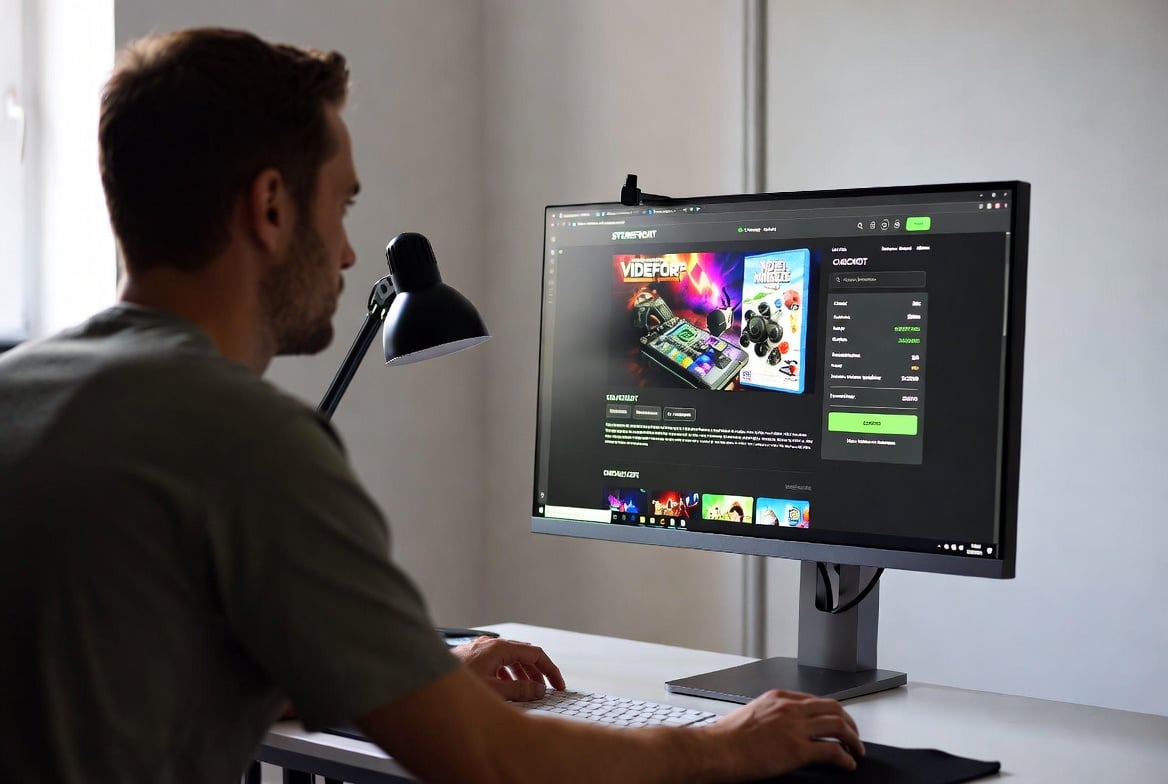
For decades, paying for a game was the least interesting thing about it. You fed a quarter into a cabinet, or you handed a clerk sixty dollars for a boxed copy, and that was the whole transaction. The money changed hands once and then vanished from the experience entirely. What is genuinely odd about modern gaming is how much that simple act has changed, and how much engineering now sits behind it. Paying for play has quietly become one of the most carefully designed systems in the entire medium, and most of us barely notice it happening anymore.
Paying In Was Always the Easy Part
The arcade era ran on a brutally honest model. A machine cost money to build and floor space to keep, so it asked for a coin every time you wanted another go. Home consoles softened that into a single purchase. Buy the cartridge, own the game, play it until the contacts wore out. PC gaming added a small wrinkle with shareware and expansion packs, where the first chunk was free or cheap and the rest cost extra, but the basic idea held for most of the 1980s and 1990s. You knew exactly what you were paying and exactly what you got.
The internet quietly broke that arrangement. Once a console could reach a server, a publisher no longer had to sell you everything inside one box. It could sell you the game now and the rest later, in pieces, for as long as you kept showing up. That single shift, from one payment to many, set up almost everything that came after it.
When the Money Started Flowing Both Ways
The bigger change was not that players paid more often. It was that money started moving in two directions. Once games grew real economies, items carried value, and value meant people wanted to cash out. Valve turned cosmetic drops in Team Fortress 2 and later Counter-Strike into tradeable goods with live market prices, so a player’s inventory started to look less like a toy box and more like a small portfolio. EVE Online let pilots convert real money into in-game time and back through PLEX. Esports prize pools and skin sales pushed even more cash through these systems.
That turned getting paid into its own design problem. A marketplace is only as trusted as its cash-out, and platforms solve that in very different ways. Steam keeps your balance locked inside its own wallet. Card processors and e-wallets move funds quickly but cap how much you can pull at once and shave a percentage on the way through. At the far end sit platforms built around the payout itself: bank transfer casinos lean on direct bank-to-account wires precisely because they clear much higher limits, charge a flat fee instead of a percentage cut, and run on the same encrypted networks your bank already uses. The lesson reaches well past gambling. Any service that asks players to trust it with real money eventually has to answer the same question, which is how cleanly you can get that money back out. Speed, limits, and fees stopped being back-office footnotes and became selling points, because a platform that strands your balance loses you faster than one with a worse game library.
The Download That Rewired Everything
If you want the exact moment the modern model arrived, it comes with a punchline. In 2006, Bethesda sold a set of horse armor for The Elder Scrolls IV: Oblivion at $2.50, a cosmetic upgrade for a horse in a single-player game. Players mocked it relentlessly. They also bought it. What looked like a joke turned out to be a proof of concept, and within a few years the idea of paying small amounts inside a game you already owned had spread to nearly every genre on every platform. The pricing models multiplied from there: season passes that sold future content sight unseen, battle passes that charged a small fee for the privilege of grinding toward rewards, and subscriptions that quietly replaced ownership with access.
What made it stick was not greed so much as plumbing. Storefronts on Xbox Live, and later PlayStation Network and Steam, had finally made paying inside a game effortless. No card to dig out, no checkout to clear. The payment method was already on file, one button away, and that convenience changed player behavior far more than any single price tag ever could. The tipping point came fast. By 2011, mobile analytics firm Flurry reported that free-to-play titles had overtaken paid ones among the top-grossing games on Apple’s App Store, which told publishers everywhere that giving the game away and selling the extras was not a fringe tactic but the new center of gravity.
The Psychology of the Frictionless Tap
Modern storefronts are engineered to erase every speed bump between wanting something and owning it. Currencies are deliberately abstracted, so you buy V-Bucks or Robux or generic gems rather than spending visible dollars, which makes the real cost much harder to feel in the moment. Bundles get framed against an inflated original price to manufacture a sense of value. Limited-time offers borrow the old fear of missing out and weaponize it. None of this is accidental, and there is a real craft to how modern storefronts are built to keep us spending, because the design choices are subtle and surprisingly effective on people who consider themselves careful with money.
The line back to the arcade is clear once you look for it. The coin slot was friction by design, a constant small reminder that play cost something. Today’s systems exist to remove exactly that reminder. The quarter has not disappeared. It has been dissolved into a stored balance, a saved card, and a single tap that feels like nothing at all.
Where the Quarter Went
The way we pay for games has quietly become a story about trust and convenience pulling in opposite directions. We traded the honesty of the coin slot for the smoothness of the digital wallet, and we got real things in return: instant access, living games that keep growing, and economies that occasionally pay players back in actual money. We also handed publishers a finely tuned set of tools for separating us from our cash without our quite noticing.
That is the quiet evolution. Not one dramatic shift, but a slow redesign of the most ordinary part of gaming, carried out over thirty years, until the simple act of paying became as deliberately built as the games it pays for.



Minecraft All Biomes Seeds for Players Who Love Exploring

Double-Sentinel Defensive Holds Disrupt Fast Valorant Site Executes

Blox Fruits Physical vs Permanent Fruits: What’s the Difference?

What to Check Before Buying FC 27 Coins Online

Pokémon Announces New Movie With a New Hero and Mimikyu

Can You Stream Kick on Xbox: Complete Guide for Xbox Users

One Piece Is Everywhere Right Now – and It’s Exposing a Problem With How Gaming Teaches Players to Gamble

Why Game Clips Stall on Instagram Reels

This Unexpected Frieren x MapleStory Crossover Looks Too Perfect

Why Have Animal Characters Taken Over Every Corner Of Gaming?

6 Years Later, Haikyu!! Returns in the Last Way Fans Expected

How Much Does Player Housing Really Cost in WoW Midnight?

6 Gaming Platforms That Push Originality to the Forefront

Anime You’ll Be Glad You Added to Your Fall Watchlist (Part-1)

Struckd on Windows: Making 3D Games Without Writing a Line of Code

Why Randomness Makes Some Video Games So Interesting
-
 Anime4 weeks ago
This Unexpected Frieren x MapleStory Crossover Looks Too Perfect
-
 Features4 weeks ago
Why Have Animal Characters Taken Over Every Corner Of Gaming?
-
 Anime2 weeks ago
6 Years Later, Haikyu!! Returns in the Last Way Fans Expected
-
 Features4 weeks ago
How Much Does Player Housing Really Cost in WoW Midnight?
-
 Features4 weeks ago
6 Gaming Platforms That Push Originality to the Forefront
-
 Anime3 weeks ago
Anime You’ll Be Glad You Added to Your Fall Watchlist (Part-1)
-
 Features1 week ago
Struckd on Windows: Making 3D Games Without Writing a Line of Code
-
 Features2 weeks ago
Why Randomness Makes Some Video Games So Interesting
-

 Features2 weeks ago
Keyboard vs Controller Gaming: Which One Is Better?
-

 Features2 weeks ago
5 Masterful Video Games Where The Element of Chance Shaped the Narrative
-

 Features1 week ago
From Arcade Cabinets to Digital Cards: The Psychology of the Push-Your-Luck Mechanic
-

 Features5 days ago
Why Side Activities Make Open Worlds Feel More Alive