
Features
4 Ways Retro Games Redefined PC Design and Nostalgia

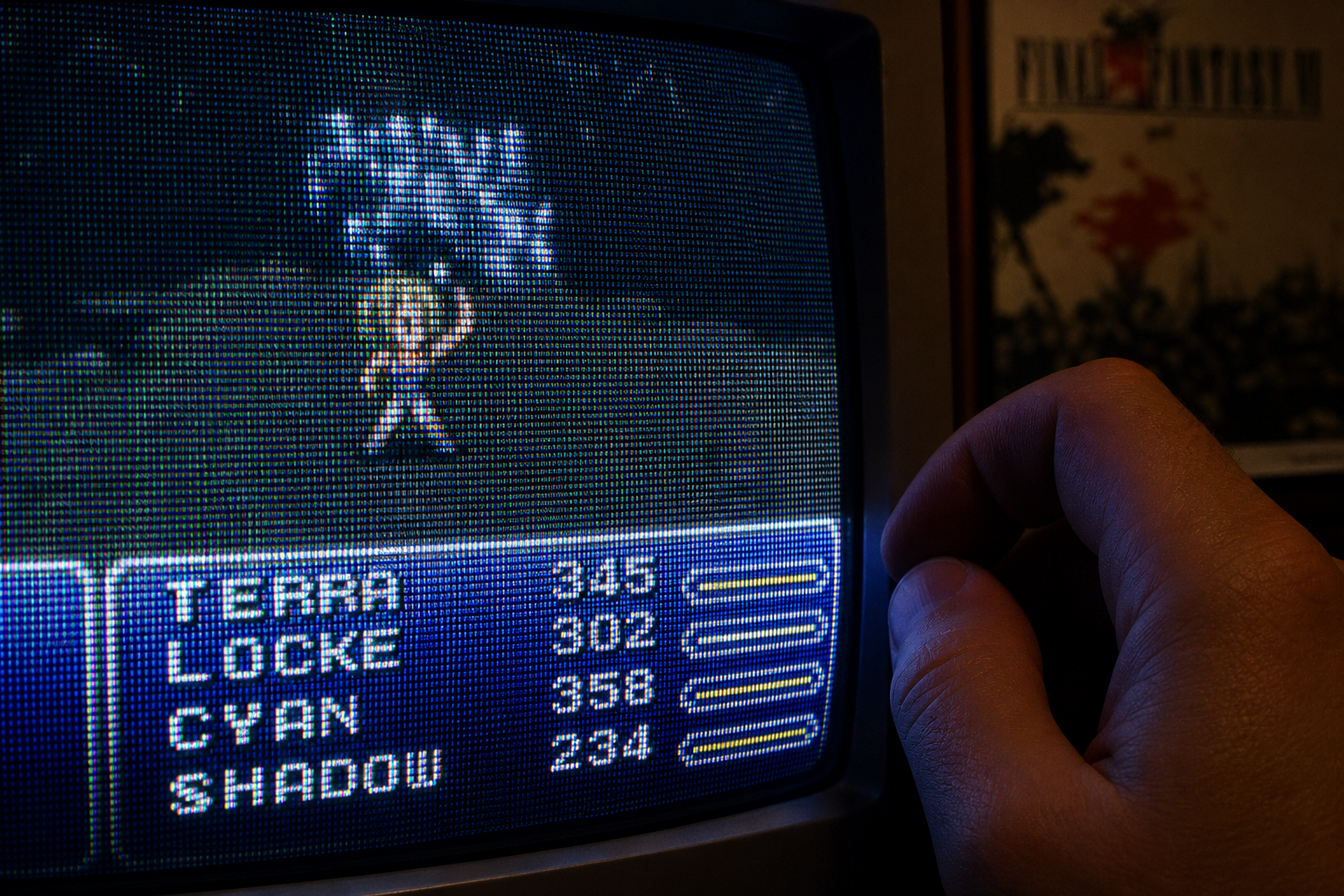
Labeling the obsession with retro titles as mere sentimentality ignores a deeper technical interrogation. Enthusiasts revisiting DOS classics aren’t just seeking comfort; they are exploring a communal design language tied to early computing.
While modern titles often rely on hand-holding mechanics like map markers and quest journals, the DOS era demanded spatial awareness and deduction.
These environments prioritized imagination over raw computational force, a design value that current developers now strive to reverse-engineer.
To accurately capture this feel, enthusiasts often require durable, business-grade hardware for reliable emulation. Sourcing a reliable refurbished desktop from a specialist like PCLiquidations provides the utilitarian, no-frills base that perfectly mirrors this classic hardware ethos.
1. Finding a Better Measure of Having a Good Time
The divide between classic and contemporary design lies in the distinction between intrinsic joy and extrinsic reward. While modern titles often lean on monetization loops and progression metrics, the retro era prioritized mastery.
The satisfaction of a precise, tactile jump is fundamentally different from watching a digital counter rise on a menu.
The 1.44MB floppy disk was less a technological cage and more a creative crucible. These constraints forced developers to ensure every kilobyte earned its place. This era remains a masterclass in discipline, meaning more with less.
This is why emulation culture is about preservation, not piracy. Communities keeping these titles operational perform a vital cultural service, ensuring that the mechanical history of gaming remains accessible to future generations.
2. Design That Respected the Player
To understand the era’s trust in the player, look at DOOM (1993). Eschewing tutorials and objective markers, it treated the player as an autonomous agent. Technically, id Software utilized the Binary Space Partitioning (BSP) engine to deliver fluid movement on hardware that had no business rendering such environments.
On the opposite spectrum sat Myst (1993). Though deliberate and static, it shared the same lack of hand-holding, relying on the player’s imagination to fill the gaps between frames.
Both titles possessed a design confidence that the modern industry has largely traded for retention engineering. This foundational design prioritized player intelligence over developer ego.
Ultimately, the most radical commonality between DOOM and Myst was their refusal to explain themselves.
3. When “Less Sophisticated” Is a Real Strength
Pixel-grid constraints forced creative problem-solving, building a psychological bond between player and asset that hyper-realism often destroys.
This is the core difference between passive consumption and active engagement. NES and Commodore 64 composers were programmer-musicians wrestling with hardware to evoke the dread of Castlevania or the momentum of Mega Man 2.
Chiptune’s resonance reflects human ingenuity overcoming machine silence.
While modern scores often follow safe cinematic conventions, raw waveforms require emotional participation to complete the atmosphere. The games that aged best prioritized imagination over fidelity.
Pixel art didn’t limit what players felt; it invited them to feel more, as imagination always renders at a higher resolution than any GPU.
4. Mastery Over Victory
Classic reward structures contrast sharply with modern binary win-states. Retro games focused on the gradient between incompetence and mastery rather than a simple win/loss outcome.
Pac-Man, for example, offers no traditional narrative victory, only increasingly rhythmic, fluent play. Similarly, 1990s fighting games acted as mastery architectures where memorizing a move list was only the beginning of the player’s education.
Even Sonic the Hedgehog exemplifies this philosophy, where achieving a perfect, uninterrupted run provides a private satisfaction that leaderboards cannot replicate. This skill gradient is what fuels emulation culture today.
The flawless execution of a pixel-perfect trick is the true payoff, while the high score remains a mere footnote. Communities preserving these titles understand this distinction with scholarly seriousness.
A Closing Reflection
The severe constraints of classic computing did not limit game design; they established its foundation. This architectural discipline echoes in every indie success that prioritizes playability over polygon counts and in every grassroots emulation revival.
Stepping back from the relentless cycle of modern patches and server updates allows us to embrace the unhurried charm of systems that trusted player intelligence from the very first frame.
| PCLiquidations is the leading online retailer of quality refurbished technology for businesses, schools, government organizations, and home users. |



Minecraft All Biomes Seeds for Players Who Love Exploring

Double-Sentinel Defensive Holds Disrupt Fast Valorant Site Executes

Blox Fruits Physical vs Permanent Fruits: What’s the Difference?

What to Check Before Buying FC 27 Coins Online

Pokémon Announces New Movie With a New Hero and Mimikyu

Can You Stream Kick on Xbox: Complete Guide for Xbox Users

One Piece Is Everywhere Right Now – and It’s Exposing a Problem With How Gaming Teaches Players to Gamble

Why Game Clips Stall on Instagram Reels

This Unexpected Frieren x MapleStory Crossover Looks Too Perfect

Why Have Animal Characters Taken Over Every Corner Of Gaming?

6 Years Later, Haikyu!! Returns in the Last Way Fans Expected

6 Gaming Platforms That Push Originality to the Forefront

How Much Does Player Housing Really Cost in WoW Midnight?

Why Randomness Makes Some Video Games So Interesting

Struckd on Windows: Making 3D Games Without Writing a Line of Code

Anime You’ll Be Glad You Added to Your Fall Watchlist (Part-1)
-
 Anime4 weeks ago
This Unexpected Frieren x MapleStory Crossover Looks Too Perfect
-
 Features4 weeks ago
Why Have Animal Characters Taken Over Every Corner Of Gaming?
-
 Anime2 weeks ago
6 Years Later, Haikyu!! Returns in the Last Way Fans Expected
-
 Features4 weeks ago
6 Gaming Platforms That Push Originality to the Forefront
-
 Features4 weeks ago
How Much Does Player Housing Really Cost in WoW Midnight?
-
 Features2 weeks ago
Why Randomness Makes Some Video Games So Interesting
-
 Features2 weeks ago
Struckd on Windows: Making 3D Games Without Writing a Line of Code
-
 Anime3 weeks ago
Anime You’ll Be Glad You Added to Your Fall Watchlist (Part-1)
-

 Features6 days ago
Why Side Activities Make Open Worlds Feel More Alive
-

 Features2 weeks ago
From Arcade Cabinets to Digital Cards: The Psychology of the Push-Your-Luck Mechanic
-

 Features2 weeks ago
5 Masterful Video Games Where The Element of Chance Shaped the Narrative
-

 Features2 weeks ago
Keyboard vs Controller Gaming: Which One Is Better?